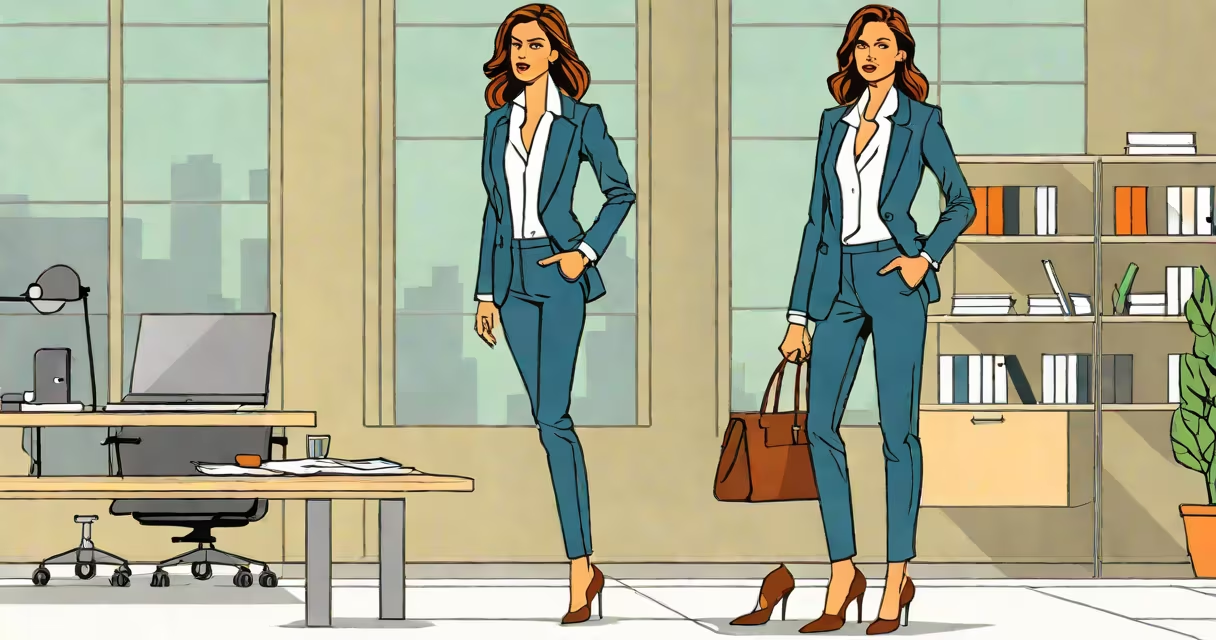
Smart casual for women is a dress code that balances professional polish with relaxed comfort, typically worn in workplaces, social events, or semi-formal gatherings where formal attire is unnecessary but neatness is expected. It avoids extremes-neither overly dressed nor too casual-and centers on intentional styling.
This look emerged in the late 20th century as workplaces moved away from rigid business suits while maintaining standards of appearance. Today, it's common in tech offices, creative agencies, and weekend events. A woman wearing smart casual might pair a structured blazer with dark jeans and loafers, or a tailored dress with nude heels.
The U.S. Office of Personnel Management notes that workplace dress codes like smart casual are often defined by employers, but they generally expect employees to avoid sweatpants, flip-flops, or torn clothing. The goal is to project competence and attention to detail without appearing overly formal.
Smart casual relies on four consistent components: structure, quality, fit, and restraint. Structure means using pieces with clean lines-blazers, belted waistlines, or tailored trousers. Quality refers to fabrics that hold shape and resist wrinkling: wool, cotton twill, silk, or high-thread-count linen.
Fit matters more than brand. A well-tailored blazer in a slightly oversized cut still counts as smart casual if it drapes correctly and doesn't sag. Conversely, a designer t-shirt with visible stitching and a perfectly fitted silhouette may fail if paired with low-slung jeans and sneakers.
Restraint prevents over-accessorizing. One statement necklace, a single ring, or a small clutch is acceptable. Two or more bold accessories signal informality. This rule applies equally to makeup: a subtle lip tint and defined brows are fine; heavy contour and glitter eye shadow cross into party territory.
Smart casual for women uses interchangeable wardrobe staples. These pieces mix and match across seasons and occasions. Below are the most effective combinations:
| Top | Pants/Skirt | Shoes | Outerwear |
|---|---|---|---|
| Silk blouse, tucked in | High-waisted trousers | Low block heel or loafers | Tailored blazer |
| Crew neck sweater (fine knit) | Dark wash jeans (no rips) | Chelsea boots or ballet flats | Longline trench coat |
| Button-down shirt (cotton or poplin) | Wrap skirt or pencil skirt | Heeled mules or oxfords | Peacoat or wool duster |
Each combination maintains visual balance. The silk blouse and trousers create a polished base. The sweater and jeans offer ease without sloppiness. The button-down with a skirt adds formality to a relaxed outfit.
A real-world example: At a midweek team meeting at a San Francisco startup, a woman wore a navy merino wool sweater, black wide-leg trousers, and leather loafers. She added a silver pendant on a thin chain and carried a structured canvas tote. Her hair was pulled back in a low bun. This ensemble met smart casual standards-professional enough for client-facing roles, comfortable enough for a long day.
Smart casual is standard in many industries. Tech companies like Google and Salesforce allow it in offices, especially in cities like Seattle and Austin. Creative fields such as advertising, design, and media often adopt it to reflect a changing, approachable culture.
It's also common at social events. A dinner at a restaurant with colleagues, a gallery opening, or a wedding rehearsal dinner may call for smart casual. In these cases, the expectation is that guests appear put-together but not stiff.
Some institutions have specific policies. The University of Michigan's HR guidelines state that smart casual is appropriate for internal meetings and campus events unless otherwise specified. They define it as "clothing that is neat, well-fitted, and free of logos or excessive wear."
Many people mistake smart casual for "business casual," but they differ in formality. Business casual allows more uniformity-navy pants, white shirts, closed-toe shoes. Smart casual introduces variety: patterned blouses, textured fabrics, or unique shoe shapes.
Another error is assuming that "casual" means "unstructured." A woman wearing a flowy maxi dress with sandals to a job interview would violate smart casual norms. The dress lacks structure and the sandals lack polish. Even if the fabric is high-quality, the silhouette fails the test.
A less obvious point: color choice matters. Neutral tones-black, navy, beige, gray-are safe. Bright colors or bold patterns can work, but only if balanced. A red silk blouse with black trousers and heels is acceptable. The same blouse with denim shorts and sneakers is not.
I once observed a colleague at a New York City event wear a sequined top with a tailored blazer and wide-leg trousers. The top was flashy, but the rest of the outfit grounded it. The result was eye-catching but not inappropriate-a rare success in balancing drama and decorum.
Smart casual excludes: ripped jeans, graphic tees, athletic wear, flip-flops, and overly revealing tops. It also avoids excessive jewelry, loud prints, or scented products. These choices signal informality or distract from the aesthetic.
For reference, the American Psychological Association's workplace guidelines emphasize that attire affects perception. Employees who dress in smart casual are seen as competent and approachable-more so than those in full business wear or casual loungewear.
When in doubt, ask: "Would this look appropriate in a mid-tier law firm or a creative agency's Friday lunch?" If yes, it likely qualifies. If not, adjust.