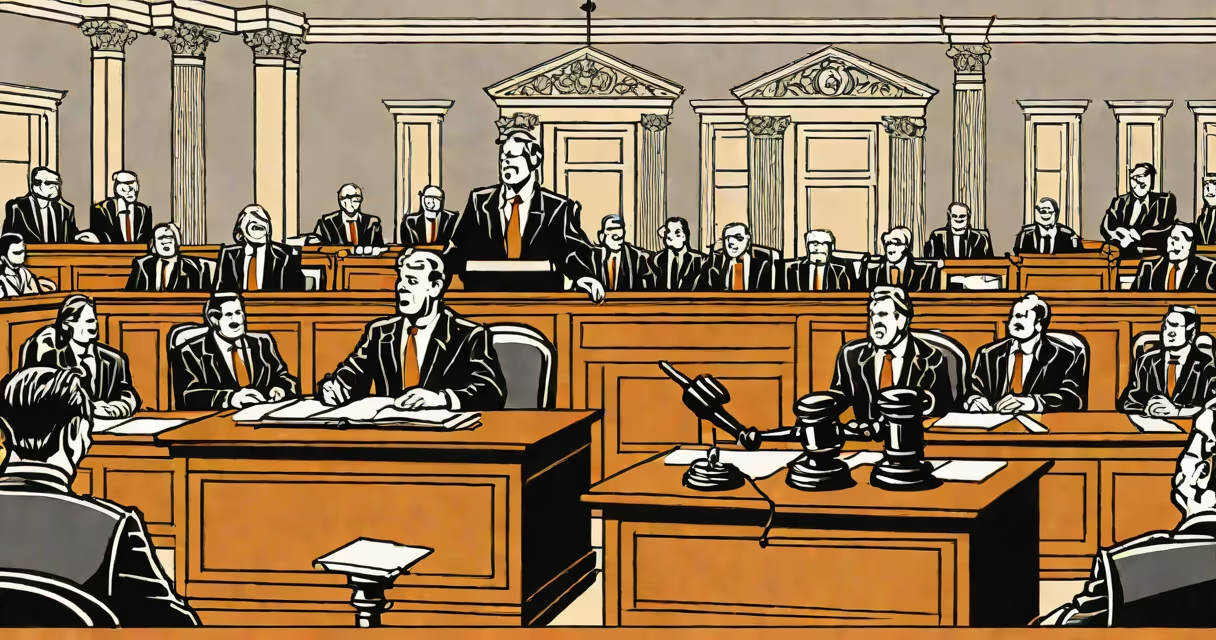
In court, "suppressed" means a judge has ruled that certain evidence cannot be used during a trial because it was obtained illegally, violates constitutional rights, or would unfairly bias the jury. This decision prevents prosecutors from presenting the evidence, even if it proves guilt.
Suppression occurs when a defense attorney files a motion to exclude evidence based on violations of the Fourth, Fifth, or Sixth Amendments. If the judge agrees, the evidence is "suppressed"-removed from consideration. This is not a dismissal of charges, but a restriction on what can be shown to the jury.
The U.S. Supreme Court established the exclusionary rule in *Mapp v. Ohio* (1961), which holds that evidence gathered in violation of the Fourth Amendment cannot be used in state courts. Since then, suppression has become a core tool in criminal defense strategy.
A suppression hearing is a mini-trial held before the main trial. Both sides present evidence and arguments. The defense argues that police violated the defendant's rights-such as conducting a search without a warrant or using coercive interrogation tactics. The prosecution counters that the evidence was lawfully obtained.
If the judge finds the evidence was seized unconstitutionally, they issue a suppression order. This means the prosecutor cannot mention the evidence during opening statements, call witnesses about it, or submit physical items into evidence. The ruling applies even if the evidence is truthful or incriminating.
For example, in *Arizona v. Gant* (2009), the Supreme Court ruled that police cannot search a vehicle's passenger compartment after arresting a driver unless there is reason to believe the car contains weapons or evidence related to the crime. If officers search without justification, any drugs found may be suppressed.
Not all evidence is subject to suppression. Only evidence obtained through unconstitutional conduct can be excluded. Common grounds include:
Even if evidence is accurate, it can still be suppressed if the process violated the law. For instance, in *Terry v. Ohio* (1968), the Court allowed "stop and frisk" searches if officers have reasonable suspicion. But if they go beyond that, any weapons found can be suppressed.
| Type of Suppression | Common Cause | Example |
|---|---|---|
| Fourth Amendment | Unlawful search or seizure | Police search a house without a warrant and find drugs. |
| Fifth Amendment | Self-incrimination without Miranda rights | Detainee confesses after being questioned without warning. |
| Sixth Amendment | Denial of counsel during critical stages | Defendant speaks to police before meeting their lawyer. |
Suppression can change the outcome of a trial. Without key evidence, prosecutors may lack enough proof to secure a conviction. In some cases, charges are dropped entirely after suppression rulings.
For example, in *State v. Johnson* (2017), New Jersey courts suppressed video footage of a traffic stop because officers failed to record audio. The defense argued the lack of audio created doubt about whether the suspect was read their rights. The court agreed, and the evidence was excluded. The case was later dismissed due to insufficient evidence.
Suppression is not automatic. Judges weigh factors like the seriousness of the violation, whether the police acted in good faith, and whether excluding the evidence would harm justice. The *Herring v. United States* (2009) decision clarified that evidence won't be suppressed if police relied on a valid but later invalidated warrant.
People often confuse suppression with dismissal. A suppressed piece of evidence doesn't mean the case ends. Charges remain active, and prosecutors can retry with different evidence. Suppression only removes specific items from trial.
Another misunderstanding is that suppression means the defendant is innocent. It only means the evidence can't be used. The prosecution may still prove guilt through other means.
Some assume suppression applies to all evidence. But only evidence obtained through constitutional violations is subject to suppression. Legally collected evidence-even if damaging-is not automatically excluded.
I once observed a suppression hearing in a federal courthouse where a defense attorney successfully challenged a wiretap. The government had obtained the authorization after the initial deadline. The judge ruled the recordings were suppressed. The case was later settled without trial, showing how suppression can influence plea negotiations.
Suppression is often mistaken for similar terms. Understanding the differences matters.
Suppression is final only if upheld on appeal. If the prosecution appeals a suppression order, higher courts may reverse it. The appellate standard is whether the lower court abused its discretion.
When evidence is suppressed in court, it means a judge has barred its use because it was gathered unlawfully or would distort fairness. This protects defendants' rights under the Constitution. Suppressed evidence remains in the record but cannot be presented to the jury. The process helps justice isn't compromised by unlawful tactics.