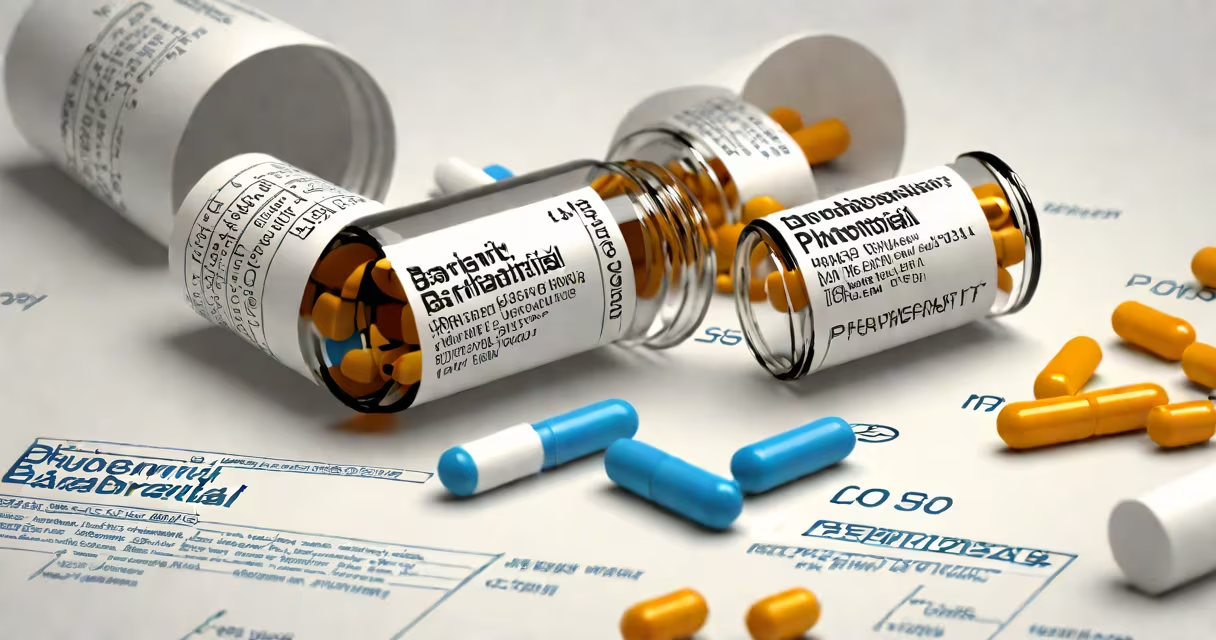
Barbiturates are synthetic depressants that improve GABA activity in the brain, reducing neuronal excitability. They were widely used from the 1940s through the 1970s for anxiety, sleep disorders, and seizure control but have since been largely replaced due to high addiction potential and narrow therapeutic index.
These compounds act on the gamma-aminobutyric acid (GABA) receptor complex, increasing chloride ion influx into neurons. This hyperpolarizes nerve cells, making them less likely to fire. The result is sedation, muscle relaxation, and reduced seizure activity. The effect intensity depends on the specific barbiturate's chemical structure and dosage.
Barbiturates include drugs like phenobarbital, secobarbital, and thiopental. Phenobarbital remains in clinical use for epilepsy treatment, particularly in children. Thiopental was historically used for rapid induction of anesthesia during surgery. Despite their utility, barbiturates carry significant risks, including dependence, overdose, and dangerous interactions with alcohol and opioids.
Barbiturates bind to the GABAA receptor, a ligand-gated ion channel. When GABA binds naturally, it opens the chloride channel. Barbiturates potentiate this effect, prolonging the channel's open state. This increases inhibitory signaling across the central nervous system (CNS).
The duration and potency of action depend on pharmacokinetics. For example, thiopental has a very short half-life (about 10 minutes) and rapidly crosses the blood-brain barrier, making it ideal for inducing anesthesia quickly. In contrast, phenobarbital has a long half-life (up to 100 hours), allowing sustained effects suitable for chronic seizure management.
Because barbiturates affect multiple CNS pathways-not just GABA-they can cause side effects like dizziness, confusion, and impaired coordination. At high doses, they suppress respiratory centers in the brainstem, leading to life-threatening hypoventilation. The risk escalates with concurrent use of other CNS depressants.
Barbiturates are categorized by onset and duration of action. Fast-acting agents like thiopental are used in surgical settings. Intermediate-acting drugs such as amobarbital treat anxiety and insomnia. Long-acting agents like phenobarbital manage epilepsy and prevent febrile seizures in infants.
| Type | Example | Onset | Duration | Primary Use |
|---|---|---|---|---|
| Ultra-short acting | Thiopental | Seconds | 10-20 min | Anesthesia induction |
| Short acting | Secobarbital | 10-20 min | 1-3 hr | Pre-anesthetic sedation |
| Intermediate acting | Amobarbital | 15-30 min | 3-6 hr | Anxiety, sleep aid |
| Long acting | Phenobarbital | 30-60 min | 100+ hr | Epilepsy, neonatal seizures |
Phenobarbital remains a first-line anticonvulsant in resource-limited settings due to low cost and stability. A 2021 WHO report noted its continued use in over 40 countries for childhood epilepsy, especially in sub-Saharan Africa where access to newer antiseizure medications is limited.
Despite historical popularity, barbiturates are now rarely prescribed for anxiety or insomnia. Their high abuse liability and narrow safety margin make them unsuitable for outpatient use. Benzodiazepines, which offer similar efficacy with lower overdose risk, have largely taken their place.
Many assume barbiturates are obsolete. While newer drugs dominate outpatient care, they remain in use in hospitals and emergency departments. Thiopental is still listed in the World Health Organization's Model List of Essential Medicines for anesthesia induction.
Another misconception is that barbiturates are always addictive. While physical dependence develops with prolonged use, not everyone who takes them becomes dependent. However, withdrawal symptoms-including seizures, delirium, and psychosis-can occur after abrupt cessation, especially with high-dose regimens.
A lesser-known fact: barbiturates induce liver enzymes, particularly CYP3A4 and CYP2C9. This accelerates metabolism of other drugs, potentially reducing their effectiveness. For example, patients on phenobarbital may require higher doses of warfarin to maintain therapeutic INR levels. This interaction is often overlooked in polypharmacy scenarios.
Both classes improve GABAergic transmission but differ in mechanism and safety. Benzodiazepines bind selectively to the α-subunit of the GABAA receptor, producing anxiolysis and sedation with less respiratory depression. Barbiturates activate the receptor regardless of subunit composition, leading to broader CNS suppression.
This difference explains why benzodiazepines have a wider therapeutic window. A study published in *The New England Journal of Medicine* (2002) found that benzodiazepines had a 10-fold higher ratio of effective dose to lethal dose compared to barbiturates. Overdose deaths involving barbiturates are more common and harder to reverse than those involving benzodiazepines.
Barbiturates increase the risk of paradoxical excitement-especially in elderly patients-where sedation gives way to agitation or hallucinations. This phenomenon is rare with benzodiazepines and contributes to the preference for the latter in psychiatric and geriatric populations.
In a 2019 case series from Nigeria, 120 children aged 1-10 with generalized tonic-clonic seizures were treated with phenobarbital. Doses ranged from 3-5 mg/kg/day. After six months, 78% achieved seizure freedom. Side effects included drowsiness (32%), irritability (18%), and mild skin rash (5%). No fatal adverse events occurred.
Researchers attributed success to consistent dosing and monitoring. Blood levels were maintained between 15-40 μg/mL, a therapeutic range established by the American Academy of Neurology. The drug's affordability-costing under $1 per month in generic form-makes it accessible in low-income regions where newer antiepileptics are unavailable.
I observed this treatment protocol firsthand during a medical mission in rural Ghana. Parents reported improved school attendance and reduced fear of sudden seizures. The simplicity of oral administration and lack of refrigeration needs made phenobarbital practical in areas with unreliable electricity and poor healthcare infrastructure.
Barbiturates are central nervous system depressants that improve GABA activity, resulting in sedation, hypnosis, and anticonvulsant effects. Though largely supplanted by safer alternatives like benzodiazepines, they persist in critical care and low-resource settings. Understanding their mechanisms, risks, and ongoing clinical roles ensures accurate use and avoids outdated assumptions about their obsolescence.