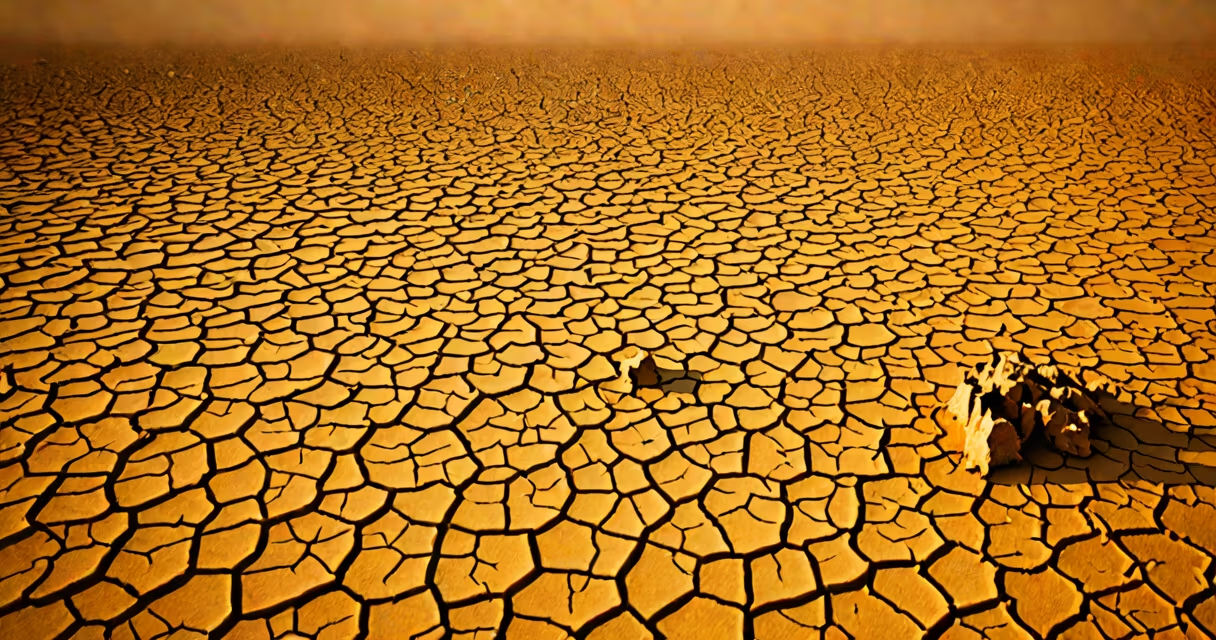
Desertification definition describes the process by which fertile land in drylands becomes barren and unproductive due to prolonged drought, deforestation, overgrazing, and poor agricultural practices. It is not the expansion of existing deserts but the degradation of land in arid, semi-arid, and dry sub-humid zones.
Desertification occurs when human actions and climatic shifts combine to degrade soil quality and reduce biodiversity. It affects approximately 3.2 billion people globally, primarily in Sub-Saharan Africa, Central Asia, and parts of Latin America. According to the United Nations Convention to Combat Desertification (UNCCD), over 52% of global drylands are moderately to severely degraded.
Unlike natural desert formation, desertification results from unsustainable land use. It reduces agricultural productivity, increases poverty, and forces migration. The process is irreversible without significant intervention and long-term restoration efforts.
Desertification begins when vegetation cover declines due to overuse of land. Roots that hold soil in place die off, exposing the ground to wind and water erosion. Without plant cover, rainwater runs off instead of soaking in, reducing groundwater recharge and increasing surface runoff.
Soil structure deteriorates under pressure. Organic matter decreases, nutrients leach away, and the remaining soil becomes compacted and saline. Once this happens, seeds cannot germinate, and native species vanish. The land loses its ability to support crops, livestock, or forests.
A 2021 study published in *Nature Sustainability* found that degraded soils in drylands lose up to 60% of their carbon storage capacity. This loss contributes to climate change by releasing stored carbon into the atmosphere.
Desertification is driven by both natural and human factors. Climate variability such as extended droughts accelerates land drying. But human activities are the primary cause. Overgrazing by livestock, excessive irrigation leading to salinization, deforestation for fuel or agriculture, and urban sprawl all degrade dryland ecosystems.
The UNCCD identifies five major types of desertification processes:
| Type | Description | Example Region |
|---|---|---|
| Water erosion | Soil washed away by rain or runoff | Sahel, West Africa |
| Wind erosion | Topsoil blown away by persistent winds | Inner Mongolia, China |
| Salinization | Build-up of salts in soil due to poor irrigation | Punjab, India |
| Soil compaction | Heavy machinery or animal traffic compresses soil pores | Great Plains, USA |
| Loss of organic matter | Decomposition of plant material slows; soil becomes sterile | Central African Republic |
Each type reduces land's ability to sustain life. Salinization, for instance, renders soil unusable for most crops. In Pakistan's Sindh province, 30% of farmland has become saline since 1990 due to over-irrigation and inadequate drainage systems.
Desertification is often confused with desert expansion. Deserts are naturally occurring arid regions with low precipitation. Desertification refers to the transformation of productive land into desert-like conditions through degradation. The Sahara Desert expanded by 10% between 1920 and 1990, but this was due to climate shifts-not human activity alone.
Another myth is that only dry areas are affected. Drylands make up 41% of Earth's land surface and support 44% of the world's population. They include grasslands, shrublands, and savannas. Even areas with seasonal rainfall can suffer desertification if management is poor.
Desertification is not inevitable. The Great Green Wall initiative in Africa aims to restore 100 million hectares of degraded land by 2030. As of 2023, over 20 million hectares have been restored across 11 countries, proving that recovery is possible with coordinated effort.
In northern Kenya, pastoralist communities rely on grazing lands for cattle and goats. Between 2000 and 2015, drought frequency increased from once every 12 years to every 5 years. Herders responded by expanding grazing areas, pushing animals into marginal zones. Soil compaction and root destruction followed.
By 2018, satellite imagery showed a 40% reduction in green vegetation cover across 15 counties. Rainfall data from the World Bank indicates average annual precipitation dropped from 550 mm to 380 mm during the same period. Combined, these changes led to widespread land degradation.
Local NGOs introduced rotational grazing and tree planting using indigenous species like *Acacia tortilis*. After five years, vegetation recovery reached 65% in monitored plots. Soil moisture levels improved by 30%, and herder income rose by 22%. This case shows that reversing desertification requires both ecological and community-based solutions.
When you hear "desertification definition," remember it's not about sand dunes-it's about lost potential. A single hectare of degraded land can produce 30% less food than healthy soil. That's 30% less nutrition for families, 30% less income for farmers, and 30% more pressure on neighboring ecosystems.
Desertification definition is not just a term-it's a warning. And it's one we can act on.