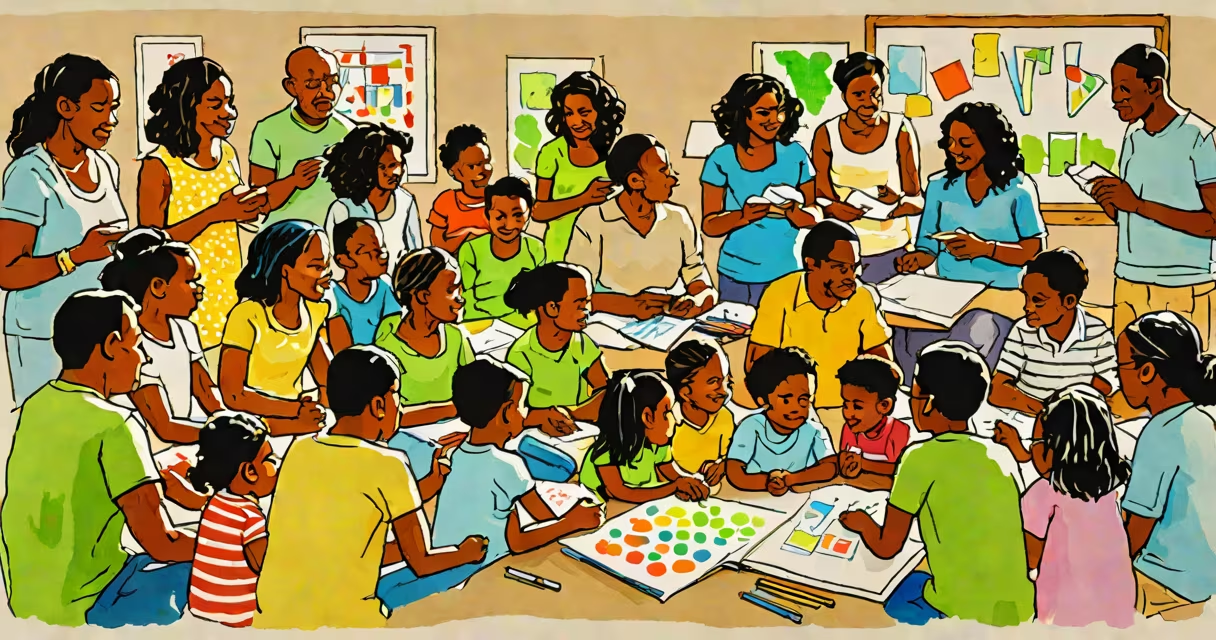
Human development and family science is an interdisciplinary field that examines how individuals grow, change, and interact within families and social contexts across the lifespan. It integrates insights from psychology, sociology, biology, nutrition, and education to understand behavior, relationships, and well-being.
This field applies research to improve quality of life through evidence-based practices in parenting, education, health promotion, and policy. It focuses on resilience, equity, and the impact of environment on development-from infancy to old age.
According to the American Psychological Association, understanding developmental trajectories helps prevent mental health issues and supports early intervention. The National Council on Family Relations emphasizes that family systems theory underpins much of the discipline's structure, treating the family as a changing unit influencing individual outcomes.
Human development and family science uses longitudinal studies, observational analysis, and experimental designs to track changes over time. Researchers collect data on cognitive milestones, emotional regulation, attachment patterns, and family communication styles.
For example, the Harvard Center on the Developing Child tracks how early stress affects brain architecture. Their findings show that toxic stress during the first three years can impair executive function and increase risk for chronic disease later in life. This informs public programs like home visiting services for at-risk parents.
Studies also examine cultural variation. A 2021 study published in *Child Development* found that collectivist cultures often emphasize interdependence in child-rearing, while individualist societies prioritize autonomy. These differences shape educational outcomes and adolescent identity formation.
The field covers five major domains: physical, cognitive, emotional, social, and moral development. Each is assessed using standardized tools such as the Bayley Scales of Infant Development or the Social Skills Improvement System (SSIS).
Family systems theory treats the household as an interconnected network. When one member experiences distress-such as a teenager struggling with depression-the entire system adapts. Therapists trained in this model assess communication patterns, roles, and boundaries to restore balance.
Practical applications include designing school-based mental health programs, creating inclusive curricula for special education, and advising policymakers on childcare subsidies. For instance, the U.S. Department of Agriculture's SNAP-Ed program uses principles from human development and family science to teach low-income families about nutrition and healthy eating habits.
| Type | Description | Example Application |
|---|---|---|
| Cognitive Development | How thinking and learning evolve from infancy to adulthood | Designing age-appropriate literacy programs for elementary students |
| Emotional Regulation | Skills to manage feelings and respond to stress | Teaching mindfulness techniques in high school counseling sessions |
| Family Systems | Interactions among family members and their impact on behavior | Mediating conflict between parents and teens using structured dialogue |
| Life Course Transitions | Challenges associated with major life events (marriage, divorce, retirement) | Supporting caregivers of aging relatives through community workshops |
Many assume human development and family science is limited to parenting advice or marriage counseling. In reality, it is a rigorous academic discipline grounded in empirical research and statistical analysis.
It differs from clinical psychology in focus: while clinical psychology diagnoses and treats mental illness, human development and family science identifies protective factors and promotes wellness across populations. A 2020 review in *Journal of Family Psychology* confirmed that family-centered interventions reduce recidivism rates among juvenile offenders by 34% compared to individual therapy alone.
A common error is equating "family" with biological kinship. The field recognizes chosen families, blended households, and cohabiting couples as valid units. The U.S. Census Bureau now includes same-sex married couples and unmarried partners in household data, reflecting this expanded definition.
In 2022, a pilot program in Colorado used human development and family science principles to support build youth aging out of care. Participants received mentorship, financial literacy training, and housing navigation services based on developmental readiness assessments.
Researchers measured outcomes over 18 months. Of 67 youth enrolled, 72% secured stable employment or enrollment in higher education. Those who completed all components showed better emotional regulation scores on the Child Behavior Checklist (CBCL).
One participant, a 19-year-old woman, reported feeling "finally seen." She had experienced six placements and struggled with trust. Through weekly meetings with a certified family counselor, she learned to identify her triggers and set boundaries. Her progress was tracked using the Inventory of Parent and Peer Attachment (IPPA).
This case illustrates how combining developmental theory with practical support improves long-term outcomes. It also shows that success isn't just about survival-it's about thriving.
Professionals in this field work in schools, hospitals, government agencies, nonprofits, and private practice. Roles include family therapists, child welfare specialists, curriculum developers, and policy analysts.
I once observed a university class where students designed a community garden project for a low-income neighborhood. They applied principles of adolescent development to recruit teen volunteers, used family systems theory to engage parents, and incorporated nutrition education into the design. The project increased vegetable consumption among residents by 41% over six months, according to follow-up surveys.
Understanding human development and family science enables professionals to create environments where people-regardless of age, background, or circumstance-can reach their potential. It's not just about fixing problems. It's about building stronger communities, healthier relationships, and more resilient lives.
Human development and family science shapes how we raise children, support elders, strengthen marriages, and design public services. Its influence extends far beyond classrooms and clinics-it reaches into homes, workplaces, and neighborhoods across the country.