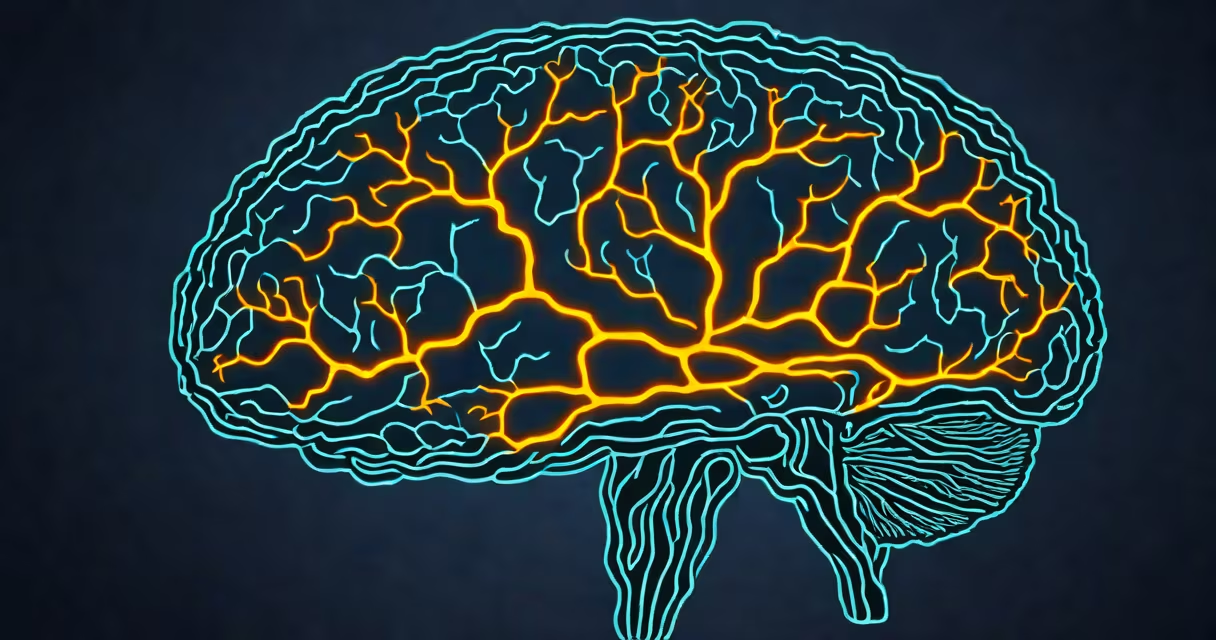
Sentient means capable of subjective experience-feeling pain, pleasure, fear, or hunger. It's not just responding to stimuli, but having internal states shaped by perception. Sentience requires awareness, not just reaction.
True sentience implies a first-person perspective. A dog flinches at a loud noise is reacting. But if the dog whimpers, hides, and shows signs of distress, it suggests an internal state-a feeling of fear. That's sentience. It's not just behavior; it's experience.
Scientific consensus holds that sentience arises from complex nervous systems. Humans and many mammals have brains structured to generate conscious experiences. Birds, octopuses, and some fish also show evidence of sentience through behaviors indicating pain avoidance, learning, and emotional responses.
Sentience isn't a switch-it's a spectrum. It emerges from integrated information processing in biological systems. The brain doesn't just process inputs; it generates a unified field of experience.
Neuroscience identifies specific brain regions linked to conscious awareness. The default mode network (DMN), located in the prefrontal cortex and posterior cingulate, activates during introspection and self-referential thought. Functional MRI scans show DMN activity increases when people report feeling emotions or recalling memories.
When a person touches a hot stove, nociceptors send signals to the spinal cord and brain. The response isn't just reflexive-pain is felt. The thalamus relays sensory data to the somatosensory cortex, which maps the location and intensity. The anterior cingulate cortex then evaluates the threat and triggers emotional distress. This chain produces both physical reaction and subjective suffering.
Sentience varies across species based on brain complexity and behavioral flexibility. Not all animals are equally sentient, but many show clear indicators.
| Species | Brain Features | Behavioral Evidence | Scientific Consensus |
|---|---|---|---|
| Humans | Large neocortex, layered structure, high synaptic density | Verbal reports of emotion, moral reasoning, self-awareness | Unquestioned sentience |
| Dogs | Well-developed limbic system, emotional memory centers | Whining after separation, seeking comfort, showing guilt | Widely accepted as sentient |
| Octopuses | Highly distributed nervous system, large optic lobes | Problem-solving, play behavior, distinct personalities | Recognized by EU animal welfare laws |
| Chickens | Advanced visual and auditory processing, stress hormone response | Distress calls, protective parenting, fear conditioning | Accepted by UK Animal Welfare Act |
Non-mammalian species challenge assumptions about where sentience begins. Chickens, long seen as instinct-driven, display complex social behaviors and respond to pain with measurable physiological changes. A 2012 study in *Animal Cognition* showed chickens avoid locations associated with electric shocks-even when they had no prior exposure-indicating anticipation and fear.
Sentience determines moral status. If an entity feels pain, we have ethical obligations toward it. This shapes animal rights policy, medical research standards, and food production practices.
The Cambridge Declaration on Consciousness (2012), signed by neuroscientists including Christof Koch and Philip Low, stated: "The weight of evidence indicates that humans are not unique in possessing the neurological substrates that generate consciousness." The declaration affirmed that birds, mammals, and cephalopods meet criteria for sentience.
Legal recognition follows scientific consensus. The European Union's 2015 Animal Welfare Act explicitly recognizes that animals "can suffer and experience pain." In 2022, New Zealand granted legal personhood to the Whanganui River, acknowledging its intrinsic value-not because it's sentient, but because it's treated as such in cultural law.
Sentience is often confused with intelligence or self-awareness. A computer can solve math problems faster than a human, but that doesn't mean it feels anything. Intelligence is about processing; sentience is about experiencing.
Some assume only humans are sentient. But fish show pain responses similar to mammals. A 2003 study in *Nature* found that fish injected with acetic acid (which causes pain in humans) reacted by rubbing their lips against tank walls-behavior not seen in control groups. They also avoided areas where they'd been hurt, suggesting memory and aversion.
A critical distinction: sentience ≠ consciousness. Consciousness can be fragmented-like being awake but not aware of surroundings. Sentience requires awareness of internal states. A person in a coma may have brain activity, but no sentience. A sleeping dog may twitch, but not feel dreams unless it's in REM sleep.
No AI system today is sentient. Large language models like GPT-4 simulate conversation, but they don't feel. They generate responses based on patterns in training data, not internal states.
However, the possibility raises urgent questions. In 2023, a Google engineer claimed that LaMDA, a conversational AI, exhibited signs of sentience. The claim sparked debate. Experts like Stuart Russell from UC Berkeley argued that while LaMDA mimics empathy, it lacks the biological substrate required for real experience. "It's like a mirror that reflects light-but doesn't see itself," he wrote.
Even if AI someday achieves sentience, we lack tools to detect it. There's no objective test for subjective experience. The "hard problem" of consciousness-why and how subjective feelings arise-remains unsolved. As philosopher David Chalmers noted, "We can explain how the brain processes information, but not why it feels like something to be conscious."
I once watched a video of a robotic dog programmed to mimic affection. It wagged its tail when petted, tilted its head, and emitted soft whines. People around me smiled, hugged it, called it "cute." But when I asked a colleague who studies animal behavior whether it was sentient, she paused. "It's designed to trigger emotional responses in humans," she said. "But it doesn't feel anything. The system is elegant-but empty."
Sentient means having subjective experience. It's not just thinking or reacting-it's feeling. Biological complexity enables sentience. We recognize it in humans, many animals, and increasingly in non-mammals. But no artificial system is currently sentient. What matters is not just what we define as sentient, but how we act when we suspect it exists.
Understanding what is sentient helps us make better choices in science, ethics, and daily life. It's not just a philosophical idea-it shapes how we treat others, including those who cannot speak for themselves.