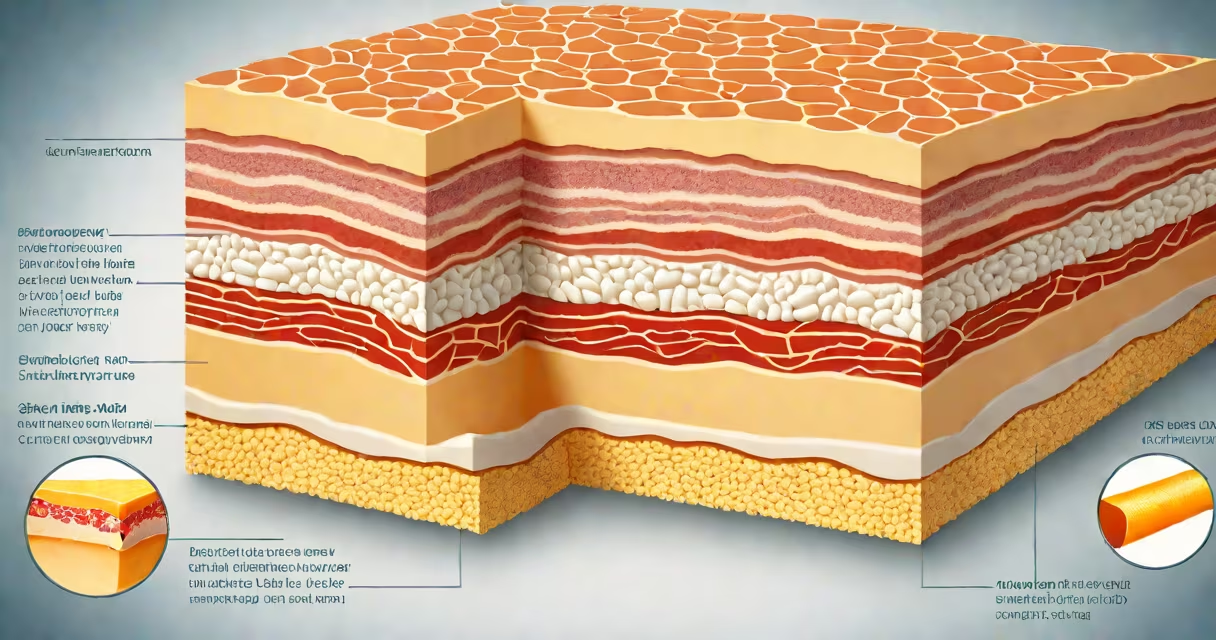
Subcutaneous describes the layer of tissue directly beneath the skin, composed mainly of fat and connective fibers. It serves as insulation, energy storage, and cushioning against impact.
This anatomical layer lies between the dermis and deeper fascia. It contains blood vessels, nerves, and adipocytes-fat-storing cells. Its thickness varies by body region and individual, being most prominent in the abdomen, buttocks, and upper arms.
Medical professionals use "subcutaneous" to describe injections administered into this layer, such as insulin or certain vaccines. These are called subcutaneous injections because they deliver medication just below the skin surface, avoiding muscle tissue.
The subcutaneous layer acts as a shock absorber during falls or impacts. Fat cells store excess energy and release fatty acids during fasting. It also insulates the body, helping maintain core temperature in cold environments.
Nerve endings in this layer detect pressure and touch. When compressed, they send signals to the brain, contributing to tactile sensation. Damage to these nerves can result in numbness or altered sensitivity in affected areas.
During wound healing, fibroblasts in the subcutaneous layer produce collagen to repair torn tissues. This process supports scar formation and tissue integrity after injury.
Subcutaneous tissue is primarily composed of adipose tissue, loose connective tissue, and vascular structures. Adipose tissue stores triglycerides and releases hormones like leptin, which regulate appetite and metabolism.
There are two main types of fat within this layer:
| Type | Function | Location |
|---|---|---|
| White adipose tissue | Energy storage, thermal insulation | Abdomen, thighs, hips |
| Brown adipose tissue | Heat production via thermogenesis | Neck, shoulders, around the kidneys |
Brown adipose tissue is metabolically active and burns calories to generate heat. It's more prevalent in infants and hibernating animals but remains functional in adults, especially under cold exposure.
Subcutaneous injections are common in chronic disease management. Insulin is typically administered subcutaneously because the tissue absorbs it slowly and predictably. A 2020 study in *The Lancet* confirmed that subcutaneous insulin delivery results in stable glucose control with fewer hypoglycemic episodes compared to intravenous routes.
One misconception is that subcutaneous means "deep." In reality, it's the shallowest layer beneath the skin. Deeper structures include the deep fascia, muscles, and bones. Confusing subcutaneous with deeper tissues can lead to improper injection technique and reduced drug efficacy.
A non-obvious fact: subcutaneous tissue can swell due to fluid accumulation, known as edema. This swelling often appears as pitting edema-when pressed, the area indents and takes seconds to return to normal. Pitting edema in the lower legs may signal heart failure, kidney disease, or venous insufficiency.
Subcutaneous emphysema occurs when air leaks into the subcutaneous space. This usually happens after trauma to the chest or neck, such as a fractured rib puncturing the lung. Air travels along tissue planes, causing a crackling sensation under the skin-known as crepitus.
For example, a 42-year-old man involved in a motor vehicle accident developed subcutaneous emphysema after a left-sided rib fracture lacerated his lung. On physical exam, the physician felt a crunching sensation when pressing on his neck and chest. Imaging confirmed air tracking through the subcutaneous layers. Treatment focused on stabilizing the lung and preventing infection.
Subcutaneous emphysema is not always serious. In minor cases, such as after a dental procedure involving local anesthesia with gas, air may enter the tissue and resolve spontaneously within days. However, widespread involvement requires imaging and monitoring to rule out life-threatening conditions like pneumomediastinum.
Understanding the difference between subcutaneous emphysema and cellulitis is critical. Cellulitis presents as red, warm, painful skin with spreading inflammation. Subcutaneous emphysema feels firm and crackles under the fingers but lacks warmth or redness. Misdiagnosing the two can delay proper treatment.
In my years working in emergency medicine, I've seen patients arrive with facial swelling after a fall. One case stands out: a woman who fell on her face while skiing. She had bruising and swelling on her cheek, but the skin felt like rice paper under pressure. Palpation revealed a distinct crackling-crepitus-indicating subcutaneous air. CT scan showed a zygomatic bone fracture with air tracking into the subcutaneous plane. Early recognition prevented complications.
Subcutaneous refers to the tissue layer beneath the skin, not deep within the body. It plays roles in insulation, energy storage, and sensory perception. Medical procedures like insulin injections target this layer for controlled absorption.
Knowing what is subcutaneous helps interpret physical exams, understand injection sites, and recognize abnormal findings like crepitus. This foundational knowledge improves patient outcomes across primary care, surgery, and emergency settings.