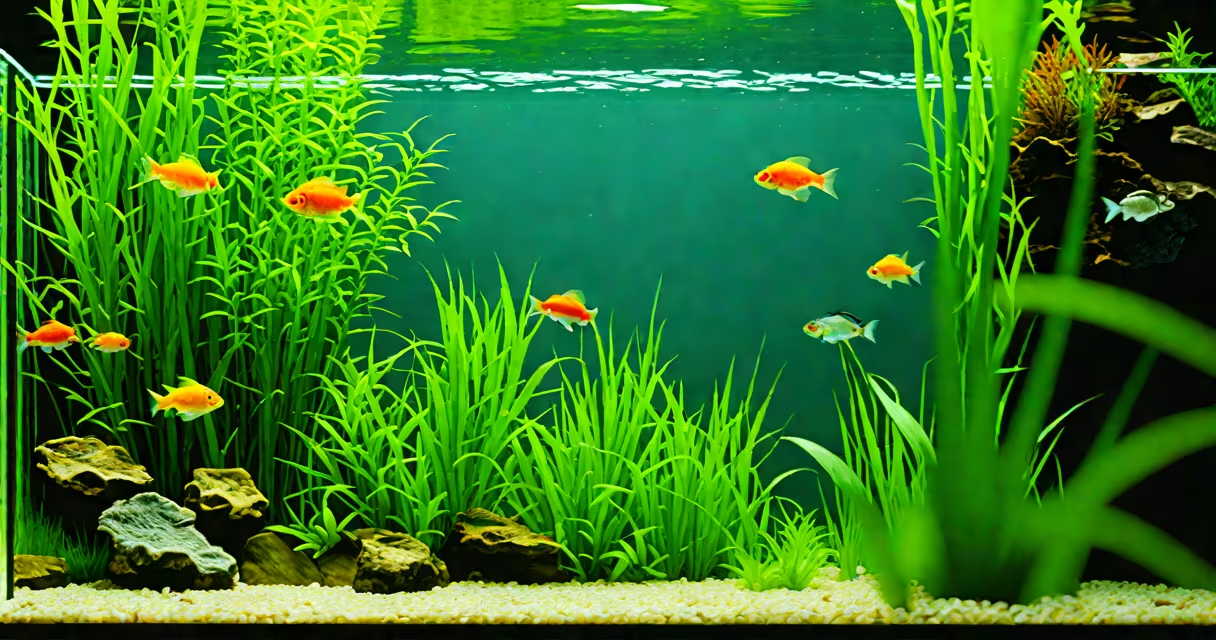
The ideal pH for a freshwater tank is between 6.5 and 7.5. This range maintains stability for most tropical fish species and supports beneficial bacterial colonies essential for nitrogen cycling.
Pure water has a pH of 7.0, which is neutral. In nature, freshwater bodies often fall slightly below or above this due to dissolved minerals and organic material. For home aquariums, pH levels within 6.5-7.5 ensure fish health, prevent stress-related diseases, and support plant growth. Levels outside this range can disrupt osmoregulation-the process by which fish maintain internal salt and water balance-and lead to gill damage or reduced oxygen uptake.
According to the American Fisheries Society, consistent pH fluctuations greater than 0.5 units within 24 hours can trigger physiological stress in fish, increasing mortality risk. A stable pH is more critical than hitting a single number. Most community tanks thrive when pH remains steady near 7.0, especially when housing species like tetras, guppies, and dwarf cichlids.
pH measures hydrogen ion concentration in water. On the pH scale, 7.0 is neutral; values below 7.0 are acidic, and above 7.0 are basic (alkaline). In a freshwater tank, pH is influenced by substrate, decor, tap water source, biological load, and plant respiration.
During the day, aquatic plants consume carbon dioxide (CO₂) and release oxygen through photosynthesis. This reduces acidity and raises pH slightly. At night, plants respire, releasing CO₂ and lowering pH. Daily swings of 0.2-0.5 points are normal and generally harmless if the average stays within 6.5-7.5.
Ammonia produced by fish waste and decaying food lowers pH over time. Beneficial bacteria in filters convert ammonia to nitrite, then to nitrate-processes that also affect pH. High nitrates can contribute to lower pH, especially in soft water systems. Regular water changes help stabilize pH by removing accumulated acids and replenishing buffering capacity.
Tap water varies widely in pH depending on local geology and treatment. Municipal supplies often have pH between 7.0 and 8.0. Soft water from rain-fed sources may be naturally acidic (pH 5.5-6.5), while hard water rich in calcium and magnesium tends to be alkaline (pH 7.5-8.5).
Using reverse osmosis (RO) water removes minerals entirely, resulting in pH around 5.5-6.0. Without re-mineralization, RO water cannot sustain most fish long-term. Mixing RO water with tap water allows control over pH and hardness. For example, mixing 50% RO water with 50% tap water can bring pH down from 7.8 to 7.2, ideal for African cichlids.
| Water Type | Typical pH Range | Best For |
|---|---|---|
| Tap water (city supply) | 7.0-8.0 | Tropical fish, livebearers, barbs |
| Soft, rainwater-derived | 5.5-6.5 | Neon tetras, discus, South American species |
| Hard, mineral-rich | 7.5-8.5 | African cichlids, livebearers, some catfish |
| Reverse osmosis (RO) | 5.5-6.0 | Only after re-mineralization |
Many aquarists assume that pH must be exactly 7.0. This is incorrect. Fish adapt to their native pH ranges. A guppy from a river with pH 6.8 will suffer stress if moved to a tank at pH 7.8 without acclimation. Sudden shifts matter more than the absolute value.
Another error is using pH adjusters like vinegar or baking soda without testing buffer capacity. Adding acid or base without understanding carbonate hardness (KH) leads to unstable pH. KH measures resistance to pH change. Low KH (<5 dKH) causes rapid swings; high KH (>10 dKH) resists change but may raise pH too high.
I once maintained a 55-gallon tank with 15 neon tetras. After a week of daily 10% water changes using tap water (pH 7.3), the tank pH dropped to 6.4. Testing showed KH was 3 dKH-too low to buffer changes. I added crushed coral to the filter media, raised KH to 8 dKH, and stabilized pH at 6.8. The fish stopped gasping at the surface. This shows that pH management requires understanding both pH and KH together.
Use a liquid test kit or digital meter calibrated monthly. Test strips are unreliable for precise readings. Always test at the same time of day-preferably morning, before feeding. Record results weekly to track trends.
To raise pH, add crushed coral, limestone chips, or sodium bicarbonate (baking soda) in small amounts. Use 1/4 tsp per 10 gallons to raise pH by ~0.1. Monitor closely. To lower pH, use peat moss in a filter bag or reverse osmosis water mixed with tap water. Avoid commercial pH-lowering products unless labeled safe for aquariums.
Never make large adjustments. Change pH by no more than 0.2 per day. Rapid shifts cause osmotic shock. When introducing new fish, acclimate them slowly by floating the bag in the tank for 15 minutes, then adding small amounts of tank water every 5 minutes over 30 minutes.
Stable pH within 6.5-7.5 is optimal for most freshwater tanks. Consistency matters more than precision. Monitor KH alongside pH. Adjust gradually. Match water parameters to your fish's natural habitat. A well-balanced system reduces disease and extends lifespan.