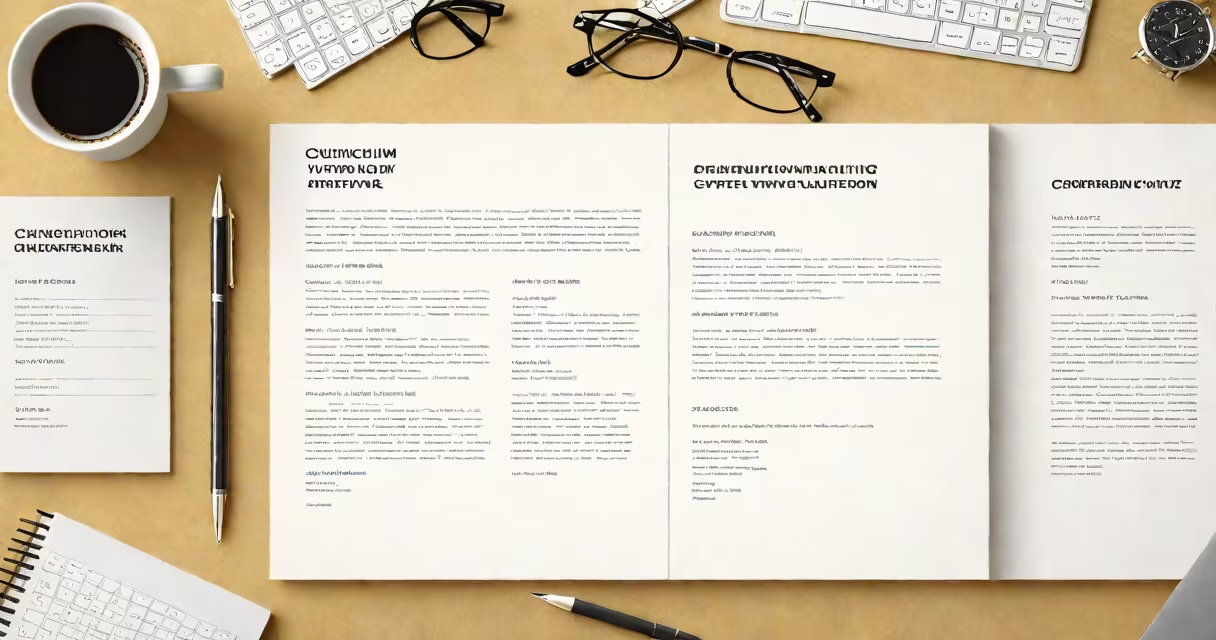
A curriculum vitae (CV) is a detailed document listing your academic qualifications, professional experience, publications, presentations, and other achievements relevant to a job or academic position. It typically spans multiple pages and is used primarily in academia, research, and international roles.
Unlike a resume, which is usually one page and tailored to specific jobs, a CV chronologically details your entire career path. It serves as a formal record of your professional process, emphasizing depth over brevity. For example, a university professor applying for a tenure-track role will include peer-reviewed articles, grant funding history, and teaching evaluations.
The standard format includes sections such as personal information, professional summary, education, work experience, publications, presentations, awards, and references. Each section builds a narrative of your expertise and impact. According to the University of Cambridge Careers Service, a well-structured CV should reflect both competence and consistency across time.
Your CV begins with a concise personal statement that summarizes your professional identity. This section should show your field, years of experience, key specializations, and career goals. A strong summary avoids generic phrases like "hard worker" and instead states measurable outcomes, such as "10+ years in clinical research with five published studies in peer-reviewed journals."
Education is listed in reverse chronological order. Include degree titles, institutions, graduation dates, and relevant honors. For graduate applicants, list coursework only if it directly relates to the role. The Harvard Graduate School of Education advises including dissertation titles and advisors for PhD candidates.
Work experience should detail positions held, organizations, durations, and responsibilities. Use action verbs and quantify results. Instead of "Responsible for managing team projects," write "Led a team of six researchers in completing three NIH-funded studies within budget and ahead of schedule."
Publications are critical for academic and research roles. List them under a dedicated section with full citation details. Use a consistent style-APA, MLA, or Chicago-based on your field's norms. For example:
Presentation and conference participation demonstrate visibility in your field. Include the event name, location, date, and whether you were a speaker or attendee. A single appearance at a major conference like the American Psychological Association Annual Convention adds credibility.
Awards and grants validate your standing. Name the award, granting organization, date, and significance. For example: "National Science Foundation Graduate Research Fellowship (2021-2024), awarded to top 10% of applicants nationwide."
Many people confuse a CV with a resume. A resume is a one-page summary tailored to a specific job. A CV is complete and cumulative. In the UK and Europe, CVs are standard; in the U.S., resumes dominate except in academia and medicine.
Another mistake is listing irrelevant jobs. A 2022 study by the National Association of Colleges and Employers found that hiring managers reject 75% of applications with unrelated entry-level roles. Focus on experiences that align with the position's requirements.
Some applicants include personal details like marital status, religion, or photos-especially in the U.S. These are not only unnecessary but may lead to bias. The U.S. Equal Employment Opportunity Commission prohibits such information in hiring documents.
Dr. Elena Rodriguez applied for a postdoctoral fellowship in environmental policy at a European university. Her CV included:
This structure demonstrated her expertise and alignment with the fellowship's focus areas.
Before sending your CV, verify all entries are accurate and verifiable. Double-check dates, spellings, and publication details. Use tools like Grammarly or Hemingway Editor to eliminate errors.
Ensure the file is saved as a PDF unless otherwise requested. Name the file using your full name and the role, e.g., "Elena_Rodriguez_CV_Academic_Fellowship.pdf."
Always tailor your CV to the opportunity. A CV for a research grant application differs from one for a faculty job. Show the most relevant experiences and adjust your summary accordingly.
Remember: a CV is not a static document. Update it regularly-after each publication, presentation, or new role. Keep it current and precise. Your CV reflects not just what you've done, but how you communicate your value.