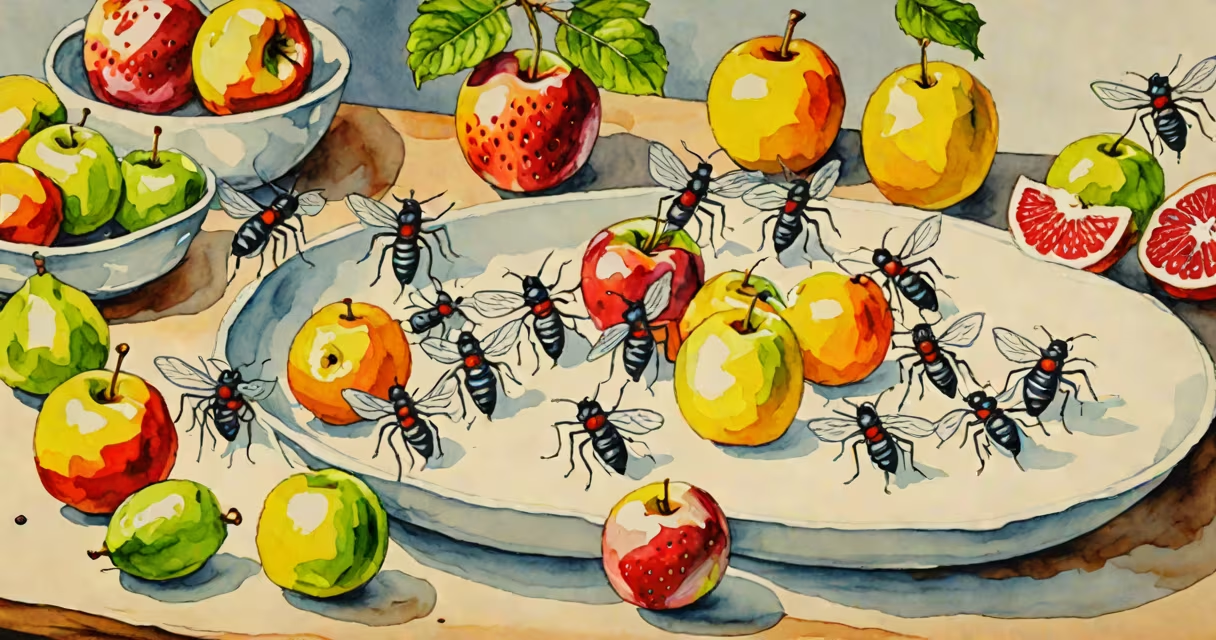
Gnats are small flying insects, typically 1-3 mm long, that irritate humans through swarming behavior, biting, and infesting homes and food. Their persistence stems from biology, environment, and sensory triggers that make them hard to ignore.
These insects belong to several families, including fungus gnats (Sciaridae), drain flies (Psychodidae), and fruit flies (Drosophilidae). While most don't bite, some species like the fungus gnat can deliver a mild pinch. More commonly, annoyance comes from their presence in large numbers, especially around damp areas, decaying matter, or ripe fruit.
Unlike larger pests, gnats don't cause structural damage. But their sheer numbers and erratic flight patterns disrupt focus, invade personal space, and trigger anxiety in people sensitive to insects. A single female can lay up to 300 eggs in moist soil or rotting material, leading to rapid population growth indoors.
Gnats annoy because they exploit human environments with precision. They detect moisture, warmth, and carbon dioxide-signs of living hosts-and fly toward them. This makes kitchens, bathrooms, and plant pots prime targets. Their flight is unpredictable, often circling heads or landing on skin, which triggers reflexive swatting and stress.
Fungus gnats, common in houseplants, thrive in wet potting soil. A single infestation can produce hundreds of adults within 14 days. They don't feed on blood but may bite lightly, causing minor itching. Fruit flies, though smaller, are drawn to fermenting sugars in overripe fruit, beer, or trash. Their constant buzzing near food creates a psychological burden, even if they pose no health risk.
One study from the University of California Agriculture and Natural Resources notes that gnat populations can double every 5-7 days under ideal conditions. In homes with high humidity and poor ventilation, this leads to persistent infestations that feel unmanageable despite cleaning.
Gnats have a thin exoskeleton, six legs, and one pair of wings. Their bodies are segmented, and their eyes are large relative to size-up to 80% of their head surface. This gives them excellent motion detection, allowing them to dodge swats with surprising speed.
They reproduce rapidly. Fungus gnats lay eggs in moist soil; larvae feed on fungi and plant roots. Drain flies breed in gelatinous film inside pipes, thriving in dark, damp drains. Fruit flies prefer fermenting sugars, laying eggs on the surface of overripe bananas or spilled wine.
For example, a single fruit fly can lay 500 eggs in two weeks. Each egg hatches in 12-24 hours. Larvae develop into adults in 8-10 days. With four generations per year in warm homes, a few flies can become a swarm in less than a month.
Many people mistake gnats for mosquitoes or fruit flies. Mosquitoes are larger, longer-legged, and require blood meals. Gnats are smaller, shorter-legged, and mostly feed on fungi, decaying plants, or nectar. Fruit flies are similar in size but differ in wing pattern-fruit flies have red eyes and distinct dark bands on wings.
A frequent error is assuming all gnats are pests. Some species, like certain fungus gnats, are beneficial in nature-they break down leaf litter and support soil ecosystems. However, in homes, they become nuisances due to their breeding sites.
Another myth: gnats are attracted to light. While some species are phototactic, most are drawn to moisture and organic decay. Placing a light trap near a sink won't solve a gnat problem unless the source of moisture is also addressed.
In a 2022 case documented by the National Pest Management Association, a family reported constant gnat activity in their kitchen. The source was a potted basil plant placed near a window. Soil remained damp due to overwatering. Within 10 days, dozens of adult gnats emerged.
The family tried wiping counters and sealing food. But the gnats kept returning. Only after removing the plant, letting the soil dry completely, and replacing it with well-draining mix did the infestation end. They also used a vinegar trap (one cup apple cider vinegar, a drop of dish soap, covered with plastic wrap and punctured holes) to catch adults.
This shows that targeting the breeding site-not just the visible adults-is essential. Cleaning alone fails if the root cause remains.
| Type | Size | Breeding Site | Behavior | Control Method |
|---|---|---|---|---|
| Fungus gnat | 1-3 mm | Wet potting soil | Flies low, circles plants | Let soil dry; use sticky traps |
| Drain fly | 1-2 mm | Damp pipe film | Slow, crawling flight | Clean drains; use enzyme cleaners |
| Fruit fly | 2-4 mm | Rotten fruit, trash, spills | Fast, erratic flight | Seal food; use vinegar traps |
Each type requires different control strategies. For example, using a fan to disrupt airflow stops fruit flies from landing on fruit but does nothing against drain flies, which live in plumbing.
I once spent a week tracking gnats in my apartment after noticing them near a compost bin. After identifying them as fungus gnats, I removed the bin, replaced the soil in my fern, and set up yellow sticky traps. Within five days, activity dropped by 90%. The lesson: identify the species and attack the source.
Why are gnats so annoying? Because they exploit our routines and spaces with biological precision. They thrive in places we overlook-damp soil, old fruit, slow drains-and multiply faster than we can react. Their small size makes them hard to see until they're everywhere. The solution isn't chasing them but fixing the conditions that allow them to survive.