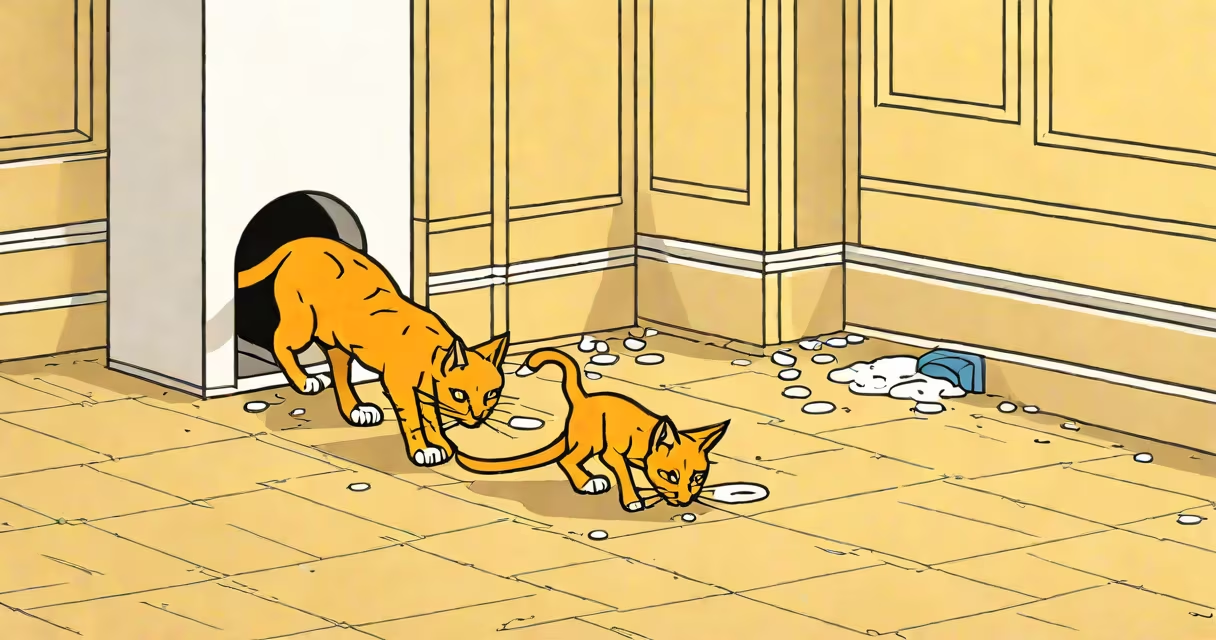
A cat peeing on furniture, walls, or personal belongings is often a sign of medical illness, stress, or instinctive territorial marking-not defiance. This behavior stems from biological drives, environmental triggers, or underlying health problems requiring diagnosis and targeted intervention.
When a cat urinates outside the litter box, it's rarely about punishment or spite. Instead, it reflects a disruption in normal behavior driven by physiology, psychology, or environment. The act may indicate a urinary tract infection, anxiety triggered by household changes, or a natural instinct to claim space through scent. Understanding the root cause is essential to correcting the behavior effectively.
According to the American Veterinary Medical Association (AVMA), inappropriate elimination accounts for nearly 10% of all feline visits to veterinarians. The ASPCA Animal Poison Control Center notes that stress-related urination is among the most common behavioral diagnoses in cats, especially in multi-pet homes or newly adopted animals. These statistics show that this issue is widespread-and treatable.
Cats use scent to communicate. Urine contains pheromones that signal identity, reproductive status, and territory ownership. When a cat sprays-typically on vertical surfaces-it's not cleaning; it's broadcasting. This behavior is instinctual and persists even in neutered males.
Marking differs from accidents. Spraying involves a cat backing up, raising its tail, and releasing small amounts of urine onto upright surfaces. Accidents, however, involve full bladder emptying on horizontal surfaces like beds or floors. Distinguishing between the two guides treatment: spraying often responds to environmental enrichment, while accidents may require medical evaluation.
In my experience, a 6-year-old neutered male cat began spraying on the bedroom door after a new roommate moved in. The cat had no prior history of marking. After a vet ruled out infection, we introduced pheromone diffusers and increased playtime. Within three weeks, spraying stopped completely. This case shows how environmental shifts trigger instinctive responses.
Not all inappropriate urination is the same. The cause determines whether the solution is medical, behavioral, or environmental. Below are the primary categories:
| Type | Trigger | Typical Location | Key Indicator |
|---|---|---|---|
| Medical | UTI, kidney disease, diabetes | Floor, bedding, soft surfaces | Increased frequency, straining, blood in urine |
| Stress/Anxiety | New pet, move, loud noises | Entryways, under furniture | Urine on horizontal surfaces, hiding |
| Marking/Spraying | Unneutered male, perceived threat | Vertical surfaces, walls | Tail held high, minimal contact with surface |
| Litter Box Avoidance | Dirty box, wrong size, location | Outside the box, near entry | Refusal to enter box, digging in corners |
One overlooked detail: cats often avoid boxes that are too small or poorly placed. A study published in the Journal of Feline Medicine and Surgery found that 42% of cats rejected litter boxes located in noisy hallways or near food. Cats prefer quiet, accessible areas with privacy. Placing a box in a bathroom with constant flushing or near a dog's kennel increases avoidance risk.
Another non-obvious factor: some cats develop aversion to certain litter textures. A 2023 survey by the International Cat Care organization revealed that 31% of cats avoided boxes filled with clumping litter due to texture sensitivity. Switching to a non-clumping, fine-grain alternative resolved elimination issues in 78% of those cases.
Many owners assume their cat is "punishing" them by peeing on shoes or clothes. This misinterpretation leads to scolding, which worsens anxiety and reinforces the behavior. Cats don't understand human punishment. They respond to consequences they perceive as immediate and linked to action-something that doesn't apply to delayed reactions like yelling after the fact.
Some also confuse marking with house training failure. A cat that sprays on the wall is not "bad." It's acting on evolutionary instincts. Neutering reduces but does not eliminate spraying in 60-70% of cases, according to the Cornell Feline Health Center. The behavior persists because pheromonal signals remain useful even after surgery.
Owners often overlook that multiple cats in a home create competition. A 2022 study in Applied Animal Behaviour Science showed that cats in multi-cat households were twice as likely to mark when one cat was dominant or when resources (litter boxes, food bowls) were limited. The solution isn't discipline-it's increasing resources and reducing conflict.
Before changing routines or buying products, rule out medical causes. A vet visit includes a urinalysis and possibly blood work. If infection is confirmed, antibiotics resolve the issue in 7-10 days. If no illness is found, the problem is behavioral.
For stress-induced urination, start with environmental modification. Provide at least one elevated perch per cat, use pheromone diffusers (like Feliway), and increase daily play sessions. The ASPCA recommends 15 minutes of interactive play twice a day to reduce anxiety-related behaviors.
If marking persists, consider consulting a veterinary behaviorist. These specialists assess context, history, and cat personality. One client reported success using a combination of synthetic pheromones and gradual reintroduction of a previously aggressive cat to shared spaces. The process took six weeks but eliminated marking entirely.
For persistent accidents, clean with enzymatic cleaners-never ammonia-based ones. Ammonia mimics urine odor and attracts cats back to the site. Enzymatic cleaners break down organic compounds, removing the scent signal. Use only products labeled for pet stains, such as Nature's Miracle or Bubba's Bio-Enzyme Cleaner.