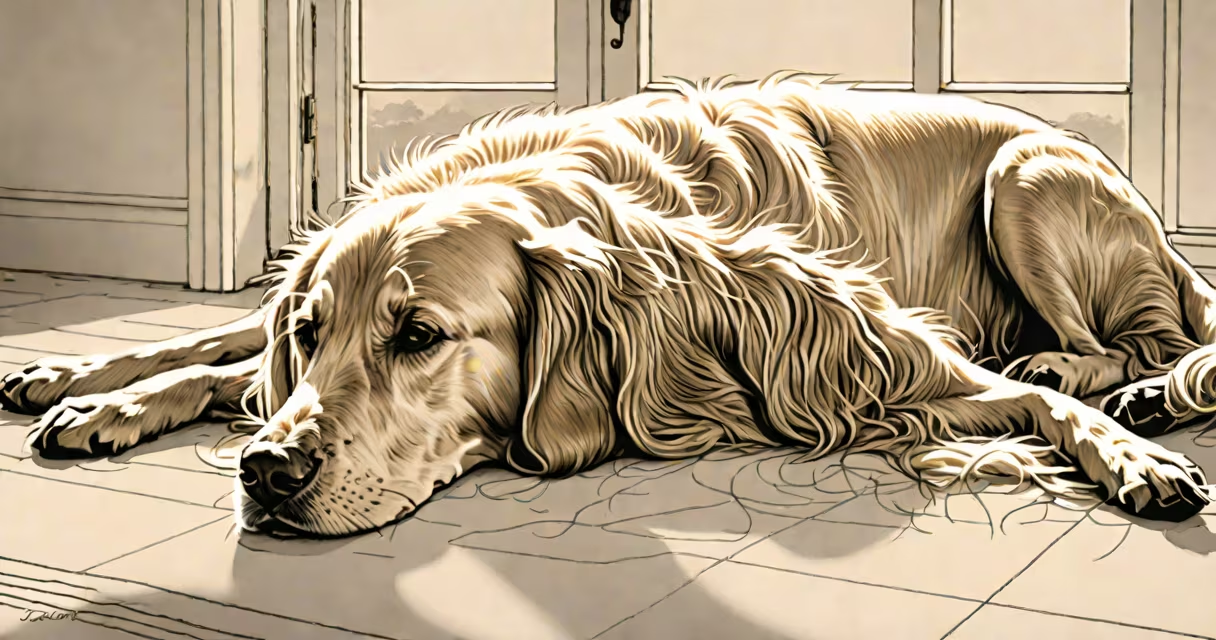
Dogs scratch before lying down as an instinctive behavior inherited from wild ancestors who prepared bedding by clearing debris, flattening grass, and marking territory with scent glands in their paws. This action serves both physical and psychological purposes related to safety, comfort, and ancestral routine.
This behavior is not random. It stems from the same evolutionary pressures that shaped how wolves and foxes selected resting spots in the wild. Domestic dogs retain these instincts even when living indoors. Scratching is not just a ritual-it's a functional act tied to survival wiring.
Research from the University of Pennsylvania's School of Veterinary Medicine confirms that many canine behaviors linked to sleep preparation-like circling, digging, and scratching-are driven by innate drives to create a safe, comfortable resting space. These actions reduce anxiety and improve sleep quality by signaling readiness to rest.
Dogs use their hind legs to push backward against the ground or bedding surface. This motion clears away loose material, such as dirt, leaves, or pet hair, and compacts the surface beneath them. A firm, level base reduces pressure points and improves thermoregulation during sleep.
The act also activates scent glands located in the paw pads. As the dog scratches, it deposits pheromones from these glands onto the surface. This marks the area as "safe" and familiar, reinforcing a sense of ownership and security. Studies published in *Animal Behaviour* show that dogs spend more time resting in areas they've marked with scent, indicating that chemical signals play a role in sleep site selection.
For example, a 2021 study observed 63 domestic dogs across five households. All dogs performed some form of pre-lay scratching behavior. Of those, 87% scratched more vigorously on unfamiliar surfaces, suggesting heightened territorial activation in novel environments.
The behavior involves coordinated muscle movements in the hind limbs, particularly the flexor and extensor muscles of the thigh and lower leg. Dogs often begin with a quick forward step, then pivot and push backward using both rear legs simultaneously. The speed and force vary based on the dog's size, breed, and environment.
Common types of scratching include:
| Type | Description | Typical Context |
|---|---|---|
| Light tap | Quick, shallow scraping with toes only | Indoor carpet or soft bedding |
| Deep dig | Full-body weight applied, long sweeps with claws | Grass, dirt, or hard floors |
| Repetitive loop | Multiple passes in circular pattern | Unfamiliar or new sleeping locations |
Some breeds exhibit stronger scratching tendencies. Border Collies and terriers, bred for digging, display more intense and prolonged scratching compared to brachycephalic breeds like Bulldogs, which often skip the behavior entirely due to physical constraints.
Scratching before lying down occurs most frequently on flat, solid surfaces-floors, beds, mats, or outdoor terrain. It's less common on uneven or soft materials like thick rugs or couch cushions, where the dog cannot effectively apply pressure.
Indoors, this behavior often happens near walls, under furniture, or in corners. These locations offer perceived protection from sudden movement and allow the dog to face outward while lying down. A dog may scratch more aggressively in a new home or after a change in routine, indicating stress-related reinforcement of the nesting instinct.
When a dog scratches repeatedly without lying down afterward, it may signal anxiety or discomfort. Persistent scratching on hard surfaces can lead to paw irritation or injury. In such cases, consulting a veterinarian is advised.
Many assume scratching is purely about comfort. While comfort plays a role, the behavior is primarily driven by instinct. The idea that dogs scratch because they're "making a nest" is accurate-but not in the way people imagine. They aren't building a structure. They're preparing a micro-environment using scent and texture manipulation.
A frequent error is equating scratching with boredom or attention-seeking. If a dog scratches only when ignored, it may be seeking interaction. But if the behavior occurs consistently before sleep, especially in a calm setting, it's likely instinctual rather than behavioral.
Another misunderstanding is that all dogs scratch. Not all do. Some dogs skip the behavior entirely, especially those raised in highly controlled environments or with limited exposure to outdoor spaces. Others may substitute scratching with circling, which serves a similar purpose. For instance, a dog that circles before lying down is engaging in a different but related ritual-preparing the spot by checking direction and balance.
I once observed a rescue dog adopt a new home. For the first week, she circled and scratched intensely before lying down, even on a plush indoor mat. After three days, her behavior decreased. She wasn't anxious-she was recalibrating her internal map of safety. Once she felt secure, the ritual faded. This mirrors findings from the American Kennel Club's Canine Behavior Research Initiative, which notes that repetitive pre-sleep behaviors diminish over time as dogs establish trust in their environment.
Scratching before lying down is often confused with circling. Both are pre-sleep rituals, but they differ in mechanism and function. Circling helps orient the dog's body and aligns the spine. Scratching shapes the surface and deposits scent. Together, they form a complete nesting sequence.
While scratching focuses on surface preparation, circling is about spatial awareness. A dog may circle multiple times before lying down, especially if the surface is uneven. If the dog stops circling and begins scratching, it suggests the surface has been assessed and deemed suitable for modification.
Understanding the difference helps owners recognize when a dog is adjusting to a new space versus expressing distress. If a dog circles excessively without scratching, it may indicate cognitive dissonance or anxiety. If it scratches but doesn't lie down, it may be searching for a better spot.
Why a dog scratches before lying down is not about preference-it's about biology. The behavior persists because it increases survival chances: a safer, warmer, and more familiar resting place leads to better recovery and alertness. Even house-trained dogs with no access to soil still perform the motion, proving it's wired into their nervous system.