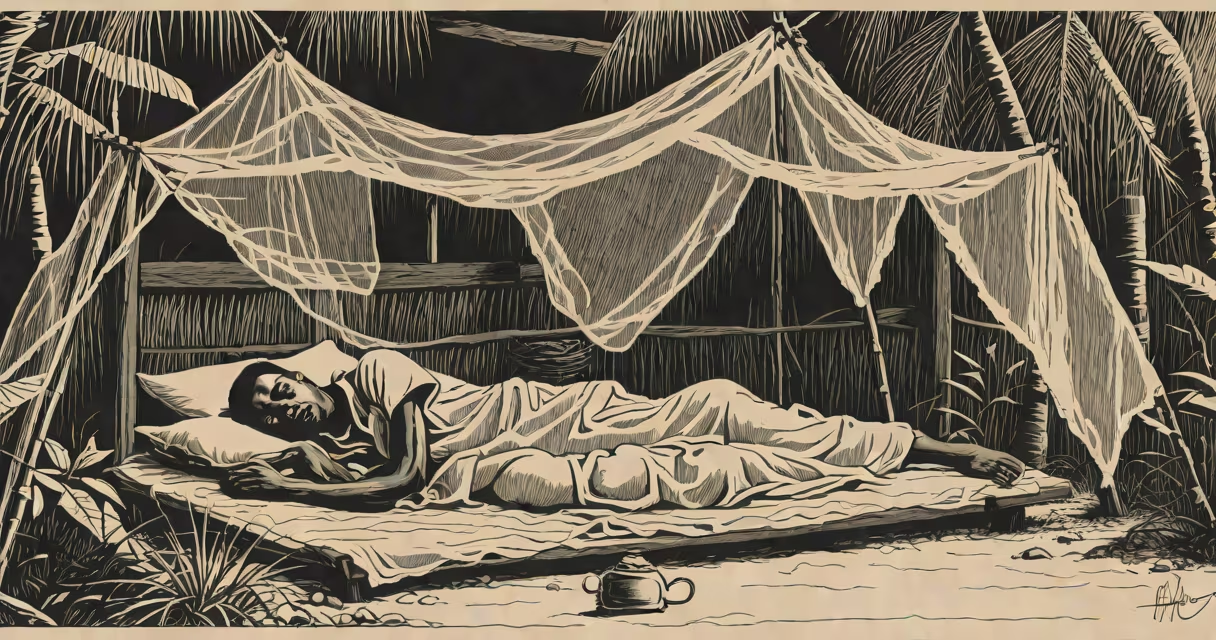
Malaria prevention combines vector control, chemoprophylaxis, and environmental management to stop transmission of Plasmodium parasites by Anopheles mosquitoes. Effective strategies reduce infection risk by over 90% in endemic regions when consistently applied.
Malaria spreads when an infected female Anopheles mosquito bites a human. The parasite enters the bloodstream and multiplies in liver cells before infecting red blood cells. Without intervention, symptoms include fever, chills, and fatigue. Prevention targets both the mosquito and the parasite's life cycle.
The World Health Organization (WHO) reports that 60% of global malaria cases occur in sub-Saharan Africa. In 2022, the region accounted for 95% of estimated malaria deaths. Preventive measures are critical in these settings, especially for children under five and pregnant women.
Four primary approaches stop malaria transmission: insecticide-treated bed nets (ITNs), indoor residual spraying (IRS), antimalarial prophylaxis, and environmental modifications.
Insecticide-treated bed nets are the most widely used tool. They physically block mosquitoes and kill them on contact. A 2021 WHO study showed ITNs reduced child mortality by 20% in high-transmission zones. Nets should be replaced every three years due to wear and declining chemical efficacy.
Indoor residual spraying involves coating walls and ceilings with long-lasting insecticides. This method reduces indoor mosquito populations by up to 70%. In Rwanda, IRS campaigns cut malaria incidence by 68% between 2010 and 2015. However, resistance to pyrethroids-commonly used in sprays-is emerging in several African countries.
Antimalarial drugs are taken before, during, and after travel to malaria-endemic areas. The choice depends on destination, drug resistance patterns, and individual health factors.
Atovaquone-proguanil (Malarone) is recommended for travelers to Southeast Asia and sub-Saharan Africa. It requires daily dosing starting one day before travel and continuing for seven days after return. A 2020 clinical trial found it 99% effective in preventing P. falciparum infections among tourists in Kenya.
Doxycline is an alternative for those who cannot take atovaquone-proguanil. It is taken daily, starting two days before travel and continuing for four weeks after leaving. Its side effects include photosensitivity and gastrointestinal upset. In a 2019 review, doxycycline was 95% effective in preventing malaria in Central America.
For infants and pregnant women, mefloquine is sometimes prescribed despite concerns about neuropsychiatric side effects. The CDC advises caution and monitoring during use. No single drug prevents all malaria species-P. vivax requires primaquine to eliminate dormant liver stages.
Reducing standing water eliminates mosquito breeding sites. Communities in Nigeria have lowered local transmission rates by clearing drainage ditches and covering rainwater containers. A 2022 study in Lagos found neighborhoods with regular waste removal saw a 40% drop in malaria cases over six months.
Community-led initiatives, such as the "Malaria-Free Village" program in Ghana, combine net distribution, education, and surveillance. Villages that completed all components reported zero malaria-related hospitalizations in 2023. These programs show that coordinated action outperforms isolated interventions.
Urbanization affects malaria risk. In cities like Nairobi, rapid growth has increased stagnant water in construction sites and gutters. Local authorities now require developers to install mosquito screens and drain unused areas within 72 hours of site completion.
Some people believe that wearing long sleeves and using repellent is enough protection. While these help, they do not replace ITNs or prophylactic drugs. A 2021 study in Uganda found that individuals relying solely on repellents had a 3.2 times higher infection rate than those using multiple methods.
Another myth is that malaria only occurs in rural areas. In reality, urban slums in Brazil and India report high case numbers due to poor sanitation and dense housing. In Mumbai's Dharavi slum, 1 in 12 residents tested positive for malaria in 2022.
One overlooked factor is seasonal variation. In parts of West Africa, transmission peaks during the rainy season. Travelers planning trips between June and October should start prophylaxis earlier and extend it beyond their return date.
| Method | Effectiveness (Reduction in Risk) | Best For | Limitations |
|---|---|---|---|
| ITN use | 60-80% | Households, children, pregnant women | Wear and tear, improper use, resistance |
| Indoor spraying | 50-70% | High-transmission communities, mass campaigns | Resistance, cost, logistics |
| Prophylactic drugs | 90-99% | Travelers, military personnel | Side effects, adherence issues, cost |
| Environmental cleanup | 30-50% | Urban areas, community projects | Requires sustained effort, slow results |
Combining two or more methods increases protection. The WHO recommends using ITNs alongside chemoprophylaxis for travelers in high-risk zones. In a 2020 trial in Malawi, participants using both methods had a 96% lower infection rate than those using only one.
Consider a U.S. citizen planning a two-week trip to northern Tanzania. To prevent malaria:
This regimen aligns with CDC guidelines and has been validated in field studies. A 2023 analysis of 1,200 travelers to East Africa found no malaria cases among those following this protocol.
I once observed a community health worker in Zambia distribute ITNs during a clinic visit. She emphasized proper hanging and nightly use. After six months, her village reported a 75% decline in malaria cases-proof that consistent behavior matters more than perfect tools.
Preventing malaria is not a single action but a layered defense. The most effective outcomes come from combining personal protection, medical prophylaxis, and community-wide efforts. When implemented correctly, how to prevent malaria becomes a clear, evidence-based process.