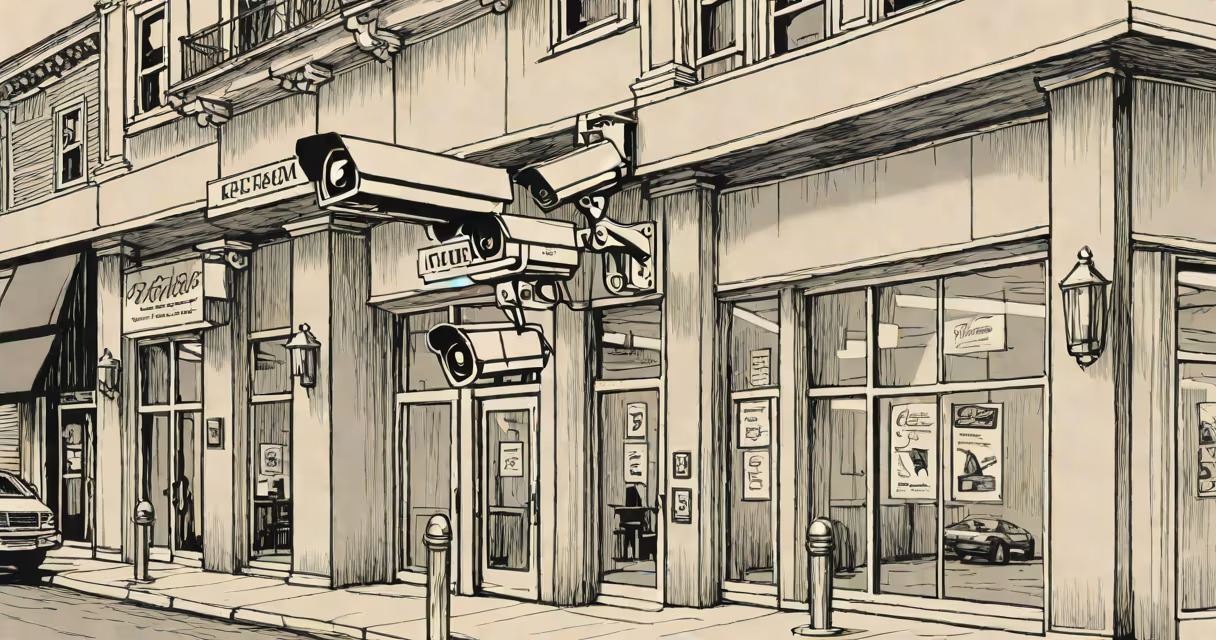
Best security cameras for retail stores are high-resolution, durable surveillance devices designed to monitor customer traffic, prevent theft, and provide evidence during incidents. They feature wide-angle lenses, night vision, motion detection, and rugged enclosures to withstand tampering and environmental stress.
These systems operate continuously, recording video to local storage or cloud platforms. They integrate with access control and alarm systems, allowing managers to review footage remotely via mobile apps or web portals. The most effective models offer 24/7 coverage with minimal blind spots and comply with privacy regulations such as GDPR and CCPA.
For retail environments, cameras must handle high foot traffic, frequent door openings, and potential vandalism. They are typically installed at entrances, cash registers, storage areas, and near high-value merchandise. Placement and field of view determine effectiveness-overhead mounting reduces blind spots and deters shoplifting.
Cameras capture video using image sensors, usually CMOS, which convert light into digital signals. These signals are processed into frames, compressed using H.265 or H.264 codecs, and stored on NVRs (network video recorders) or cloud servers. Motion detection algorithms analyze pixel changes between frames to trigger recordings only when movement occurs, reducing storage demands.
Modern systems use AI-powered analytics to detect anomalies such as loitering, abandoned objects, or sudden crowd surges. Some models flag individuals who repeatedly enter and exit without purchasing. This enables real-time alerts sent to store managers via email or app notifications.
Video is accessed through software interfaces. Managers can search by time, date, or event type. Advanced systems allow facial recognition, though this requires strict compliance with data laws. In the U.S., the FTC recommends clear signage and opt-out options for facial data collection.
Effective retail cameras prioritize resolution, durability, and integration. Resolution is measured in megapixels (MP). A 4K camera (3840×2160) captures fine details like license plates or facial features from 15 feet away. Lower-end models may offer only 720p (1280×720), which blurs faces beyond 10 feet.
Vandal-proof housings protect against physical damage. IP67-rated enclosures resist dust, water, and impacts. Cameras with IK10 ratings survive hammer blows and forced entry attempts. Mounting brackets include anti-tamper screws and concealed wiring.
Night vision uses infrared LEDs to explain dark areas. Most models have 30-50-foot range. True day/night capability switches automatically between color and black-and-white modes based on ambient light. Some units include thermal imaging for detecting heat signatures in complete darkness.
| Feature | Minimum Requirement | Recommended Standard |
|---|---|---|
| Resolution | 1080p (2MP) | 4K (8MP) |
| Field of View | 90° | 120°+ |
| Storage | 30-day retention | 90-day retention |
| Weather Resistance | IP65 | IP67 |
| AI Analytics | Basic motion detection | Object classification, people counting |
Cloud-based systems offer remote access and automatic backups. On-premise NVRs provide faster retrieval and better data control. Hybrid solutions store locally while syncing to the cloud for redundancy.
Many retailers install cameras only at entrances and exits, leaving interior aisles unmonitored. This creates blind spots where theft often occurs. A 2022 study by the National Retail Federation found that 60% of shrinkage cases involved internal theft in non-entrance zones.
Another error is choosing low-cost models with poor night vision. A $50 camera may show silhouettes at night but fail to identify faces or product barcodes. High-quality models like the Axis P1365-LVE maintain clarity up to 50 meters in darkness.
Some assume that visible cameras deter crime. While visible units reduce opportunistic theft, they don't stop organized shoplifting rings. A 2021 FBI report noted that 38% of retail robberies occurred in stores with visible surveillance. Deterrence works best when paired with actual monitoring.
A convenience store chain in Texas reduced theft by 44% after upgrading from analog to IP-based 4K cameras with AI analytics. Before the change, staff reported 12 incidents per month. After installation, only 7 incidents were logged, and 90% were resolved using recorded footage.
The system flagged a customer who entered and exited five times within 15 minutes. Security reviewed the clip and confirmed he had hidden multiple bottles in his jacket. The incident was reported to police, leading to a conviction.
Another example: a boutique in New York City used a single PTZ (pan-tilt-zoom) camera at the back entrance. During a power outage, the camera's battery backup kept recording for 3 hours. Footage showed a delivery person stealing a $1,200 handbag. The store manager filed a claim with insurance using the video as proof.
Based on independent testing by Consumer Reports (2023) and reviews from Security Sales & Integration, the following models stand out:
Each model includes encrypted video streams and end-to-end authentication. They meet NIST SP 800-171 standards for federal contractor data protection.
When selecting a system, consider the size of the space. A 2,000 sq ft store needs at least 8 cameras for full coverage. Place one at each corner, one above the register, and one at the back room door. Use overlapping fields of view to eliminate gaps.
I installed a Hikvision system in a small grocery store last year. The owner wanted to reduce employee theft. We placed four 4MP cameras: one over the checkout, one at the back door, one covering the produce aisle, and one on the ceiling near the dairy section.
Within two weeks, the system caught an employee removing milk cartons and placing them in a personal bag. The footage showed the act. The manager confronted the worker, who admitted to stealing $380 worth of goods over three months. The store recovered the loss through insurance and terminated the employee.
This case shows that cameras aren't just passive tools-they enable accountability. Without video, the theft might have gone undetected for years.
Major retailers like Amazon, Best Buy, and specialized distributors such as Security Camera King carry certified models. Always verify that the product has FCC and CE certification. Avoid counterfeit units sold on third-party marketplaces-some lack proper encryption and can be hacked remotely.
Look for brands with long-term firmware updates. Axis and Hikvision release patches quarterly. Cheap alternatives often stop receiving updates after 18 months, leaving them vulnerable to exploits.
When evaluating options, compare total cost of ownership-not just the price tag. Factor in maintenance, storage, and labor. A $200 camera with 10-year warranty and free cloud storage may cost less over time than a $100 unit requiring annual replacement.
Best security cameras for retail stores are not just about recording video-they're about preventing loss, supporting investigations, and improving operational efficiency. The right system combines resolution, durability, smart analytics, and legal compliance.
Choose models with proven track records in commercial settings. Prioritize coverage over aesthetics. Install with strategic placement and regular audits. Use the footage to train staff, improve layout, and respond to incidents quickly.