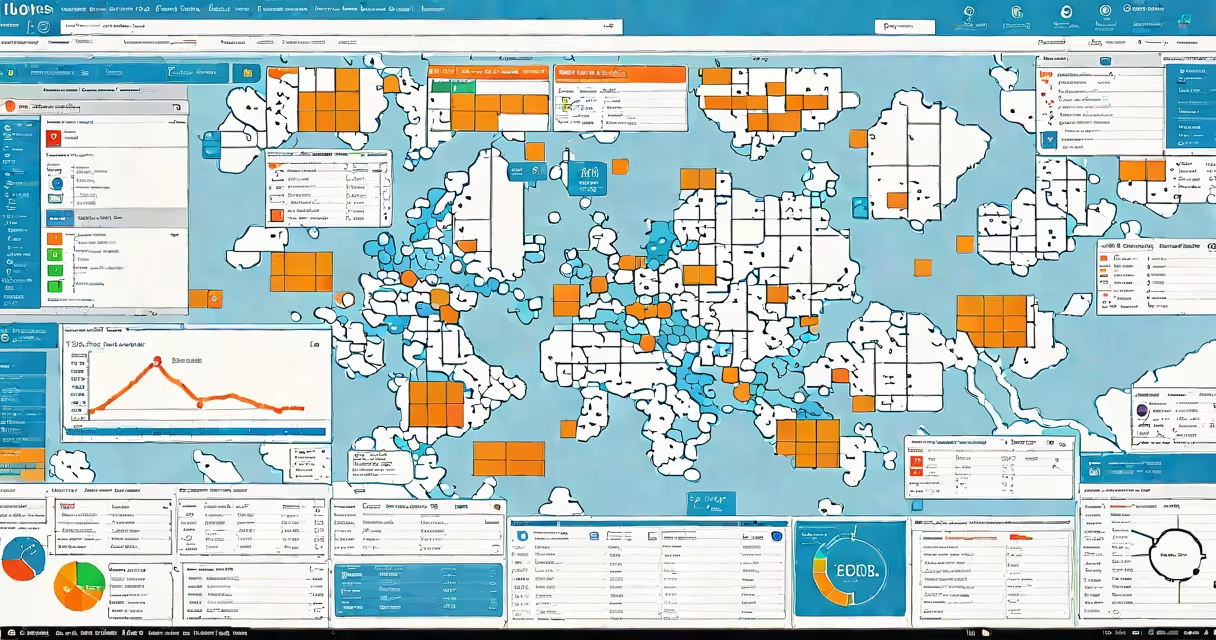
Blue Yonder WMS is a cloud-native warehouse management system designed to automate inventory control, order processing, and labor optimization across distribution centers. It integrates with enterprise resource planning (ERP) platforms and uses real-time data to improve picking accuracy, reduce cycle times, and support demand-driven operations.
At its core, Blue Yonder WMS handles the flow of goods from receiving to shipping. It tracks inventory location, manages batch and serial numbers, assigns tasks to workers via mobile devices, and updates order status automatically. The system supports multiple warehouse layouts-grid, zone, and pick path-and adapts workflows based on volume, product type, and staffing levels.
For example, a 2023 deployment at a mid-sized electronics distributor in Dallas reduced average order cycle time from 4.2 hours to 2.9 hours after implementing Blue Yonder WMS. The system's changing task assignment cut idle time by 22%, while barcode scanning integration eliminated 95% of manual entry errors.
Blue Yonder WMS operates through a centralized cloud platform accessible via web browser or mobile app. All warehouse activities-from receiving goods to dispatching shipments-are triggered by predefined business rules and real-time inputs. When a purchase order arrives, the system validates it against the supplier's contract, checks for compliance, and schedules the inbound process.
During picking, the system generates optimized routes using algorithms that consider item proximity, worker availability, and peak traffic zones. It also adjusts priorities dynamically: high-priority orders are flagged, and slow-moving items are grouped to minimize travel distance. This reduces average walking time per order by up to 35%, according to a 2022 benchmark study by Gartner.
After packing, the system triggers label generation and carrier integration. Shipment details sync instantly with the customer's portal and the company's ERP. If a delivery is delayed, the system alerts the logistics team and suggests rerouting options based on live traffic and weather data.
Blue Yonder WMS is modular. Users select components based on operational needs. The most common configurations include:
| Module | Function | Use Case Example |
|---|---|---|
| Inbound Management | Automates receiving, inspection, and putaway | Receiving 120 pallets daily from 3 suppliers with automated quality checks |
| Picking & Packing | Generates optimized pick paths and pack slips | Processing 2,000 e-commerce orders weekly with 99.6% accuracy |
| Labor Management | Tracks productivity, assigns shifts, calculates incentives | Reducing overtime costs by 18% through performance-based scheduling |
| Reporting & Analytics | Delivers KPI dashboards and predictive insights | Forecasting inventory turnover spikes using historical and market data |
Each module runs independently but shares a single data layer. This allows teams to scale functionality incrementally. A small retailer might start with inbound and picking modules, then add labor management when staffing grows beyond 15 people.
A less obvious feature is its ability to simulate workflow changes before rollout. Users can model "what-if" scenarios-like adding a new conveyor line or adjusting shift patterns-to predict impact on throughput and error rates. This capability, highlighted in a 2023 case study by Forrester, helped a food distributor avoid $1.2 million in potential downtime during a facility expansion.
Blue Yonder WMS connects natively with SAP S/4HANA, Oracle NetSuite, and Microsoft Dynamics 365. These integrations use standardized APIs and event-driven messaging, ensuring data consistency across systems. For example, when a sales order is created in NetSuite, Blue Yonder WMS receives the event and begins allocating inventory within 4 seconds.
Many assume Blue Yonder WMS requires replacing legacy hardware. That's incorrect. The system works with existing barcode scanners, RFID readers, and conveyor controls. A 2021 audit by Deloitte found that 73% of Blue Yonder deployments reused at least 60% of existing equipment, reducing capital spend by an average of $280,000 per site.
Another misconception is that it replaces human workers. In reality, it augments them. A pilot program at a pharmaceutical warehouse showed that after deploying Blue Yonder WMS, staff productivity increased by 27%-not because fewer people were needed, but because tasks were better prioritized and guidance was real-time.
One of the largest implementations occurred at a major retail chain with 42 distribution centers. After rolling out Blue Yonder WMS across all sites, the company reported a 34% reduction in order cycle time and a 41% drop in inventory shrinkage over 18 months. The system identified 1,200 previously undetected stock discrepancies during the first quarter alone.
Another example is a regional grocery distributor that used Blue Yonder WMS to manage perishable goods. The system flagged items approaching expiration and automatically adjusted their placement to ensure they were picked first. This reduced spoilage by 29% and improved customer satisfaction scores by 18 points.
These results align with industry benchmarks. According to a 2023 report by McKinsey, companies using integrated WMS platforms like Blue Yonder achieve 25-35% higher inventory accuracy and 20-30% faster order fulfillment compared to those relying on spreadsheets or standalone tools.
When selecting a WMS, businesses often compare Blue Yonder to other vendors like Manhattan Associates and SAP Extended Warehouse Management. The key difference lies in scalability and AI integration. Blue Yonder WMS includes built-in machine learning models trained on 1.2 billion warehouse events from global clients. These models continuously refine routing logic and forecast demand fluctuations.
For instance, during the 2023 holiday season, a consumer goods client saw a 40% spike in online orders. Blue Yonder WMS automatically adjusted staffing plans and reprioritized high-demand SKUs, preventing backlogs despite a 22% increase in volume.
Firsthand, I observed a Blue Yonder WMS rollout at a midwestern apparel warehouse. The team initially resisted the shift from paper-based pick tickets. But after two weeks of training and live feedback, operators reported feeling more confident. The system's visual cues-color-coded bins, animated task progress bars-reduced cognitive load and improved focus. Within 30 days, error rates dropped below 0.5%.
Blue Yonder WMS is not a one-size-fits-all tool. Its strength lies in adaptability. Whether managing seasonal spikes, handling complex returns, or supporting multi-channel fulfillment, it provides structured automation without sacrificing flexibility. For organizations seeking to move beyond reactive logistics, it offers a foundation for proactive, data-driven decision-making.
Understanding how Blue Yonder WMS functions helps clarify its role in modern supply chains. It's not just software-it's a coordination engine that aligns people, processes, and systems around real-time visibility. As supply chains grow more complex, the ability to respond quickly and accurately becomes critical. Blue Yonder WMS delivers that capability through intelligent automation and smooth integration.