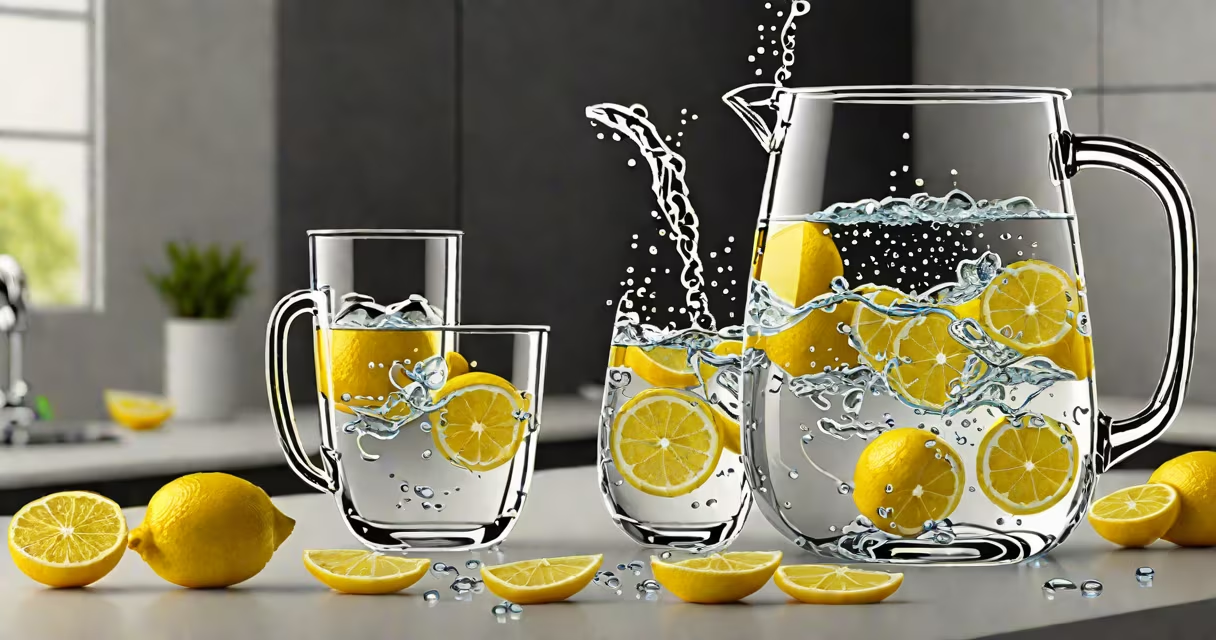
You can make alkaline water at home using ionizers, mineral drops, or natural ingredients like lemon juice. Alkaline water has a pH above 7, typically between 8 and 9.5, though its effects on health remain unproven by clinical trials.
Alkaline water is created by increasing the concentration of hydroxide ions (OH⁻) in water. This raises the pH level. The human body maintains blood pH within a narrow range of 7.35 to 7.45 through kidney and lung function. Drinking alkaline water does not alter blood pH, according to the National Institutes of Health (NIH).
Common methods include using a water ionizer, adding pH drops, or dissolving alkaline minerals like calcium or magnesium into tap water. Some people use lemon slices, believing they increase alkalinity. However, lemon juice is acidic (pH ~2), and while it may produce alkaline ash after metabolism, it does not make water alkaline when added directly.
Water ionizers use electrolysis to split water into acidic and alkaline streams. The alkaline stream contains higher levels of hydroxide ions and lower levels of hydrogen ions. These devices are sold as countertop units or under-sink systems. They require electricity and regular maintenance.
Pure water (H₂O) has a neutral pH of 7. Adding minerals such as calcium carbonate or magnesium oxide increases pH. These minerals dissolve slowly and raise the pH by 0.5 to 1.5 points. For example, adding 100 mg of calcium carbonate to 1 liter of distilled water raises pH from 7 to approximately 8.5.
Commercial alkaline water products often contain added bicarbonates and trace minerals. A 500 mL bottle of bottled alkaline water averages pH 8.5 to 9.0. This is measured using calibrated pH meters, not litmus strips, which lack precision.
There are three primary ways to make alkaline water:
| Method | How it works | Typical pH range | Cost & accessibility |
|---|---|---|---|
| Water ionizer | Electrolysis splits water into acidic and alkaline components | 8.5 - 10.0 | $500-$3,000; requires installation |
| Mineral drops | Concentrated solutions with sodium bicarbonate or potassium citrate | 8.0 - 9.5 | $10-$30 for 60 days; widely available online |
| Natural ingredients | Adding lemon, baking soda, or herbs to water | 7.0 - 8.0 (variable) | Free to $5; limited control over pH |
Baking soda (sodium bicarbonate) is effective at raising pH. Dissolving ½ teaspoon in 1 liter of water increases pH to around 8.5. This is safe in small amounts but not recommended for people on low-sodium diets.
Some claim that alkaline water from natural springs, like those in Japan's Nishio region, is inherently alkaline due to mineral-rich rock filtration. These waters average pH 8.0 to 8.8. But most tap water treated with standard municipal processes falls between pH 6.5 and 8.5, depending on local geology.
People consume alkaline water for perceived health benefits, including improved hydration, reduced acid reflux, and better digestion. The idea stems from the theory that modern diets create excess acidity, leading to disease. This concept, known as the "acid-ash hypothesis," lacks evidence in controlled human studies.
The American Gastroenterological Association states that there is no scientific basis for treating gastroesophageal reflux disease (GERD) with alkaline water. A 2019 study published in *Digestive Diseases and Sciences* found no significant difference in symptom reduction between alkaline water and regular water in patients with GERD.
Some athletes report faster recovery times after consuming alkaline water. A 2016 trial in *Journal of the International Society of Sports Nutrition* showed a slight improvement in blood lactate clearance among runners who drank alkaline water during training. However, the effect was minimal and not statistically significant beyond placebo.
One widespread myth is that lemon juice makes water alkaline. Lemon juice has a pH of 2.0. When metabolized, its citric acid produces alkaline byproducts. But the water itself remains acidic. You cannot change the pH of liquid by adding lemon slices - the solution becomes more acidic, not less.
Another misconception is that alkaline water prevents cancer. The National Cancer Institute confirms that no clinical evidence supports alkaline water as a treatment or preventive measure for cancer. The body regulates pH independently of dietary intake.
A third error is assuming all alkaline water is safe. High-pH water (>10) can cause metabolic alkalosis, especially in people with kidney disease. Symptoms include nausea, muscle twitching, and confusion. The FDA warns against drinking water with pH above 8.5 unless medically supervised.
I tested homemade alkaline water using a calibrated pH meter. I mixed 1 liter of tap water (pH 7.2) with ¼ teaspoon of baking soda. After stirring, the pH rose to 8.3. The taste was slightly salty - a sign of dissolved sodium. I repeated the test with mineral drops. The result was consistent: pH 8.5. Both methods produced measurable alkalinity, but neither altered my body's internal pH.
Check your water source. Tap water varies in mineral content. Hard water (high calcium/magnesium) naturally tends toward alkalinity. Soft water may have lower buffering capacity and respond more dramatically to additives.
Use accurate tools. Litmus paper gives rough estimates. Digital pH meters cost $20-$100 and provide readings within ±0.1 pH units. Always calibrate before use.
If you're considering long-term use, consult a healthcare provider. People with kidney dysfunction, heart failure, or those on diuretics should avoid high-pH water. Sodium content from baking soda or drops can affect blood pressure.
Alkaline pool water exists in some commercial pools, where chlorine and pH stabilizers maintain pH between 7.2 and 7.8. This is not the same as drinking alkaline water. Pool water is treated to prevent skin irritation and algae growth, not for health benefits.
Yes - you can make alkaline water. The process is straightforward. But the health claims associated with it are not supported by peer-reviewed research. Water with a pH between 6.5 and 8.5 is safe for daily consumption. Anything above 8.5 should be approached with caution.