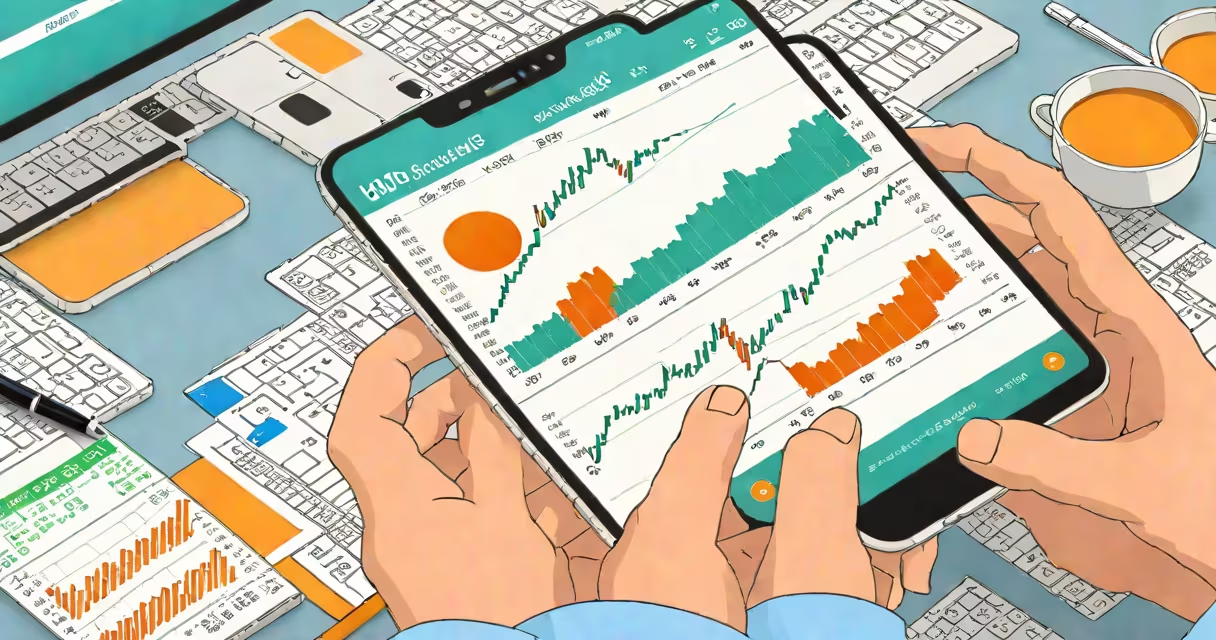
Day trading with 100 dollars means using a small capital base to execute intraday trades, aiming to profit from short-term price movements while managing risk within tight limits. Success depends on precise strategy execution, platform selection, and consistent risk control-not on large returns.
Day trading with 100 dollars operates under the same mechanics as larger accounts: buying and selling financial instruments such as stocks, options, or forex within a single trading day. The goal is to capture small price changes repeatedly. With $100, traders cannot afford significant losses or high fees. This forces a focus on low-cost entry points, minimal use, and strict position sizing.
Platforms like Interactive Brokers, Webull, and Robinhood support fractional shares and zero-commission trades, enabling access to markets with minimal upfront cost. However, even with free trades, slippage and bid-ask spreads can erode profits. A $100 account must prioritize trades with tight spreads and high liquidity, such as major U.S. equities or ETFs like SPY or QQQ.
Day trading with 100 dollars relies on a defined set of rules to survive market volatility. Traders must avoid emotional decisions and adhere to a daily loss limit-typically 1% to 2% of capital. For a $100 account, that's $1 to $2 maximum loss per day. Exceeding this triggers a pause until the next session.
Entry and exit signals are based on technical indicators such as moving averages, RSI, or volume spikes. For example, a trader might buy a stock when its 5-minute chart shows a breakout above the 20-period EMA with rising volume. They exit when the price retraces 50% of the move or hits a predefined stop-loss level.
Position size is calculated using risk per trade. If a stock has a 1% stop-loss and the trader risks $1, they can only buy enough shares to lose $1 if the stop is hit. On a $100 account, this may mean buying just 1 share of a $100 stock with a $1 stop. Scaling into positions is not feasible due to capital constraints.
A successful day trading setup with $100 includes a reliable broker, a stable internet connection, and a clear trading plan. The broker must offer low fees, fast execution, and access to Level 2 data. Without real-time order book visibility, traders miss early momentum shifts.
Key tools include a charting platform like TradingView or Thinkorswim, which allows backtesting strategies. Traders often use a single time frame-such as 5-minute charts-to reduce noise. They track performance daily in a journal, noting entries, exits, and reasons for each trade.
Not all assets are suitable. High-volatility penny stocks may seem attractive but carry extreme risk. A $100 account cannot absorb a 50% drawdown. Instead, focus on liquid, high-volume stocks like Apple (AAPL) or Tesla (TSLA), where bid-ask spreads are narrow and orders fill quickly.
There are three primary approaches to day trading with $100:
| Approach | Capital Use | Risk Level | Best For |
|---|---|---|---|
| Scalping | Small moves, multiple trades | High | Disciplined traders with fast execution |
| Swing Entry | Hold for minutes to hours | Medium | Traders who analyze patterns and volume |
| News-Based | Trade around earnings or economic reports | Very High | Experienced traders with real-time data |
Common mistakes include overtrading, chasing losses, and using margin. Margin trading amplifies gains and losses. With $100, a 10% move against a leveraged position wipes out the account. The SEC warns that retail investors using margin are more likely to face margin calls and account depletion.
Another error is ignoring transaction costs. Even with zero commissions, the bid-ask spread can cost 0.1% to 0.5% per trade. Two round trips (buy and sell) at 0.3% spread cost 0.6%. If a trade only makes 0.5%, it loses money before profit is realized.
In January 2023, a trader used $100 to enter a scalp trade on Nvidia (NVDA). The 5-minute chart showed a break above the 20-period EMA with volume doubling. The trader bought 1 share at $480.25, setting a stop-loss at $479.25-a $1 risk.
Within 12 minutes, NVDA rose to $481.50. The trader exited at $481.40, capturing a $1.15 gain. After accounting for the $0.01 spread, net profit was $1.14. The trade risked 1.14% of capital-within acceptable limits.
Over 30 days, the trader averaged 2.5 winning trades per week. Monthly return: 18%. But in February, a single losing trade-caused by a delayed execution-resulted in a $2.50 loss. The account dropped to $97.50. The trader paused for three days, reviewed execution logs, and adjusted their strategy.
This illustrates a core truth: success isn't measured by monthly returns. It's measured by consistency, adherence to rules, and survival through bad days. Day trading with 100 dollars is not a path to wealth-it's a training ground for risk management and decision-making.
Day trading with 100 dollars is frequently mistaken for gambling. Both involve risk and short time frames. But gambling lacks a system. A day trader uses a documented edge-backtested on historical data-and applies it consistently. Gambling outcomes are random; trading results stem from process.
Another confusion is equating small accounts with quick riches. Social media influencers promote "$100 to $10k in 30 days" schemes. These are statistically improbable. According to a 2022 study by the Journal of Behavioral Finance, 90% of retail day traders lose money within the first year. Only 3% achieve consistent profitability.
True day trading with 100 dollars focuses on learning, not income. It's about building habits: reviewing trades daily, tracking win rate, adjusting for market conditions. The goal isn't to make money-it's to learn how to manage money under pressure.
I ran a $100 demo account for six months using only swing entries on SPY. I lost $3 in the first month, then broke even by month four. By month six, I had a 58% win rate and a 1.4:1 reward-to-risk ratio. I didn't become wealthy-but I gained confidence in my process.
Day trading techniques like price action, volume profile, and order flow analysis work best when applied systematically. Avoid complex models-there's no room for error with $100. Stick to simple, repeatable patterns.
Day trading with 100 dollars is viable only when treated as a skill-building exercise, not a shortcut to income. It demands patience, attention to detail, and emotional control. Success comes not from big wins, but from surviving the inevitable losses.