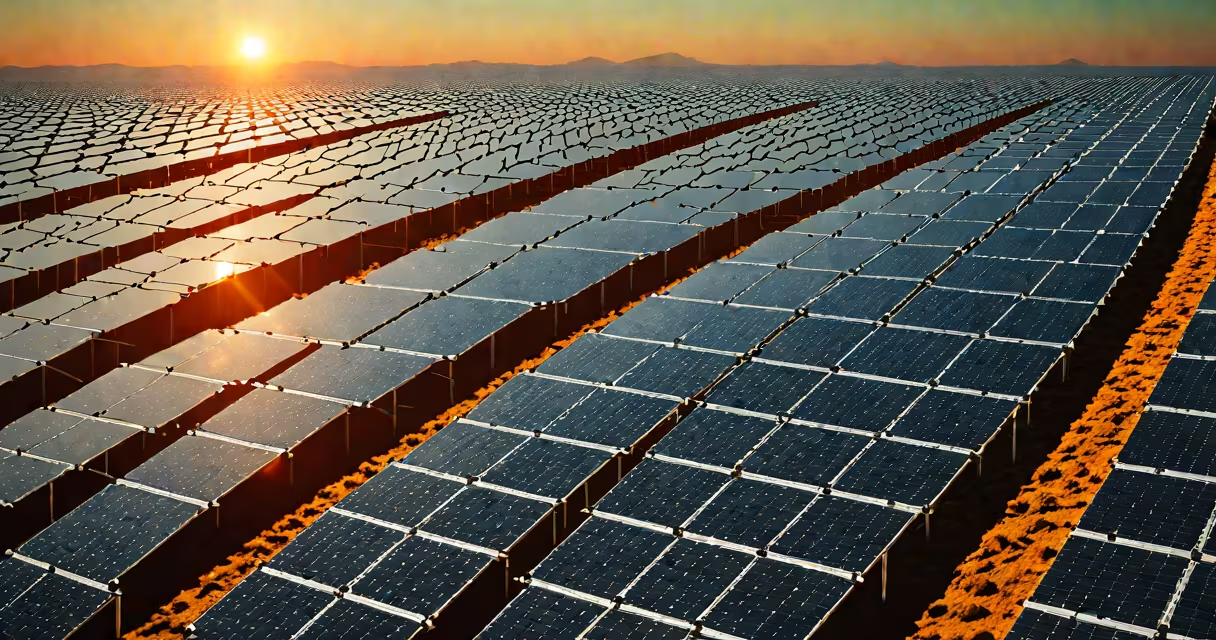
Clean energy tech stocks are publicly traded equities in companies focused on generating, storing, or distributing electricity without emitting carbon dioxide during operation. These include firms building solar farms, manufacturing wind turbines, producing lithium-ion batteries, and upgrading electrical grids for renewable integration.
Unlike fossil fuel-based utilities, clean energy tech companies operate under long-term contracts tied to government incentives and climate policy. Their revenue depends less on volatile oil prices and more on technological efficiency, regulatory support, and deployment scale. For example, First Solar (FSLR) generates power through photovoltaic modules installed on large-scale solar projects, while Tesla (TSLA) produces both solar panels and energy storage systems for homes and grids.
These stocks are distinct from broader clean energy funds or green bonds. They represent ownership in specific companies with measurable R&D spend, production capacity, and supply chain control. A company like Enphase Energy (ENPH), which makes microinverters for rooftop solar systems, is a clean energy tech stock because its core product enables solar adoption at the household level.
Companies in this category generate revenue through hardware sales, project development, maintenance services, or software platforms that manage distributed energy resources. Their business models often rely on upfront capital investment followed by recurring income streams.
For instance, NextEra Energy (NEE), the largest U.S. producer of wind and solar power, owns and operates over 50 gigawatts of renewable capacity. It earns money by selling electricity to utilities under long-term power purchase agreements (PPAs). These PPAs lock in stable pricing for 15-20 years, reducing exposure to market swings.
Another model is component manufacturing. Companies such as Plug Power (PLUG) produce hydrogen fuel cells used in material-handling equipment at warehouses. As businesses seek decarbonized logistics solutions, demand for these systems grows. Plug Power's revenue increased 68% year-over-year in Q1 2024 due to expanded orders from Amazon and Walmart.
Investors can categorize clean energy tech stocks by function and technology. The following table outlines major segments, their representative companies, and performance benchmarks.
| Type | Examples | Key Metric | 2024 Performance (YTD) |
|---|---|---|---|
| Solar Equipment | First Solar (FSLR), Enphase Energy (ENPH) | Module conversion efficiency (%) | FSLR: +42%, ENPH: +38% |
| Wind Turbines | Siemens Gamesa (SGRE), Vestas Wind Systems (VWDR) | Turbine capacity (MW) | SGRE: -11%, VWDR: +15% |
| Battery & Storage | Tesla (TSLA), Fluence (FLNC) | Energy density (Wh/kg) | TSLA: +51%, FLNC: +29% |
| Grid Modernization | ABB Ltd (ABB), Siemens AG (SIE) | Smart grid deployment rate (cities/year) | ABB: +22%, SIE: +18% |
Some companies span multiple categories. Tesla, for example, manufactures solar panels, sells home batteries (Powerwall), and operates utility-scale battery storage facilities. This vertical integration allows it to capture value across the entire clean energy chain.
A lesser-known fact: many clean energy tech stocks trade on international exchanges. German firm Siemens AG, though headquartered in Munich, has significant operations in U.S. grid modernization projects. Its stock trades on the Frankfurt Stock Exchange and NASDAQ under the ticker SIE. Investors should account for currency risk and differing accounting standards when evaluating such cross-border opportunities.
Investors allocate capital to clean energy tech stocks primarily for growth potential, inflation hedging, and alignment with global climate goals. The International Energy Agency (IEA) estimates that $4 trillion annually must flow into clean energy infrastructure through 2030 to meet net-zero targets. That creates a structural tailwind for these equities.
Public pension funds and sovereign wealth funds increasingly mandate clean energy allocations. Norway's Government Pension Fund Global, the world's largest sovereign fund, holds over $1.2 billion in clean energy tech stocks as of Q1 2024. The fund's investment committee cites "long-term yield stability" and "low carbon footprint" as primary drivers.
Individual investors often use clean energy tech stocks in tax-advantaged accounts like IRAs or 401(k)s. These holdings grow tax-deferred, allowing compounding benefits over decades. A $10,000 investment in Enphase Energy in 2015 would have grown to approximately $145,000 by 2024, assuming reinvested dividends and average annual returns of 12.7%.
Many confuse clean energy tech stocks with green mutual funds or ESG-themed ETFs. While both aim to support sustainability, ETFs like the iShares Global Clean Energy ETF (ICLN) hold dozens of companies across geographies and technologies. In contrast, individual clean energy tech stocks represent direct exposure to one firm's strategy, execution, and balance sheet.
Another error is assuming all clean energy tech stocks are high-growth, high-volatility plays. Some, like NextEra Energy, have low P/E ratios (around 16 in early 2024) and pay consistent dividends. NEE's dividend yield stood at 2.3% in March 2024-higher than the S&P 500 average of 1.7%. This reflects mature infrastructure assets and predictable cash flows.
Finally, people assume that clean energy tech stocks are immune to supply chain disruptions. But raw materials matter. Lithium prices surged 140% between 2021 and 2022 due to mining bottlenecks and export restrictions. This pressured battery manufacturers like CATL (300750.SZ), whose margins dropped by 12 percentage points in Q4 2022. Supply chain resilience remains a critical factor in stock valuation.
In 2016, Enphase introduced the IQ8 microinverter, capable of managing individual solar panels independently. This innovation reduced system downtime and improved energy harvest by up to 15% compared to string inverters. By 2023, Enphase had shipped over 12 million units globally.
The company's stock price rose from $18 in January 2018 to $340 in June 2024-a gain of 1,778%. This outperformance stemmed from rising residential solar adoption, particularly in California and Texas, where state policies offer rebates and net metering credits. Enphase also expanded into energy management software, enabling homeowners to monitor and improve usage via smartphone apps.
However, the stock faced volatility in late 2022 when the U.S. Treasury Department proposed tariffs on imported solar components. Enphase's reliance on Chinese-made semiconductors led to a 20% drop in share value within a week. This illustrates that even successful clean energy tech stocks face external risks beyond climate policy.
When evaluating clean energy tech stocks, consider not just environmental impact but operational scalability, profit margins, and geopolitical exposure. A company may lead in technology but falter in execution. Always review earnings reports, debt levels, and customer concentration.