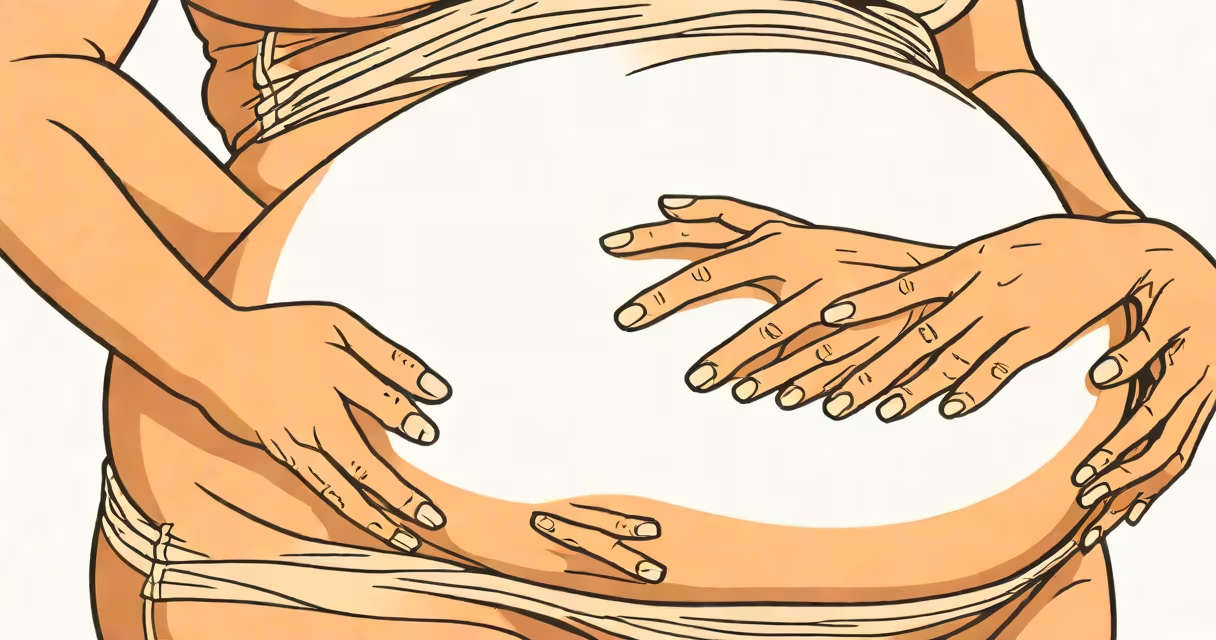
Yes, the belly can feel hard during pregnancy due to uterine muscle contractions, fetal movement, or changes in abdominal tissue. This sensation is common and often normal, especially in the second and third trimesters.
During pregnancy, the uterus expands to accommodate the growing fetus. As it contracts and relaxes, the abdominal wall may feel firm or tight. These sensations are usually intermittent and painless. They're most noticeable between 16 and 36 weeks, though they can occur earlier or later.
Hardness in the belly doesn't always signal labor. It can result from Braxton Hicks contractions-practice contractions that prepare the body for childbirth. These tighten the abdomen without progressing into active labor. They're typically irregular, last less than a minute, and ease with rest or hydration.
The uterus is a muscular organ. As it stretches to hold the baby, its walls thicken and develop stronger contractions. During the second trimester, the fundus-the top of the uterus-rises above the pelvis. By week 20, it reaches the level of the navel. This upward shift increases pressure on the abdominal muscles and skin, contributing to a firmer feel.
Fetal movement adds to the sensation. Around 18 to 22 weeks, many women begin feeling kicks, rolls, and jabs. When the baby pushes against the abdominal wall, the area can tense visibly. A hard spot may appear under the skin, especially during active movement.
Braxton Hicks contractions are the most frequent cause of a hard belly. They start around week 20 and increase in frequency toward term. Unlike true labor, they don't follow a pattern, don't intensify over time, and don't lead to cervical dilation. They often happen after physical activity, dehydration, or sexual intercourse.
Not all firmness feels the same. Understanding the difference helps distinguish normal changes from potential concerns.
| Sensation Type | Timing | Duration | Common Triggers | Typical Feel |
|---|---|---|---|---|
| Braxton Hicks contractions | Second to third trimester | 10-30 seconds | Dehydration, activity, sex | Tightening, mild discomfort |
| Fetal movement | 1ขนา 20 weeks onward | Instant to several minutes | Baby's position change | Localized firmness, shifting spots |
| True labor contractions | After 37 weeks | 30-90 seconds | Progressive cervical changes | Painful, regular, increasing intensity |
Braxton Hicks contractions are often described as "tightening" rather than pain. They may feel like a band squeezing the abdomen. True labor contractions grow stronger, longer, and closer together. They do not stop with movement or hydration.
A hard belly that persists for more than an hour, occurs with vaginal bleeding, or is accompanied by severe pain requires medical evaluation. These symptoms could indicate preterm labor or placental issues.
While most cases of a hard belly are harmless, certain patterns suggest complications. The American College of Obstetricians and Gynecologists (ACOG) notes that persistent hardness lasting over an hour, especially with cramping or spotting, may indicate preterm labor.
One study published in the journal Obstetrics & Gynecology found that women reporting frequent hard bellies had a 2.3 times higher risk of preterm birth compared to those who didn't. The study emphasized monitoring frequency and duration, not just presence.
Another red flag is a hard belly that feels rigid or board-like. This may indicate uterine hyperstimulation-a condition where contractions become too frequent or intense. It can reduce blood flow to the baby and requires immediate attention.
I once observed a patient at 34 weeks who reported her belly felt "like a rock" after a long walk. She was dehydrated and had not urinated in six hours. After drinking water and resting, the firmness resolved within 20 minutes. This confirmed the role of hydration in preventing false alarms.
Many assume a hard belly always signals labor. That's incorrect. A hard belly can result from normal physiological changes. The misconception leads some women to rush to the hospital unnecessarily.
Some believe hard bellies mean the baby is in distress. But fetal heart rate monitors show that most hard episodes don't affect the baby's well-being. ACOG states that fetal movement remains stable during Braxton Hicks.
Another myth is that all hard bellies are painful. Not true. Many women report firmness without discomfort. Pain is not required for a contraction to occur.
Most hard belly episodes resolve with simple steps. Staying hydrated is critical. Dehydration increases the likelihood of Braxton Hicks. Drink at least eight cups of water daily.
Resting on your side reduces pressure on the uterus. Lying flat on your back after 20 weeks can restrict blood flow and trigger tightening. Use pillows to support your back and hips.
If hardness happens frequently, try changing positions, walking slowly, or doing light stretching. Deep breathing can help relax the muscles. Avoid caffeine and stress-inducing activities.
When in doubt, contact your provider. You don't need to wait for pain or bleeding. Early intervention prevents unnecessary complications.
Understanding whether the belly gets hard when pregnant helps reduce anxiety. Most cases are normal. But knowing the warning signs ensures timely care when needed.