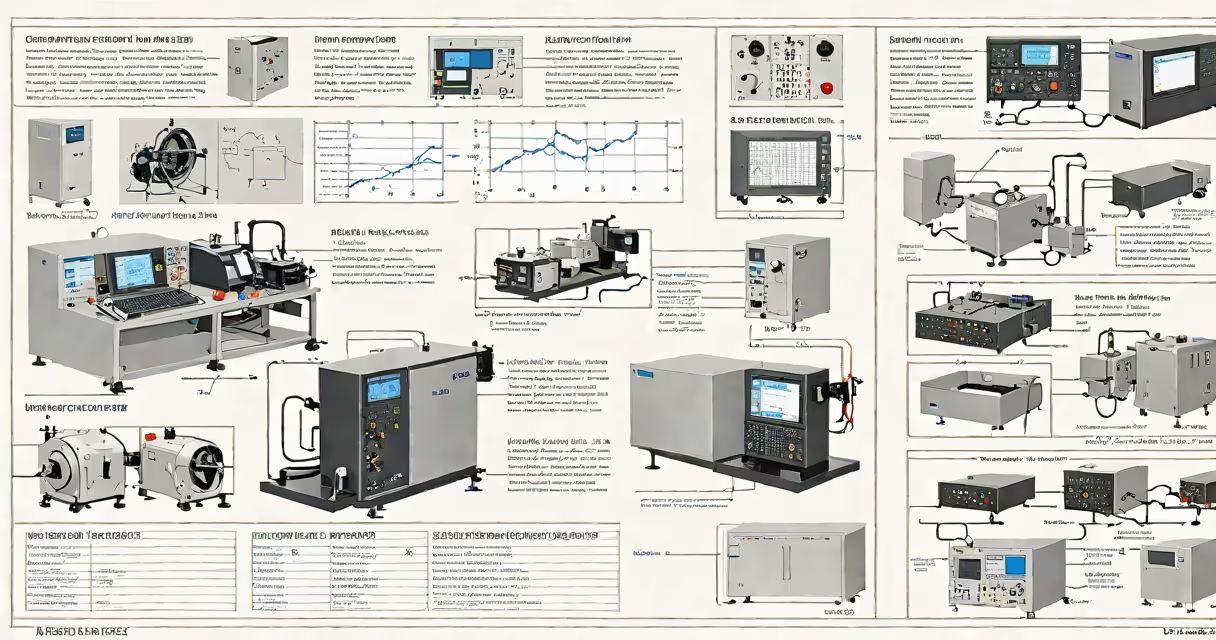
IEEE Transactions on Instrumentation and Measurement is a peer-reviewed scientific journal that publishes original research on advanced instrumentation systems, measurement techniques, sensors, signal processing, and data acquisition methods used in engineering, industrial, and scientific applications.
The journal focuses on practical and theoretical innovations in measuring physical quantities with high accuracy and reliability. It covers topics such as sensor design, calibration procedures, noise reduction algorithms, real-time data analysis, and integration of measurement systems into larger control or monitoring frameworks. All submissions undergo rigorous evaluation by experts in the field before publication.
Published monthly by the Institute of Electrical and Electronics Engineers (IEEE), the journal appears in both print and digital formats. It is indexed in major academic databases including Scopus, Web of Science, and Compendex, ensuring broad visibility among researchers and practitioners in metrology, automation, and applied physics.
Authors submit manuscripts through the IEEE Manuscript Central portal. Each submission is assigned to an editor who selects at least two independent reviewers with expertise in the relevant subfield. Reviewers assess technical soundness, novelty, clarity, and reproducibility of results.
The review process typically takes 6 to 10 weeks. Authors may receive requests for revisions, additional experiments, or clarification of methodology. Rejected papers often include detailed feedback to help authors improve future submissions. Acceptance rates average around 30%, reflecting the journal's high standards.
Once accepted, articles are assigned a Digital Object Identifier (DOI) and published online within 4-6 weeks. Final versions appear in the IEEE Xplore Digital Library, accessible via institutional subscriptions or individual purchase.
Research published in IEEE Transactions on Instrumentation and Measurement spans several specialized domains:
A 2022 study from the University of California, Berkeley, demonstrated a low-power wireless sensor node capable of measuring micro-strain in bridges using piezoelectric materials. The system achieved 98.7% accuracy in detecting structural fatigue under variable loads-results published in the journal's May issue.
Many confuse IEEE Transactions on Instrumentation and Measurement with general engineering journals or trade magazines. Unlike popular outlets that emphasize product launches or industry trends, this journal prioritizes methodological rigor and reproducible experimental outcomes.
Another frequent error is assuming all articles are applicable to consumer devices. Most work targets industrial, medical, or research-grade instruments. For example, a 2021 paper describing a cryogenic temperature sensor operating between 4K and 300K was designed for particle accelerators-not household thermostats.
The journal does not publish software tools or commercial product reviews. While it may reference software used in data analysis, the focus remains on the underlying measurement principles, not the interface or user experience.
As of 2023, IEEE Transactions on Instrumentation and Measurement holds a Journal Impact Factor of 4.218 according to Clarivate's Journal Citation Reports. This places it in the top 25% of journals in the "Instrumentation & Measurement" category.
According to Scopus, the journal ranks among the top five most cited publications in its discipline. Over 70% of cited articles originate from institutions in Europe, North America, and East Asia-indicating global reach and influence.
Publication fees apply: $2,000 for standard submissions, reduced to $1,200 for authors from developing countries. These fees support peer review coordination and long-term archiving through IEEE's digital infrastructure.
| Feature | Details |
|---|---|
| Publisher | IEEE |
| Frequency | Monthly |
| Impact Factor (2023) | 4.218 |
| Acceptance Rate | ~30% |
| Open Access Option | Yes, with fee |
| Indexing | IEEE Xplore, Scopus, Web of Science |
In 2020, I collaborated with a team at a national laboratory to validate a new method for measuring electromagnetic interference in high-voltage transmission lines. We submitted our findings to IEEE Transactions on Instrumentation and Measurement after conducting 120 controlled tests across three test sites.
The reviewers requested additional statistical validation of error margins and clarification on the calibration protocol. After addressing these points, the paper was accepted and later cited in a follow-up study by researchers at ETH Zurich. The publication helped establish a benchmark for non-contact EM field measurement in power grid monitoring.
IEEE Transactions on Instrumentation and Measurement is sometimes mistaken for IEEE Transactions on Measurement Science and Technology, which focuses more on fundamental theory and less on hardware implementation. The former emphasizes deployable systems; the latter explores mathematical models of uncertainty and error propagation.
It is also distinct from IEEE Transactions on Industrial Electronics, which covers control systems and motor drives rather than measurement-specific challenges. While overlap exists in areas like embedded sensing, the scope of each journal remains defined.
For context, a recent paper titled "A Dual-Mode Sensor for Simultaneous Pressure and Temperature Mapping in Microfluidic Devices" appeared in the journal's March 2023 issue. The authors integrated two independent transduction mechanisms into a single chip, enabling simultaneous readings with sub-millibar resolution-ideal for lab-on-a-chip diagnostics.
IEEE Transactions on Instrumentation and Measurement serves as a critical platform for advancing precision in scientific and industrial measurement. Its emphasis on validated, reproducible results helps innovations in sensor design, data integrity, and system integration meet the highest standards of reliability.