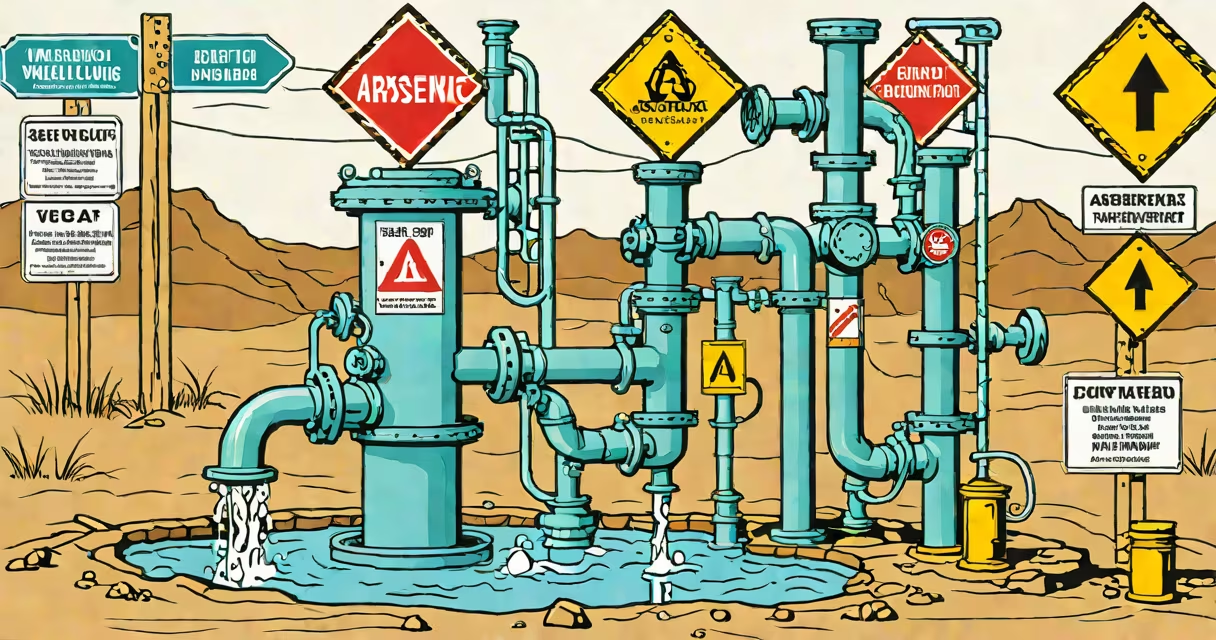
Arsenic enters drinking water supplies mainly through natural geological processes, particularly in groundwater drawn from wells. It dissolves into water as rainwater percolates through bedrock containing arsenic-rich minerals, such as those found in volcanic or sedimentary formations.
Geological sources account for over 90% of arsenic contamination in drinking water, according to the U.S. Environmental Protection Agency (EPA). This occurs when groundwater flows through areas with high concentrations of arsenic-bearing minerals like arsenopyrite or realgar. These minerals release arsenic into water under specific chemical conditions-low oxygen levels and slightly acidic pH-which improve solubility. The EPA notes that arsenic levels above 10 parts per billion (ppb) are considered unsafe for human consumption.
Industrial activity contributes less frequently but in localized regions. Mining operations, pesticide use (historical), and metal smelting can introduce arsenic into surface and groundwater systems. For example, abandoned gold mines in Nevada have been linked to elevated arsenic levels in nearby aquifers. However, natural sources remain the dominant pathway globally.
Once dissolved, arsenic travels with groundwater flow. It doesn't degrade over time and can persist for decades. Arsenic exists in two primary forms: arsenite (AsIII) and arsenate (AsV). Arsenite is more toxic and harder to remove because it doesn't bind easily to filtration media. Arsenate is less mobile and more readily removed during treatment.
Water distribution systems do not remove arsenic unless specifically designed to do so. Municipal supplies often rely on coagulation and filtration methods that work better on arsenate than arsenite. Without proper treatment, arsenic remains in tap water until consumed.
Private wells are especially vulnerable. Over 13 million Americans rely on private wells, many in regions with naturally high arsenic levels-such as parts of New England, the Midwest, and the Southwest. A 2021 study by the U.S. Geological Survey found that 6% of sampled private wells in the U.S. exceeded the EPA's maximum contaminant level (MCL) of 10 ppb.
Many assume arsenic comes from industrial waste or pollution. While industrial sources exist, they are rare compared to natural leaching. In fact, arsenic contamination is often higher in rural areas with no wastewater infrastructure, where people depend on untreated groundwater.
Another misconception is that arsenic causes immediate symptoms. Unlike bacteria or viruses, arsenic accumulates slowly. Chronic exposure leads to skin lesions, cardiovascular disease, and increased cancer risk-particularly bladder, lung, and skin cancers. The World Health Organization (WHO) classifies inorganic arsenic as a Group 1 carcinogen based on extensive epidemiological evidence.
Some believe boiling water removes arsenic. Boiling actually concentrates it by reducing volume. Similarly, adding bleach or using basic filters won't eliminate arsenic. Only specialized treatments like reverse osmosis, activated alumina, or iron-based adsorption systems effectively reduce arsenic levels.
The following table outlines the most common pathways for arsenic entry into drinking water:
| Source Type | Primary Mechanism | Typical Locations | Removal Method |
|---|---|---|---|
| Natural geologic leaching | Groundwater dissolving arsenic from bedrock | Midwest, Southwest, New England | Reverse osmosis, ion exchange |
| Historical agricultural runoff | Pesticides containing arsenic (e.g., lead arsenate) | California Central Valley, older farmland | Activated carbon, granular ferric hydroxide |
| Industrial discharge | Smelting, mining effluent | Former mining towns, near factories | Advanced oxidation, membrane filtration |
For example, in Maine, where bedrock contains significant amounts of arsenic-containing minerals, over 20% of private wells exceed safe limits. The state mandates annual testing for all new well installations, a policy adopted to prevent long-term exposure.
Bangladesh experienced one of the largest arsenic crises in history. In the 1970s, international aid programs drilled millions of tube wells to provide clean water and reduce waterborne diseases. But many of these wells tapped into arsenic-laden aquifers beneath the Ganges Delta. By the early 2000s, over 35 million people were exposed to arsenic levels exceeding 50 ppb-well above WHO guidelines.
Health impacts included widespread skin discoloration, keratosis, and increased mortality from internal cancers. The crisis prompted global attention and led to the development of low-cost arsenic removal filters, such as those using iron oxide-coated sand. Today, Bangladesh uses community-level testing and household filter programs to mitigate risk.
Arsenic contamination is not always visible. Water may appear clear and taste normal, yet carry dangerous levels. Testing is the only way to confirm presence. The EPA recommends testing private wells annually and municipal supplies every five years.
If you rely on a private well, test for arsenic at least once every two years. Home test kits are available, but lab analysis offers greater accuracy. If levels exceed 10 ppb, install a certified treatment system. Reverse osmosis systems remove 90-99% of arsenic, while iron-based adsorption units are effective for arsenate.
For those using public water, check annual Consumer Confidence Reports (CCRs) issued by utilities. These reports list detected contaminants, including arsenic. If arsenic appears above the MCL, contact your local water authority. The EPA maintains a searchable database of water quality data at epa.gov/sdwa.
When choosing a treatment method, verify certification by NSF International or the Water Quality Association. Look for products labeled "NSF/ANSI 53" for arsenic reduction. Avoid unverified devices sold online that claim to "purify" water without third-party validation.
Understanding how arsenic gets into drinking water supply is critical for protecting long-term health. Even low-level exposure over years increases disease risk. Regular testing and proper filtration are essential steps in safeguarding water quality.