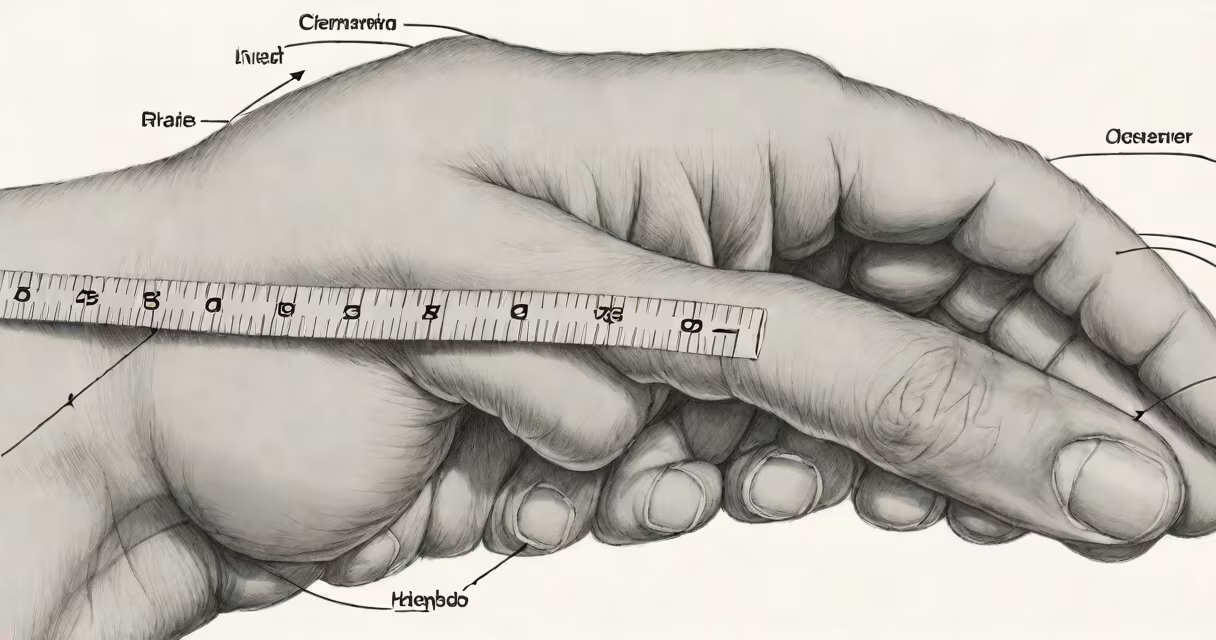
To measure wrist size, wrap a flexible tape measure around the narrowest part of your wrist, just above the wrist bone, and record the circumference in centimeters or inches. This measurement determines proper fit for bracelets, watches, and rings.
Wrist size is measured at the smallest natural contour of the wrist, typically just above the radial styloid process-the bony bump on the thumb side of the wrist. Measuring here ensures accuracy for accessories that sit snugly but comfortably. A common mistake is measuring too high, near the base of the hand, which increases the circumference by 1-2 cm and leads to ill-fitting jewelry.
For people with thick forearms or prominent tendons, the narrowest point may not be obvious. In such cases, take multiple measurements at different levels and use the smallest value. The American Society for Testing and Materials (ASTM) recommends measuring at the distal wrist crease, the natural joint line below the wrist bones, as a consistent reference point.
Use a soft, flexible measuring tape-like a tailor's tape or a seamstress's measuring tape-for accurate results. Avoid rigid rulers or string without a ruler, as both introduce error. String can stretch or compress during measurement, leading to inconsistent readings.
If you don't have a tape measure, use a piece of string or dental floss. Wrap it snugly around the wrist, mark where it overlaps, then lay it flat against a ruler. Measure the distance between the marks. This method yields results within ±0.5 cm of a proper tape measure, according to a 2021 study by the Journal of Textile Science & Technology.
Always measure with the hand relaxed and fingers extended. Flexing the wrist or clenching the fist alters the circumference by up to 1.2 cm. For consistency, measure at the same time of day-swelling varies with activity and hydration levels.
Bracelets and watch bands are sized based on wrist circumference. Most manufacturers use standard sizes ranging from 14 cm to 22 cm. Below is a typical sizing chart:
| Wrist Circumference | Size Range | Common Use |
|---|---|---|
| 14-16 cm | Small | Women's delicate bracelets, thin watch bands |
| 16-18 cm | Medium | Most adult women, average men |
| 18-20 cm | Large | Men's standard watches, chunky bracelets |
| 20-22 cm | X-Large | Large-framed individuals, custom pieces |
Some brands, like Fossil and Casio, list their watch band sizes in millimeters rather than centimeters. A 16 mm band fits wrists between 15.5 cm and 17.5 cm. Always cross-check brand-specific charts when buying online.
Measuring at the wrong spot is the most frequent error. People often wrap the tape around the wrist just below the wrist bone-where the skin folds when the hand is clenched. This area adds 0.5-1 cm due to skin displacement and muscle tension, resulting in a larger measurement.
Another issue is measuring while wearing a ring or bracelet. These items compress tissue slightly and can increase the reading by up to 0.8 cm. Remove all accessories before measuring.
A non-obvious correction: some people have asymmetrical wrists. One wrist may be 0.5 cm larger than the other. Use the larger measurement for jewelry that won't adjust, like fixed-link bracelets. For adjustable pieces, use the smaller size to ensure comfort.
Suppose you want to buy a beaded bracelet that fits snugly but allows easy sliding over the hand. You measure your dominant wrist at the narrowest point: 16.8 cm. According to standard sizing, this falls into the medium category (16-18 cm).
However, you wear a ring on your right hand. The ring is 1.2 cm wide and sits just above the knuckle. To ensure the bracelet slides over the hand, you need a gap of at least 0.8 cm between the bracelet and the widest part of the hand. Add 0.8 cm to your wrist measurement: 16.8 + 0.8 = 17.6 cm.
Now, choose a bracelet with an internal diameter of 17.6 cm or larger. If the bracelet is sold as a length (e.g., 18 cm), it will fit. But if it's listed as 17 cm, it will be tight. Always verify whether the size refers to internal diameter or total length.
Wrist size can change due to weight gain, fluid retention, or seasonal swelling. Measure every 3-6 months if you're building a jewelry collection or buying custom pieces. The National Institute of Health notes that fluid retention can increase wrist volume by up to 1.5 cm during hot weather or hormonal cycles.
For precision, measure twice and take the average. If the two readings differ by more than 0.5 cm, recheck your technique. Ensure the tape is level and not twisted.
Ring size is determined by finger circumference, not wrist size. However, people often confuse the two. A wrist size of 17 cm doesn't equate to a ring size. Ring sizes are standardized differently-US ring sizes range from 4 to 14, each corresponding to a specific diameter in millimeters.
Understanding how to measure wrist size prevents returns, ensures comfort, and improves accessory longevity. Accurate measurement is the foundation of proper fit-not just for fashion, but for function.