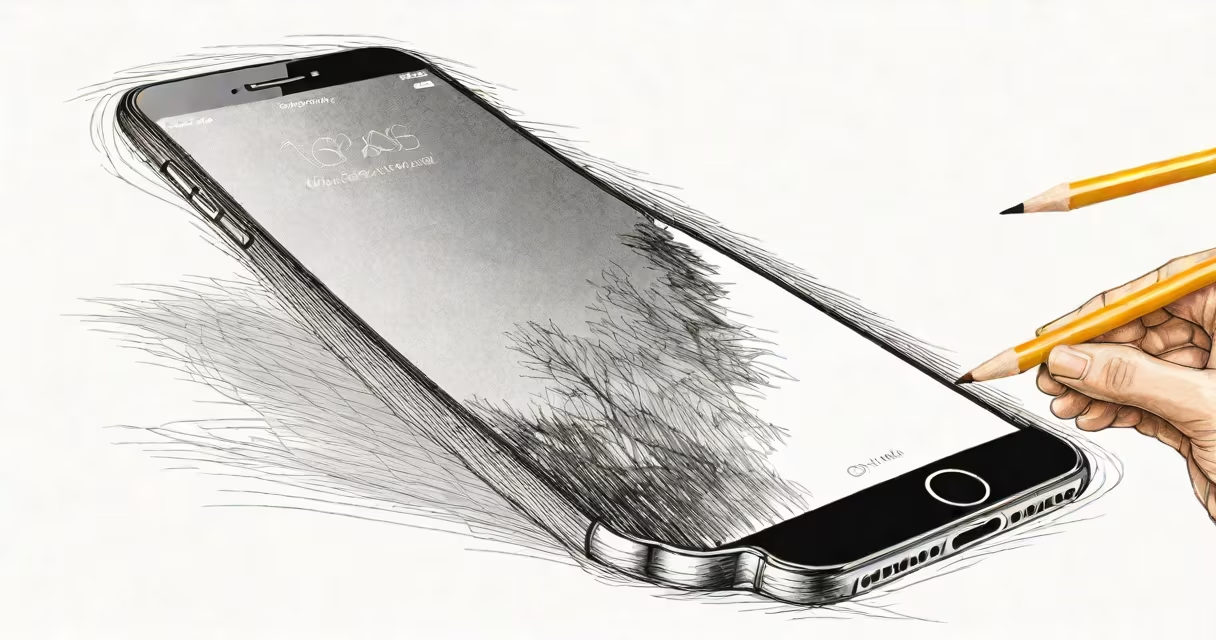
The first iPhone was released on June 29, 2007, marking Apple's debut into smartphones. It launched with a 3.5-inch touchscreen, no physical keyboard, and a single home button. This device redefined mobile interaction and set the foundation for modern smartphone design.
Apple unveiled the first iPhone during Steve Jobs' keynote at Macworld 2007. The device combined a phone, iPod, and internet communicator into one unit. It ran a custom version of iOS, then called iPhone OS, and supported web browsing via Safari, email, and basic apps. The initial model had 4 GB of storage and cost $499 for the 4 GB version and $599 for the 8 GB variant.
At the time, most phones used physical keyboards and proprietary operating systems. The iPhone's capacitive touchscreen, multi-touch gestures, and intuitive interface were revolutionary. Users could pinch to zoom, swipe between screens, and tap icons directly. These features became standard across the industry within five years.
The first iPhone operated on a modified version of macOS, optimized for mobile use. It used a 600 MHz ARM processor and had no SD card slot or expandable memory. All data lived on the internal flash storage. The device connected to Wi-Fi networks and required a computer to sync with iTunes for music, contacts, and software updates.
It lacked native support for third-party apps. Instead, Apple offered web apps through Safari. Developers couldn't build standalone applications until 2008, when Apple released the iPhone SDK. The App Store launched in July 2008, introducing downloadable apps and changing how users interacted with their devices.
Despite limited functionality compared to modern standards, the first iPhone demonstrated a vision of smooth integration between hardware, software, and services. Its success came not from technical specs but from user experience-simple, consistent, and visually coherent.
| Feature | Specification |
|---|---|
| Display | 3.5-inch capacitive touchscreen, 480×320 resolution |
| Storage | 4 GB or 8 GB (non-expandable) |
| Processor | 600 MHz ARM11 |
| Camera | 2 megapixel, no flash, video recording at 320×240@15fps |
| Network | EDGE (2G), Wi-Fi 802.11b/g |
| Operating System | iOS 1.0 (iPhone OS) |
These specifications were modest by today's standards. The camera captured low-resolution images, and the lack of 3G meant slow web browsing. But the device's core innovation lay in its interface. The ability to scroll, zoom, and tap with a finger replaced decades of button-based navigation.
Apple did not include a headphone jack or charging port on the original model. Power and audio were handled through a 30-pin dock connector. This design choice influenced future Apple products, including the iPad and later iPhones.
The first iPhone was used primarily by early adopters, tech enthusiasts, and professionals who valued design and usability. It gained traction among developers, journalists, and creative workers due to its sleek form factor and useful media capabilities.
Businesses adopted it slowly. Many companies initially rejected it because it didn't support Exchange ActiveSync natively. Apple addressed this in iOS 2.0, released in 2008, which added enterprise email and security features. After that update, corporate adoption increased.
By 2008, the iPhone had become a cultural symbol. It appeared in films, music videos, and advertising campaigns. Its influence extended beyond hardware-it reshaped app development, digital marketing, and user expectations around mobile interfaces.
Many assume the first iPhone was released in January 2007. That's incorrect. Apple announced it at Macworld 2007 in January, but the actual release date was June 29, 2007. The delay allowed Apple to finalize manufacturing, secure carrier partnerships, and prepare retail distribution.
Another myth is that the iPhone had a physical keyboard. It did not. The device relied entirely on a virtual keyboard displayed on the touchscreen. Typing accuracy improved over time with predictive text and gesture typing, but the original model had no haptic feedback or keyboard shortcuts.
A lesser-known fact: the first iPhone was available in only two colors-black and silver. Apple did not offer color options until the iPhone 3G, released in 2008. The black model sold out quickly due to high demand, while the silver version remained in stock longer.
On June 29, 2007, Apple opened its retail stores at 9 a.m. local time. Lines formed hours before opening. In New York City, customers waited overnight. One man, James L., stood in line for 14 hours to buy the first iPhone. He paid $599 for the 8 GB model and received a free headset and a copy of the manual.
He described the experience as "like being at a concert." The store staff handed him a sealed box with a plastic sleeve. Inside was the phone, a USB cable, and a power adapter. There was no SIM card slot-users had to activate the device through iTunes and pair it with AT&T, the exclusive U.S. carrier.
James reported that the device felt "lighter than expected" and "responsive despite the slow network." He used it to send photos via email and browse Wikipedia. By 10 a.m., he had already sent four messages and taken nine pictures.
Apple released the first iPhone months after announcing the iPhone OS. The company had previously introduced the iPod in 2001 and the MacBook Pro in 2006. The iPhone was not a direct evolution of those products-it was a new category altogether.
Before the iPhone, Apple had no experience building cellular devices. The company partnered with AT&T to handle network infrastructure. AT&T required Apple to meet strict performance benchmarks before approving the device for sale.
Apple also delayed the release to ensure quality control. Internal testing revealed screen glitches and battery drain issues. Engineers fixed the problems before shipping. The final product passed Apple's "Designed by Apple in California" standard, a requirement for all hardware.
The iPhone SE 2020 release date was March 18, 2020. This model brought faster performance and improved cameras. It was designed for users who preferred smaller screens and lower prices. The original iPhone's legacy lives on in these iterations.
Understanding the first iPhone release date reveals more than a calendar entry. It shows how Apple disrupted an entire industry by prioritizing user experience over hardware specs. The device didn't win on speed or storage-it won on simplicity, elegance, and vision.