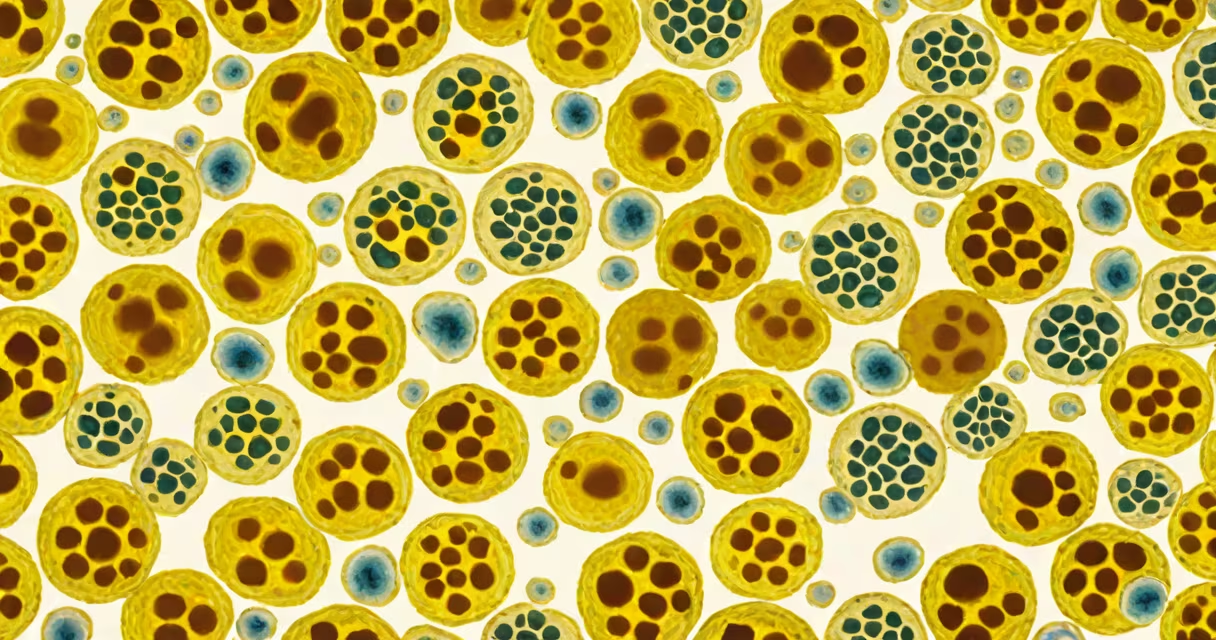
Levaduras en orina refers to the presence of yeast-like fungi, most commonly Candida species, in a urine sample. This finding may signal a urinary tract infection caused by fungi rather than bacteria. A positive result requires clinical correlation because contamination or transient presence can occur.
Urine cultures detect levaduras en orina when yeast grows in sufficient quantity to be identified. The standard threshold is ≥10³ colony-forming units per milliliter (CFU/mL) for clinically significant growth. A single isolated isolate of Candida albicans in a clean-catch specimen may represent colonization rather than true infection, especially in asymptomatic individuals.
Clinical guidelines from the Infectious Diseases Society of America (IDSA) state that symptomatic patients with persistent levaduras en orina require antifungal therapy. Asymptomatic cases often do not need treatment unless the patient is immunocompromised or has indwelling catheters.
Laboratories use microscopic examination and culture techniques to identify levaduras en orina. A dipstick test cannot distinguish between bacterial and fungal elements. Microscopy involves examining a centrifuged urine sample under a light microscope using a wet mount or Gram stain.
Yeast cells appear as oval or round structures, often budding. They measure approximately 3-6 μm in diameter. In contrast, bacterial cells are much smaller and rod-shaped. A trained technician can differentiate yeast from cellular debris or contaminants like skin flora.
Culture remains the gold standard. Urine is plated on Sabouraud dextrose agar, which supports fungal growth. After 24-48 hours, colonies are examined for morphology and confirmed via biochemical tests or molecular identification. Some labs report results within 72 hours.
The most common cause of levaduras en orina is Candida albicans, responsible for 80-90% of cases. Other species include Candida glabrata, Candida tropicalis, and Candida krusei. These yeasts are normal flora in the gastrointestinal tract and vaginal mucosa but can invade the urinary system under certain conditions.
Several risk factors increase the likelihood of fungal colonization or infection:
A 2021 study published in *Clinical Microbiology and Infection* found that 12% of hospitalized patients with catheters developed Candida in their urine, compared to 1.3% in those without. Catheter-associated candiduria is linked to higher rates of bloodstream infection and mortality.
Many clinicians assume levaduras en orina always indicates infection requiring treatment. This is incorrect. Contamination during collection is common, especially in women with vaginal yeast carriage. A urine sample collected midstream may contain vaginal flora, leading to false-positive results.
One non-obvious distinction: Candida species grow slowly and may be missed if cultures are read too early. Some labs report only 24-hour readings, missing slow-growing isolates. A 2022 review in *Journal of Clinical Pathology* noted that 15% of true Candida positives were delayed beyond 48 hours.
Another error is treating asymptomatic patients with levaduras en orina. The IDSA recommends against routine antifungal therapy in such cases. Overuse contributes to resistance and unnecessary side effects. Fluconazole, the most prescribed antifungal, has seen rising resistance rates in C. glabrata strains in U.S. hospitals.
A 62-year-old woman with type 2 diabetes presented with dysuria and low-grade fever. Her initial urinalysis showed leukocyte esterase (+) and nitrites (+). A urine culture grew Candida albicans at 1.5 × 10⁴ CFU/mL.
She had no history of catheterization or recent antibiotics. Blood glucose was 220 mg/dL. The clinician ruled out contamination due to symptoms and consistent findings. She was treated with oral fluconazole 200 mg daily for 14 days.
Follow-up urine culture at week 2 showed no growth. Symptoms resolved. This case illustrates that levaduras en orina in symptomatic patients warrants intervention, especially in high-risk populations.
| Feature | Fungal (e.g., Candida) | Bacterial (e.g., E. coli) |
|---|---|---|
| Typical symptoms | Dysuria, frequency, suprapubic pain; less systemic signs | Fever, chills, flank pain, severe dysuria |
| Common risk factors | Antibiotics, diabetes, catheters, immunosuppression | Female anatomy, sexual activity, urinary retention |
| First-line treatment | Fluconazole (oral), amphotericin B (IV in severe cases) | Trimethoprim-sulfamethoxazole, nitrofurantoin, ciprofloxacin |
| Resistance concerns | Emerging resistance in C. glabrata; reduced efficacy of fluconazole | High prevalence of ESBL-producing Enterobacterales |
While both types can mimic each other clinically, fungal infections are less likely to present with fever or flank pain. Bacterial infections typically show more pronounced inflammatory markers like elevated CRP or WBC counts.
Levaduras en orina should prompt evaluation if accompanied by symptoms such as burning during urination, frequent urges, cloudy or foul-smelling urine, or low-grade fever. Persistent symptoms despite antibiotic treatment suggest a non-bacterial cause.
For patients with recurrent yeast in urine, further testing may be needed. A renal ultrasound can rule out structural abnormalities. Blood glucose testing identifies undiagnosed diabetes. In some cases, a voiding cystourethrogram is recommended to assess for reflux.
One personal observation: During a hospital rotation, I reviewed a case where a patient with a long-term catheter had repeated Candida growth. Despite multiple courses of fluconazole, the organism persisted. Switching to intravenous amphotericin B led to clearance. This highlights that treatment failure can stem from inadequate drug selection or dosing, not just resistance.
Levaduras en orina is not a diagnosis in isolation. It requires integration with clinical presentation, patient history, and laboratory context. Accurate interpretation prevents overtreatment and ensures timely care for true infections.