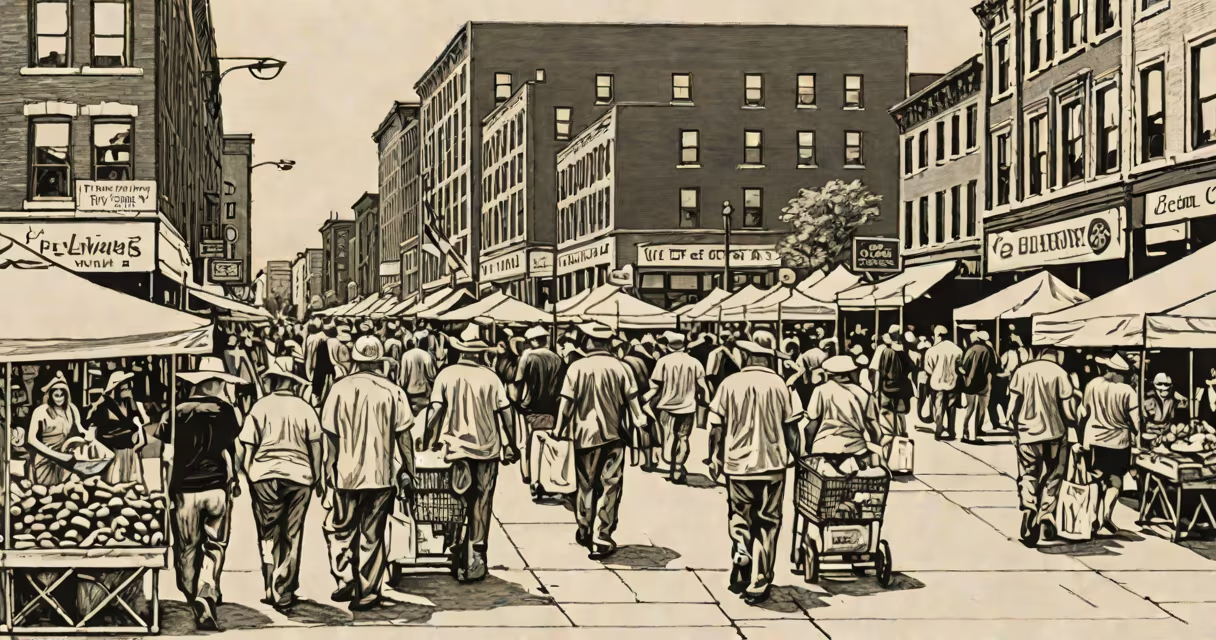
Lifeways Jackson Michigan describes the everyday patterns, cultural customs, and community interactions that shape how people live, work, and connect in Jackson, Michigan. These include neighborhood routines, seasonal festivals, local businesses, public spaces, and civic engagement shaped by the city's history and demographics.
Life in Jackson centers around small-town rhythms. Residents often start mornings with coffee at local diners like the Bluebird Café, walk dogs along the Kalamazoo River Trail, and attend town meetings at the Jackson City Hall. Weekends bring gatherings at the Jackson County Fairgrounds, where families participate in livestock shows, craft fairs, and Fourth of July fireworks. These activities reflect a blend of rural Midwestern values and urban accessibility, rooted in Jackson's identity as a regional hub in lower Michigan.
The term "lifeways" emphasizes lived experience over formal statistics. It includes unspoken norms-like neighbors helping each other during winter storms, or high school students volunteering at the Jackson Public Library's summer reading program. These behaviors reinforce social cohesion and mutual support, especially in neighborhoods such as East Jackson and Northside, where long-term residents maintain close-knit networks.
Everyday lifeways emerge from infrastructure, institutions, and informal social structures. Public transit is limited, so most residents rely on personal vehicles. This shapes schedules: people run errands early, plan doctor visits around commute times, and coordinate childcare through informal carpooling. The Jackson Area Transit System offers weekday routes, but service gaps mean many depend on walking or biking when destinations are within 2 miles.
Local institutions anchor community life. The Jackson City Parks Department manages 36 parks, including the 12-acre Jackson Park, which hosts free outdoor concerts in June and July. The Jackson County Historical Society runs monthly lectures at the old Carnegie Library building, drawing locals interested in the city's 19th-century railroad roots. These programs aren't just recreational-they preserve collective memory and provide intergenerational connection points.
Seasonal shifts deeply influence routines. In spring, residents plant gardens in backyard plots or community plots at the Jackson Community Garden. Summer brings the annual Jackson Street Festival, drawing 15,000 attendees over three days. Fall sees pumpkin carving contests at elementary schools and harvest dinners hosted by churches. Winter, though colder, remains active: ice skating at the Jackson Ice Arena draws families, while holiday light displays in downtown attract visitors from surrounding towns.
Three core elements define lifeways in Jackson: place-based routines, institutional involvement, and cultural continuity. Place-based routines include morning walks at the Riverfront Park, weekend shopping at the Jackson Mall, and evening strolls through the historic district. Institutional involvement covers participation in school boards, volunteer fire departments, and city advisory councils. Cultural continuity appears in traditions like the Jackson High School band's halftime show at home football games, a ritual attended by generations of fans.
| Type of Lifeway | Examples | Frequency |
|---|---|---|
| Neighborhood Routines | Weekly farmer's markets, block parties, yard maintenance | Weekly to monthly |
| Institutional Engagement | Volunteering at food pantries, attending school board meetings | Monthly to quarterly |
| Cultural Events | Fourth of July parade, Jackson County Fair, winter solstice lantern walk | Annual to biannual |
A lesser-known aspect of lifeways in Jackson is the role of faith-based organizations beyond worship. Churches like St. Paul's Episcopal and Grace Baptist host food drives, youth mentorship programs, and literacy tutoring. These services extend well beyond religious practice, serving as social safety nets. A 2022 study by the University of Michigan's Institute for Social Research found that 68% of Jackson residents reported receiving help from a faith-based group at least once in the past year-higher than the state average.
People often assume lifeways in Jackson mirror those of larger cities like Detroit or Grand Rapids. That's incorrect. Jackson's pace is slower, decisions are made locally, and trust in institutions tends to be higher. For example, the Jackson Police Department has a community liaison program that meets monthly with neighborhood associations-something rare in cities with populations over 100,000.
Another misconception is that Jackson lacks cultural diversity. While the city's population is 78% White, 12% Black, and 6% Hispanic, according to U.S. Census Bureau data from 2022, cultural expression thrives. The annual Juneteenth celebration at the Jackson Cultural Center features music, spoken word, and a community cookout. The city also hosts a Polish Heritage Day in September, reflecting the historical presence of Polish immigrants who settled in the area in the late 1800s.
Some confuse "lifeways" with tourism or economic development. Lifeways are not designed for visitors. They're internal systems-how people actually live. A tourist might enjoy the Jackson County Fair, but they won't understand the significance of the 1923 vintage tractor display, which honors the city's agricultural past. That display is meaningful to locals because their grandparents once operated similar machines on nearby farms.
Consider the Jackson Farmers Market, held every Saturday from May through October at the corner of Michigan Avenue and North 1st Street. It operates from 8 a.m. to 1 p.m., attracting 300-400 people weekly. Vendors sell produce grown within 50 miles, baked goods, honey, and handmade crafts. But the market's value goes beyond commerce.
Residents gather not just to buy tomatoes or sourdough bread, but to exchange news. A retired teacher might chat with a young mother about school supply lists. A man in his 70s checks in with the same vendor every week-"Just to hear someone say 'hello'," he told me during a visit last August. The market also serves as a de facto health clinic: nurses from the Jackson Health Department offer free blood pressure checks and flu shot clinics on select Saturdays.
This illustrates how lifeways function: they're not events, but ongoing systems. The market isn't just a place to shop-it's a network of relationships, information sharing, and care. Its success relies less on marketing than on consistency and trust. When a vendor missed a season due to illness, regulars organized a donation drive to cover expenses-a gesture that reinforced community bonds.
I spent two weeks in Jackson in the fall of 2023 observing daily routines. I joined a walking group that met every Tuesday at 6:30 a.m. near the Jackson Public Library. We walked five blocks, then stopped at a diner for coffee and conversation. Over time, I noticed how people remembered birthdays, shared recipes, and helped each other carry groceries. These weren't planned rituals-they were spontaneous acts of connection. That's lifeways: invisible threads woven into ordinary moments.
Understanding lifeways Jackson Michigan requires looking beyond headlines. It's not about crime rates or property values. It's about how people greet each other at the bus stop, whether a child can walk to school safely, and if a senior citizen knows someone who'll check on them during a storm. These details form the quiet foundation of community resilience.