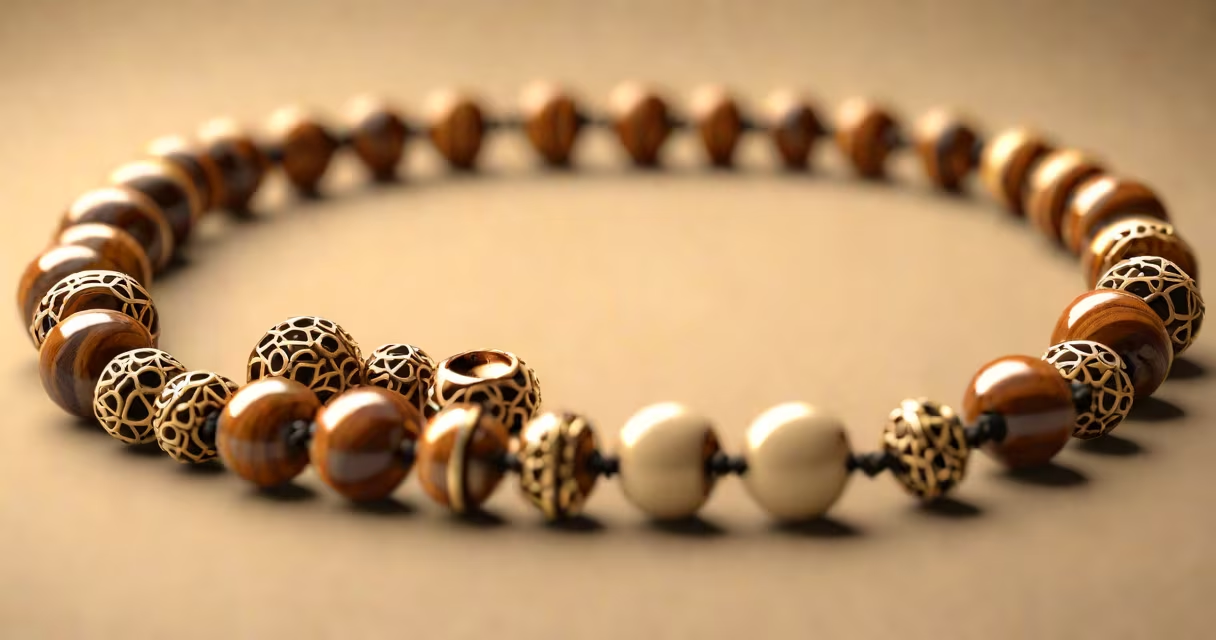
A monk beads bracelet is a string of 108 beads traditionally used in Buddhist and Hindu practices for counting mantras, prayers, or breaths during meditation. It serves as a tactile tool to maintain focus and track repetitions, often worn as a reminder of presence and intention.
The standard configuration includes 108 beads, one larger guru bead, and a tassel or knot at the end. This structure reflects ancient spiritual math: 108 is considered a sacred number in multiple traditions, symbolizing the 108 human desires or the 108 stages on the path to enlightenment. The beads are typically made from natural materials such as sandalwood, rudraksha, or bodhi seeds-each carrying symbolic weight based on origin and texture.
Each bead represents a single repetition of a mantra or breath cycle. As the user moves their fingers along the beads, they touch each one while silently reciting a phrase-common ones include "Om" or "I am calm." The motion grounds attention in the present moment, reducing mental chatter. This physical engagement supports sustained concentration, especially during long meditation sessions.
Monk beads bracelets function through rhythmic, tactile feedback. The user begins at the guru bead-the largest one-and moves clockwise through the 108 beads using the thumb and index finger. After completing a full circuit, they return to the start, continuing until the desired number of repetitions is reached. The guru bead acts as both a marker and a boundary: crossing it signals completion of a round.
This method prevents mental drift. Without a physical counter, users lose track of cycles and may restart incorrectly. The beads provide immediate sensory confirmation: a bead touched equals one repetition. This reduces reliance on memory and allows deeper immersion in the practice.
For example, someone meditating on gratitude might repeat "I am thankful" 108 times. With each utterance, they slide their finger from one bead to the next. When they reach the guru bead again, they pause, reflect, and decide whether to continue. The process becomes a ritual of attention, not just a mechanical count.
While the design remains consistent, materials vary widely based on tradition, availability, and symbolism. Common types include:
| Type | Material | Symbolism & Use | Source |
|---|---|---|---|
| Bodhi Seed Beads | From the Bodhi tree in India | Associated with Buddha's enlightenment; believed to promote wisdom and clarity | British Museum |
| Rudraksha | Seed from a Himalayan tree | Linked to Lord Shiva; used in Hindu rituals for emotional balance | Vedic Puranas |
| Sandalwood | Wood from Indian sandalwood trees | Known for calming scent; used in meditation to reduce anxiety | NIH Study on Sandalwood Oil |
Some modern versions use glass, metal, or synthetic resin. These are often marketed for fashion rather than spiritual use. However, authenticity matters: natural materials are preferred in traditional settings because they're believed to carry subtle energetic properties.
The size and spacing of beads affect usability. Smaller beads require precise fingertip control, making them harder to handle during prolonged sessions. Larger beads offer better grip and are easier to feel, especially for people with arthritis or reduced dexterity.
Many assume monk beads bracelets are interchangeable with prayer beads used in Christianity or Catholicism. While both serve as counting tools, the intent differs. Christian rosaries typically follow a set sequence of prayers tied to specific events in Jesus' life. Monk beads, by contrast, emphasize continuous repetition of a single phrase or breath cycle, aiming for mental stillness rather than narrative recall.
Another error is thinking the bracelet must be worn daily. In reality, many practitioners use it only during formal meditation. Others keep it nearby as a visual cue. Wearing it constantly is not required-and in some traditions, it's discouraged, as the object should remain sacred, not mundane.
A lesser-known fact: the number 108 isn't arbitrary. In Vedic cosmology, the universe contains 108 energy lines converging at the heart chakra. In astronomy, the average distance between Earth and the Sun is roughly 108 times the diameter of the Sun. These connections reinforce the belief that 108 holds universal significance beyond religious context.
I once attended a silent retreat in northern California where participants were given handmade monk beads bracelets made from bodhi seeds. The facilitator instructed us to use them during morning and evening sessions. Over seven days, I focused on the phrase "I am here," repeating it once per bead.
On day three, my mind wandered frequently. I'd miss a bead or skip ahead. But by day five, the rhythm became automatic. My hands knew the path before my thoughts did. During a guided session, I lost track entirely-but when I returned to the guru bead, I noticed my breathing had slowed. The physical act had recentered me.
This experience confirmed what research shows: repetitive motor tasks paired with focused attention improve neural regulation. A 2021 study published in *Mindfulness* found that individuals using mala beads reported higher levels of sustained attention and lower stress compared to those who meditated without tools.
Today, monk beads bracelets are also used in mindfulness-based cognitive therapy (MBCT) programs. Clinicians recommend them for patients struggling with rumination or intrusive thoughts. The tactile nature provides a grounding anchor during moments of emotional distress.
If you're beginning, choose a simple bracelet with 108 beads and a clear guru bead. Start with one minute of chanting per session. Use a quiet space, sit upright, and begin at the guru bead. Move slowly. Let the rhythm guide you.
Remember: the purpose isn't perfection. It's presence. silent awareness, the monk beads bracelet offers a tangible way to stay anchored in the now.