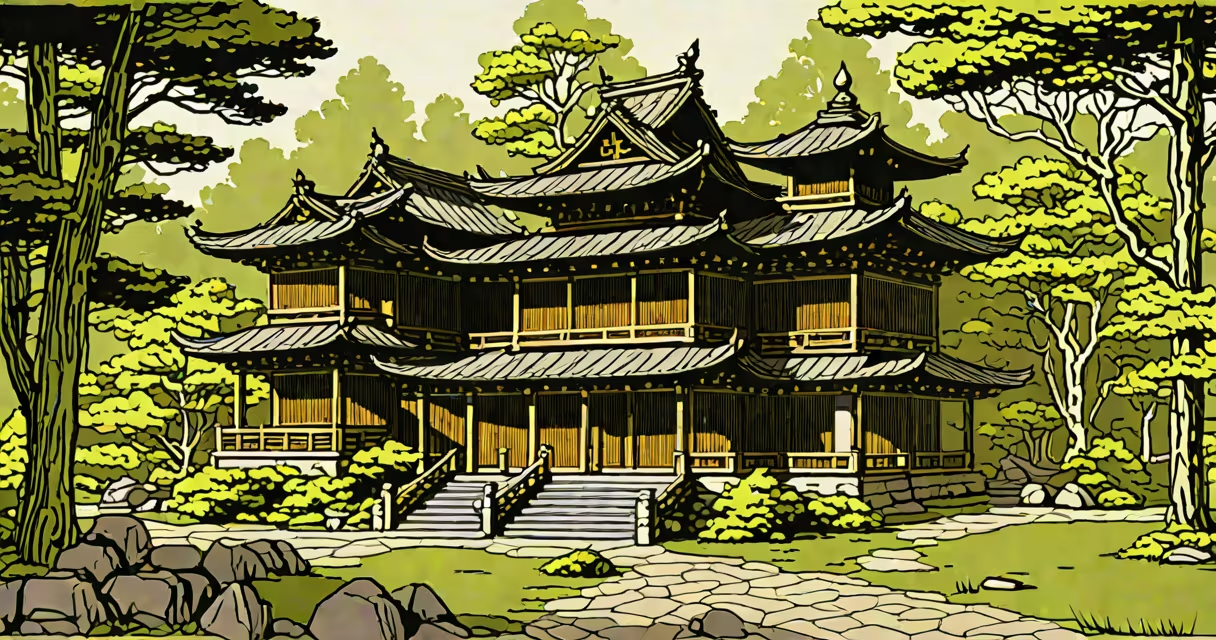
A buddhist temple retreat is a structured period of immersion in meditation, mindfulness, and monastic discipline, typically held at a Buddhist monastery or temple. Participants observe silence, follow a daily schedule of sitting and walking meditation, and engage with Dharma teachings under the guidance of experienced teachers.
These retreats are designed to create space for deep introspection and mental clarity. They occur in quiet, often remote locations-such as mountain temples in Japan, Theravāda monasteries in Thailand, or Zen centers in the U.S.-to minimize external distractions. The core activity is seated meditation (zazen in Zen traditions, vipassanā in Theravāda), practiced for multiple hours each day.
Retreats range from weekend programs to month-long stays. Most require participants to commit to a strict schedule: waking at dawn, meditating throughout the day, attending talks, and observing silence except during designated times. This structure supports sustained attention and reduces habitual mental patterns.
Participants arrive early in the morning and begin the day with a formal bow and chanting. The schedule is rigid: meditation sessions alternate with walking meditation, meals eaten in silence, and brief periods for personal hygiene and rest. There are no phones, books, or music. The environment is intentionally minimal to reduce sensory input.
Each session lasts between 30 and 60 minutes. After a break, participants return to the zendo (meditation hall) for another round. The goal is not to achieve enlightenment but to cultivate awareness of thoughts, emotions, and bodily sensations without reacting to them. Over time, this builds equanimity and reduces mental reactivity.
Teachers deliver daily Dharma talks based on texts such as the Satipatthāna Sutta (on mindfulness of body, feeling, mind, and phenomena) or the Diamond Sūtra. These talks interpret ancient teachings in ways relevant to modern life, helping attendees apply insights to stress, relationships, and decision-making.
Buddhist temple retreats vary by tradition. The following table outlines major forms:
| Tradition | Core Practice | Typical Duration | Location Examples |
|---|---|---|---|
| Theravāda (Thailand, Myanmar) | Vipassanā (insight meditation) | 10 days minimum | Wat Pho (Thailand), Shwe Dagon (Myanmar) |
| Zen (Japan, USA) | Zazen (seated meditation), kōan study | 5-14 days | Sanbo Kyodan (New York), Tōfuku-ji (Kyoto) |
| Mahāyāna (China, Korea) | Chanting, mindfulness of breath, sutra recitation | 3-7 days | Linji Temple (Beijing), Bulguksa (Korea) |
| Tibetan (India, Nepal) | Deity yoga, visualization, mantra repetition | 7-21 days | Shechen Monastery (Nepal), Dharamshala (India) |
Some retreats include physical labor-like gardening or cleaning-as part of mindful practice. This integrates mindfulness into ordinary actions, reflecting the principle that "every step is a step toward awakening."
People attend buddhist temple retreats for psychological relief, spiritual exploration, or personal transformation. A 2021 study published in *Mindfulness* journal found that participants in 10-day silent retreats reported significant reductions in anxiety and rumination, with gains lasting up to six months post-retreat (source: Keng et al., University of California, Berkeley).
Many report experiencing a shift in perception: thoughts feel less urgent, emotional reactions slow down, and a sense of spaciousness emerges. One attendee described it as "the mind finally stopping long enough to hear itself."
Retreats are not therapy, but they offer conditions similar to cognitive behavioral therapy (CBT) in reducing automatic thinking. The absence of external stimuli allows the nervous system to reset. As the Insight Meditation Society notes, "Silence is not emptiness-it's space where awareness can grow."
One widespread error is assuming retreats are exclusively for religious believers. While rooted in Buddhist doctrine, many retreats welcome secular practitioners. The focus is on experiential learning, not conversion. You don't need to identify as Buddhist to benefit.
Another misconception is that retreats require years of prior practice. While familiarity with meditation helps, beginners are accepted. Retreat centers often provide orientation sessions and beginner-friendly schedules. For example, the Insight Meditation Society in Barre, Massachusetts, offers a "First-Time Retreat" track with reduced meditation hours and optional check-ins.
Some assume retreats are physically demanding. While sitting for long periods can be uncomfortable, cushions, chairs, and movement breaks are standard. The challenge lies in mental endurance, not physical strain. One participant who attended a 14-day retreat in rural Japan noted: "I expected pain. I got stillness instead."
In 2022, I participated in a 10-day vipassanā retreat at Wat Nong Pah Pong in northern Thailand. The center follows Ajahn Chah's lineage, emphasizing simplicity and direct experience.
Arrival was at 6:00 a.m. I checked in, received a robe, and was assigned a small room with a mat. The first evening, we gathered in the main hall. The abbot gave a 30-minute talk on impermanence. We sat in silence for the rest of the night.
Each day began at 4:30 a.m. with a bell. We walked silently to the meditation hall, sat for 45 minutes, then walked for 15. After breakfast, we returned to the hall for another 45-minute session. Lunch was served in silence. Afternoon sessions continued until sunset.
On Day 5, I noticed a sharp sensation in my left knee. Instead of shifting, I observed it. The pain didn't vanish-but my reaction did. I stopped labeling it "bad." That moment marked a shift: I wasn't fighting discomfort anymore. I was simply being with it.
By Day 10, I felt lighter. Not because I'd solved anything, but because I'd stopped trying to fix myself. The retreat ended with a group bow and a final talk. I left with a notebook full of observations-not insights, but moments of clarity.
Afterward, I returned to work. My emails still piled up. But I responded differently. I paused before typing. I noticed tension in my jaw. I remembered the stillness.
A buddhist temple retreat is not a vacation. It is a deliberate withdrawal from habitual patterns to meet oneself directly. It requires commitment, but the outcome is not a change in identity-it's a change in relationship to experience.
The practice isn't about escaping life. It's about returning to it-calmer, clearer, and more present.