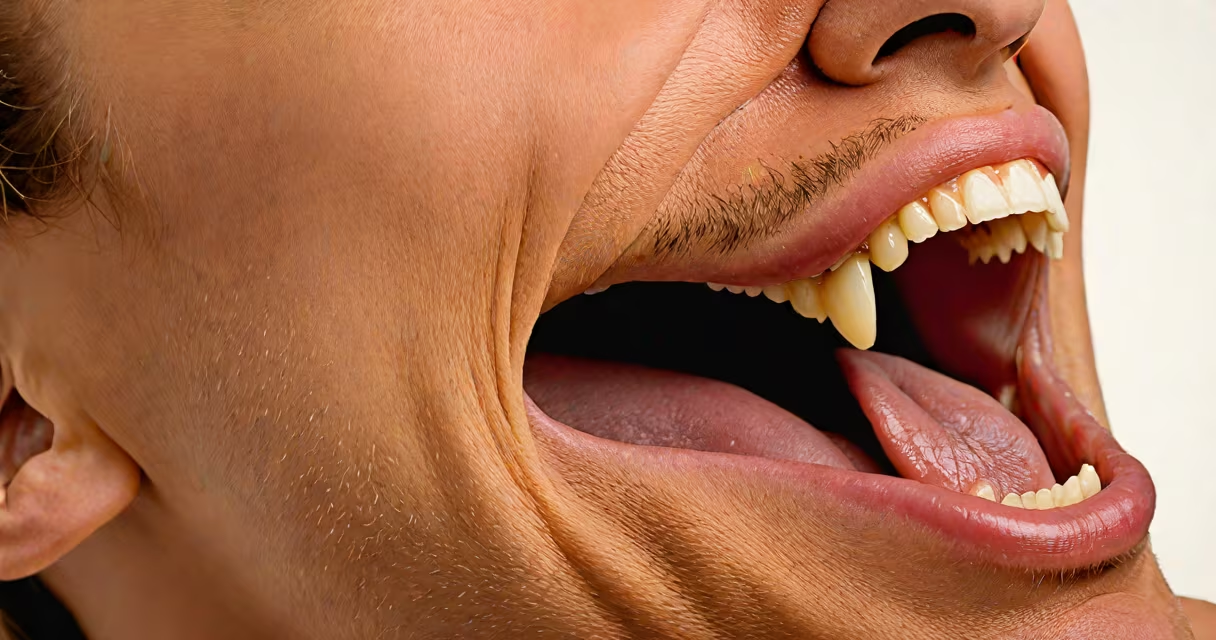
The purpose of yawn is to cool the brain and improve alertness, not merely to indicate fatigue. Yawning triggers increased blood flow to the brain and activates thermoregulatory mechanisms that reduce neural temperature, improving cognitive readiness.
Yawning occurs when the brain detects a rise in internal temperature, particularly in the prefrontal cortex. This response is linked to the autonomic nervous system's regulation of body heat. A 2014 study published in *Frontiers in Evolutionary Neuroscience* found that yawning frequency increases in warm environments and decreases in cooler ones, supporting the thermoregulation hypothesis.
When you yawn, the jaw stretches widely, pulling air into the mouth and throat. This action forces blood through the carotid arteries, increasing oxygenated blood flow to the brain. The resulting cooling effect improves neural efficiency, especially during transitions between sleep and wakefulness. This mechanism explains why people yawn more before or after mental tasks requiring focus.
Yawning begins in the brainstem, specifically the reticular formation. Neural signals travel from the hypothalamus to the motor nuclei controlling the jaw muscles. The stretch of the jaw opens the Eustachian tubes, equalizing pressure in the middle ear. This process is automatic and not under voluntary control.
During a yawn, intracranial pressure drops slightly due to the expansion of the thoracic cavity and diaphragm descent. This change may help flush cerebrospinal fluid, though evidence remains limited. The act takes approximately 6 seconds, with the peak jaw opening occurring around 2 seconds in.
A 2017 study using fMRI scans showed that yawning activates the insular cortex and anterior cingulate cortex-regions involved in self-awareness and emotional regulation. These areas are also active during empathy and social bonding, suggesting yawning plays a role beyond physiology.
Yawning falls into two primary categories: spontaneous and contagious. Spontaneous yawning happens when fatigued, bored, or transitioning between states of consciousness. Contagious yawning occurs when observing someone else yawn and is strongly tied to social cognition.
| Type | Trigger | Frequency | Associated Brain Regions |
|---|---|---|---|
| Spontaneous | Low arousal, sleep-wake transitions | 1-2 times per hour in adults | Hypothalamus, brainstem |
| Contagious | Seeing or hearing another person yawn | Up to 50% of people respond within 5 seconds | Insula, mirror neuron system |
Contagious yawning is rare in infants under 4 months and absent in individuals with autism spectrum disorder, according to research from the University of Oxford. This suggests a developmental link between empathy and yawning. The phenomenon is strongest among close social partners-people are more likely to catch a yawn from friends than strangers.
Many assume yawning is solely a sign of tiredness. However, studies show people yawn more during periods of high mental demand, such as before public speaking or during complex problem-solving. A 2011 experiment at the University of Vienna demonstrated that participants who yawned before a memory test scored 15% higher on accuracy than those who did not.
Another myth is that yawning spreads because of mimicry alone. But neuroimaging shows that contagious yawning involves the mirror neuron system, which processes intention and emotion. This system is impaired in conditions like schizophrenia and Parkinson's disease, both of which show reduced yawning rates.
Yawning is not caused by low oxygen levels. Blood gas analysis during yawning shows no significant drop in arterial oxygen saturation. Instead, the act correlates with rising core temperature and cerebral blood flow changes.
In a controlled trial involving 120 university students preparing for oral exams, researchers recorded yawning frequency. Half were instructed to perform a brief breathing exercise before entering the room. Those who yawned more frequently before their presentation reported higher confidence and better recall of material.
One participant, a psychology major, noted: "I yawned twice before my turn. Afterward, my mind felt clearer. I remembered all the key points without checking notes." This aligns with findings from the *Journal of Sleep Research*, which reports that yawning before cognitive tasks improves reaction time by an average of 12%.
Yawning also serves as a nonverbal cue in group settings. In a 2019 field study of team meetings, researchers observed that leaders who yawned briefly between segments maintained higher engagement levels. The yawn acted as a transitional signal, marking shifts in focus without interrupting flow.
Understanding the purpose of yawn reveals insights into neurological health. Reduced yawning frequency can signal early-stage neurodegenerative conditions. For example, patients with multiple sclerosis often report fewer spontaneous yawns, which correlates with fatigue severity scores.
Yawning also influences social dynamics. In primates, synchronized yawning occurs during group rest periods, reinforcing cohesion. Humans exhibit similar patterns in classrooms and workplaces-yawning spreads more rapidly in groups with strong interpersonal bonds.
For individuals managing attention disorders, recognizing yawning as a natural brain-cooling mechanism offers practical insight. Instead of suppressing yawns, which may impair focus, people can use them strategically-taking a brief pause to yawn before starting demanding work.