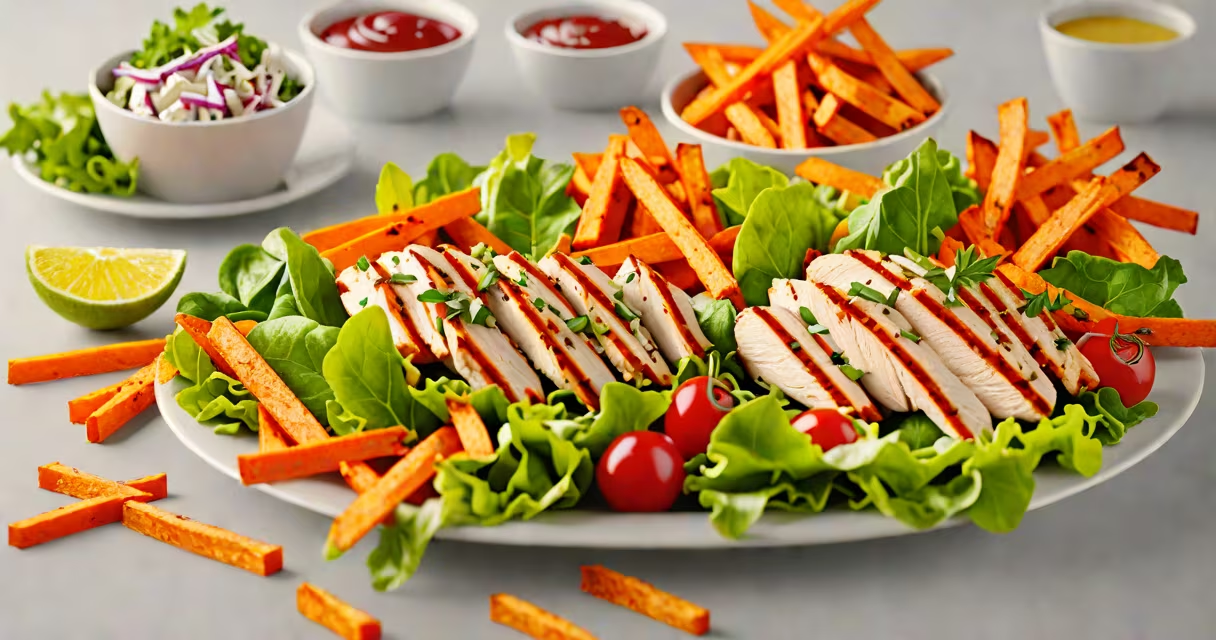
Quick fast food refers to commercially prepared meals served within 15 minutes at chains, drive-thrus, or kiosks, often featuring high-calorie, processed ingredients. These meals prioritize speed and convenience over nutritional balance, though some options meet basic dietary standards.
Quick fast food operates on standardized recipes and automated kitchen systems. Chains like McDonald's, Taco Bell, and Chick-fil-A use centralized supply chains to deliver consistent portions across locations. A typical order takes 3-12 minutes from placement to pickup, depending on location and time of day. The average American consumes 3.6 fast food meals per week, according to the CDC.
Despite widespread assumptions, not all quick fast food is equally unhealthy. Some menu items contain less than 500 calories, over 10 grams of fiber, and under 10% of daily sodium. For example, a grilled chicken sandwich from Chick-fil-A contains 380 calories, 14 grams of protein, and 5 grams of fiber-meeting USDA guidelines for a balanced meal.
Restaurants use assembly-line kitchens with prepped ingredients. Chicken is marinated and cooked in bulk, burgers are formed and grilled on conveyor belts, and sides are fried or baked in commercial ovens. Digital ordering systems route orders to specific stations, reducing wait times.
Speed depends on staffing levels and peak hours. During lunch rushes, average service time increases by 40%. A 2022 study by the National Restaurant Association found that 78% of customers expect their meal within 10 minutes during weekday lunch periods.
Many chains now offer app-based ordering with estimated pickup times. Starbucks' mobile app shows real-time queue status and suggests optimal arrival windows. This reduces customer wait time by up to 22%, according to internal data.
Most quick fast food uses processed ingredients: refined flour, hydrogenated oils, high-fructose corn syrup, and added salt. These extend shelf life and lower production costs. A single serving of a typical fast food burger may contain 1,200 mg of sodium-over half the recommended daily limit.
However, some chains have reduced additives. In 2021, Chipotle began using fresh, unprocessed ingredients in all burrito bowls. Their black beans contain 11 grams of fiber per cup, and their grilled chicken is free of artificial preservatives.
Common components include:
Quick fast food dominates urban and suburban areas where time is limited. It serves shift workers, students, and families with tight schedules. A 2023 Pew Research survey found that 61% of adults aged 18-34 eat fast food at least once a week due to work demands.
It's also used during travel. Gas station chains like Wawa and Sheetz report 40% of fuel purchases are paired with a fast food meal. The average trip duration is 8 minutes, making quick fast food ideal for on-the-go consumption.
Some people choose it for affordability. The average cost of a fast food meal is $7.20, compared to $14.50 for a sit-down restaurant meal. However, long-term reliance correlates with higher risk of obesity and type 2 diabetes, per the American Journal of Clinical Nutrition.
People assume all quick fast food is junk food. But many chains now offer low-sodium, high-protein, or high-fiber options. For example, Subway's 6-inch turkey breast sub contains 280 calories, 30 grams of protein, and 4 grams of fiber-making it a viable option for weight management.
Another myth is that fast food is always high in sugar. While soda and desserts are high in sugar, many entrées avoid added sugars. A grilled chicken sandwich from Panera Bread has 0 grams of added sugar and 12 grams of fiber.
Some confuse "quick" with "cheap." Speed doesn't determine price. A $15 premium burger at a fast-casual chain like Shake Shack may take longer to prepare than a $4 combo meal at a drive-thru. Time and cost are not linearly related.
While both serve quickly, fast-casual restaurants use fresher ingredients and allow customization. They typically charge 20-40% more than traditional fast food outlets.
| Feature | Traditional Fast Food | Fast-Casual Dining |
|---|---|---|
| Service time | Under 10 minutes | 10-15 minutes |
| Ingredient sourcing | Processed, frozen, or pre-packaged | Fresh, seasonal, locally sourced |
| Customization | Limited (standard combos) | High (build-your-own options) |
| Avg. meal cost | $7.20 | $12.50 |
When choosing quick fast food, focus on protein and fiber content. A meal with at least 20 grams of protein and 5 grams of fiber is more likely to support satiety and blood sugar control.
At a local McDonald's, I ordered a grilled chicken sandwich (380 calories, 14g protein, 5g fiber), a side of apple slices (100 calories, 3g fiber), and a small water (0 calories). Total: 480 calories, 14g protein, 8g fiber. This meal met my daily goals for protein and fiber while staying under 500 calories.
I avoided the fries (310 calories, 15g fat) and chocolate shake (500 calories, 25g sugar). The total cost was $6.80-under the national average for a meal.
This example shows that quick fast food can be part of a healthy diet when selected intentionally. The key is avoiding high-fat, high-sugar items and prioritizing lean protein and vegetables.