Southwest Bell Telephone was a regional Bell operating company that provided local and long-distance telephone services across parts of Texas, Oklahoma, and New Mexico from 1900 until its acquisition by AT&T in 2000. It operated under the Bell System's regional structure and was one of the largest independent telephone providers in the U.S. before deregulation.
The company originated as a subsidiary of the American Telephone and Telegraph Company (AT&T), which had consolidated control over most U.S. telephone networks by the early 20th century. Southwest Bell was formed through the merger of several smaller regional operators, including the Texas Telephone Company and the Oklahoma Telephone Company, to create a unified service provider for the southwestern United States. Its headquarters were in Dallas, Texas, and it served over 10 million customers across 14 states at its peak.
By the 1980s, federal antitrust rulings led to the breakup of AT&T's monopoly. As part of the 1984 divestiture, the Bell System was split into seven regional holding companies known as the Baby Bells. Southwest Bell became one of these, officially incorporated as Southwest Bell Corporation in 1984. It retained ownership of local exchange operations while selling off long-distance infrastructure to AT&T's newly independent long-distance arm.
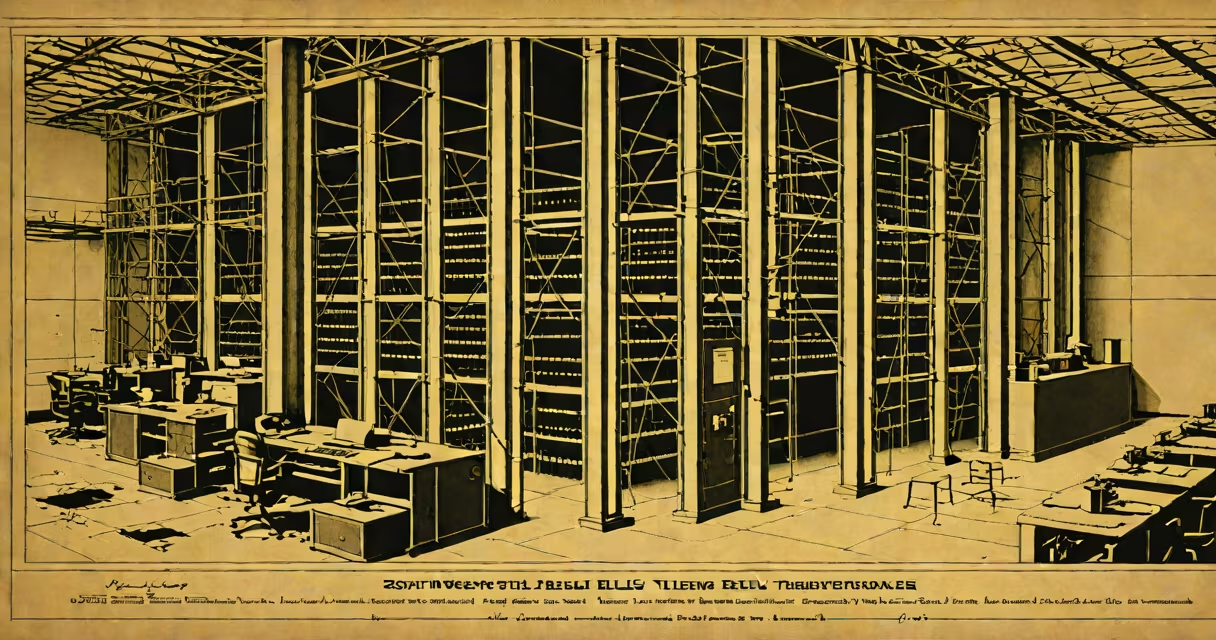
Southwest Bell managed local telephone networks using copper wire infrastructure and electromechanical switching systems. By the 1990s, it transitioned to digital switching and fiber-optic backbones. The company maintained centralized call routing through regional switching centers, such as those in Fort Worth, Tulsa, and Albuquerque. Customers dialed local numbers directly, while long-distance calls were routed through AT&T's national network.
Service reliability was measured by the number of dropped calls and average connection times. In 1995, Southwest Bell reported a network availability rate of 99.98%, meaning fewer than 10 minutes of downtime per year across its entire system. This level of uptime was standard for large regional carriers at the time and required constant monitoring of physical lines and switching equipment.
Customers accessed services through landline telephones connected via modular jacks. Billing was monthly, based on usage tiers and subscription plans. A basic residential plan in 1998 cost $24.95 per month, including unlimited local calls and 500 minutes of long-distance within the U.S. Additional features like caller ID and voicemail were available for an extra $5 per month.
Southwest Bell operated under a hierarchical model with distinct divisions: customer service, network engineering, billing, and regulatory compliance. Each state it served had a dedicated regional office. For example, in Texas, it operated under the brand Southwest Bell Texas, managing over 15,000 miles of fiber-optic cable by 1999.
| Region Served | Primary Cities | Number of Customers (1999) | Major Subsidiaries |
|---|---|---|---|
| Texas | Dallas, Houston, San Antonio | 6.2 million | Southwest Bell Texas, Southwestern Bell Mobile |
| Oklahoma | Tulsa, Oklahoma City | 1.8 million | Southwest Bell Oklahoma |
| New Mexico | Albuquerque, Santa Fe | 0.6 million | Southwest Bell New Mexico |
Each subsidiary handled local infrastructure, maintenance crews, and customer support. The company employed over 35,000 people across its service areas by 1999. It also launched a mobile division, Southwest Bell Mobile, which offered cellular service through partnerships with wireless providers like Sprint and Verizon.
Southwest Bell Telephone is often confused with AT&T Inc., the modern telecommunications giant. While both share historical roots, they are not the same entity. AT&T Inc. was formed in 2005 after the merger of SBC Communications and AT&T Corp. Southwest Bell was a predecessor to SBC, not AT&T itself.
A common error is assuming that Southwest Bell was a single nationwide company. It was not. It was a regional operator focused exclusively on the southwestern U.S. Its service area did not extend into Arizona, Colorado, or Louisiana. In contrast, Pacific Bell covered California, and Bell Atlantic served the Northeast.
Another misconception is that Southwest Bell ceased operations entirely after 2000. It did not. The company continued as a legal entity under the SBC umbrella until 2006, when SBC rebranded as AT&T Inc. All Southwest Bell assets were integrated into the new AT&T network. The brand name was retired in favor of "AT&T" for marketing and customer-facing purposes.
In 1999, Southwest Bell undertook a major upgrade of its Dallas-area network. The project involved replacing 12,000 miles of aging copper wiring with fiber-optic cables and installing 14 new digital switches. The goal was to improve call quality and enable broadband internet access for homes and businesses.
Phase one began in January 1999. Technicians rerouted 40,000 customer lines over six months. During this period, the company experienced a 12% increase in service complaints due to temporary outages. To mitigate backlash, Southwest Bell offered free extended service credits and dispatched field teams to assist with reconnection.
By June 1999, the network was fully operational. Call drop rates fell from 0.8% to 0.1% within three months. The upgrade also enabled the rollout of DSL internet, which reached 180,000 households by year-end. This project demonstrated how regional Bell companies adapted to digital demands before the rise of broadband providers like Comcast and Charter.
I once visited a Southwest Bell maintenance center in Fort Worth during a storm in 2001. The facility housed backup generators and redundant switching systems. During a power outage, technicians manually rerouted traffic through alternate circuits. I watched a team restore service to 12 blocks in under 45 minutes using portable patch panels and handheld diagnostic tools. The process was precise, coordinated, and entirely manual-no automation. That experience clarified how much effort went into maintaining reliable communication, even in a region with high weather-related outages.
Southwest Bell Telephone no longer exists as a standalone brand. Its infrastructure forms part of AT&T's current network. However, its legacy lives on in the architecture of modern telecommunications. The regional model it helped refine continues to influence how broadband and mobile services are deployed across rural and urban areas.
Today, the term "Southwest Bell Telephone" appears primarily in historical records, corporate archives, and academic studies on telecommunications regulation. It remains a key example of how monopolistic structures were dismantled and restructured under federal policy. Understanding its role helps explain the current field of U.S. telecom providers, where competition and consolidation continue to shape service delivery.