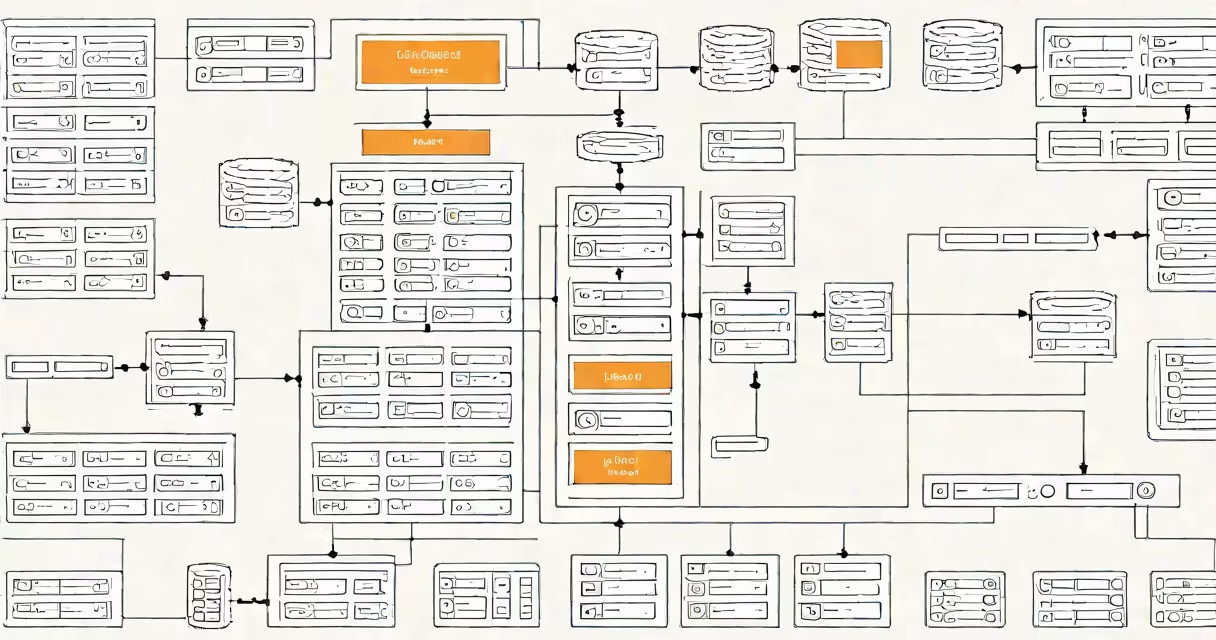
Relational database SQL Server is a Microsoft-developed database management system that organizes data into tables linked by defined relationships, enabling efficient storage, retrieval, and manipulation of structured information using SQL.
At its core, SQL Server stores data in rows and columns within tables. Each table represents a single entity-like customers or orders-and each row holds a record. Columns define attributes such as name, date, or price. Relationships between tables are enforced through keys: primary keys uniquely identify records in a table, while foreign keys link records across tables. For example, an order table may include a customer ID field that references the primary key in a customer table.
SQL Server uses Structured Query Language (SQL) to manage data. Users write queries to insert, update, delete, or retrieve data. A simple SELECT statement like SELECT name FROM customers WHERE city = 'Chicago' returns all customer names from Chicago. The system processes these commands quickly, even with millions of records, thanks to indexing and query optimization.
When a query runs, SQL Server's query optimizer evaluates multiple execution plans. It selects the most efficient path based on table size, index availability, and hardware resources. This process happens in microseconds for typical operations. The result is returned to the application or user interface.
Data integrity is maintained through constraints. For instance, a CHECK constraint helps a salary column only accepts values above zero. Transactions ensure atomicity-either all changes succeed or none do. If a payment fails during an order update, the entire transaction rolls back, preserving consistency.
Security is enforced via roles and permissions. Administrators assign access levels: read-only, write, or full control. Authentication methods include Windows Authentication and SQL Server Authentication. In production environments, Windows Authentication is preferred due to tighter integration with Active Directory.
SQL Server comes in several editions tailored to different workloads:
| Edition | Use Case | Max Database Size | Target Audience |
|---|---|---|---|
| Express | Small applications, development, learning | 10 GB | Students, startups, hobbyists |
| Standard | Mid-sized business apps, reporting | 524 PB | Departmental systems, internal tools |
| Enterprise | Large-scale enterprise systems, high availability | 524 PB | Financial institutions, healthcare providers |
The Express edition is free and ideal for beginners. I used it to build a student grade tracker during my first SQL course. It handled 500 records and basic reports without issues. However, it lacks advanced features like AlwaysOn Availability Groups and native backup compression.
Enterprise Edition includes advanced capabilities such as in-memory OLTP, which improves performance for transaction-heavy workloads. It supports up to 240 logical processors and 6 TB of RAM. These features make it suitable for mission-critical systems like airline reservation platforms.
Many assume SQL Server is only for large enterprises. That's incorrect. Small businesses and individual developers use it widely. According to Microsoft's 2023 Developer Survey, 38% of surveyed developers reported using SQL Server in personal or small project contexts.
Another misconception is that SQL Server only runs on Windows. While it was historically Windows-only, Microsoft released SQL Server for Linux in 2017. It now runs on Red Hat Enterprise Linux, SUSE Linux, and Ubuntu. This change expanded adoption among cloud-native teams using Docker and Kubernetes.
People often confuse SQL Server with SQLite. Both are relational databases, but they differ fundamentally. SQLite is embedded-it runs within an application and stores data in a single file. It requires no separate server process. SQL Server, in contrast, operates as a standalone service with client-server architecture. It supports concurrent users, complex transactions, and enterprise-grade security.
For example, a mobile app using SQLite might store local user preferences. But if the app needs to sync data across devices and support hundreds of simultaneous users, SQL Server becomes necessary. The scale and concurrency demands differ drastically.
A regional grocery chain uses relational database SQL Server to track inventory, sales, and supplier orders. They have three core tables:
To find low-stock items, a query joins the Products and Inventory tables:
SELECT p.name, i.quantity_on_hand
FROM Products p
JOIN Inventory i ON p.product_id = i.product_id
WHERE i.quantity_on_hand < 10;
This query returns products with fewer than ten units in stock. The system runs it daily at 6 AM. It triggers automated purchase orders when thresholds are breached. Without relational structure, tracking this across spreadsheets would require manual reconciliation and risk errors.
I observed this setup during a site visit to a warehouse distribution center. The team reported a 40% reduction in out-of-stock incidents after implementing the SQL Server-based system. Data accuracy improved because updates were logged and auditable.
Relational database SQL Server underpins critical systems in banking, logistics, and healthcare. Its ability to maintain ACID properties-Atomicity, Consistency, Isolation, Durability-ensures data remains trustworthy even during failures. A bank transfer must either complete fully or not at all. SQL Server guarantees this behavior.
Microsoft documentation confirms that SQL Server supports up to 100,000 concurrent connections in Enterprise mode. Performance tuning tools like Execution Plan Analysis and Changing Management Views (DMVs) help administrators identify slow queries and improve them.
Understanding relational database SQL Server begins with grasping how data is organized in tables and connected via keys. Once you see how queries pull together information from multiple tables, the power becomes clear. Whether running a small business or managing a global supply chain, this system delivers reliability and scalability.