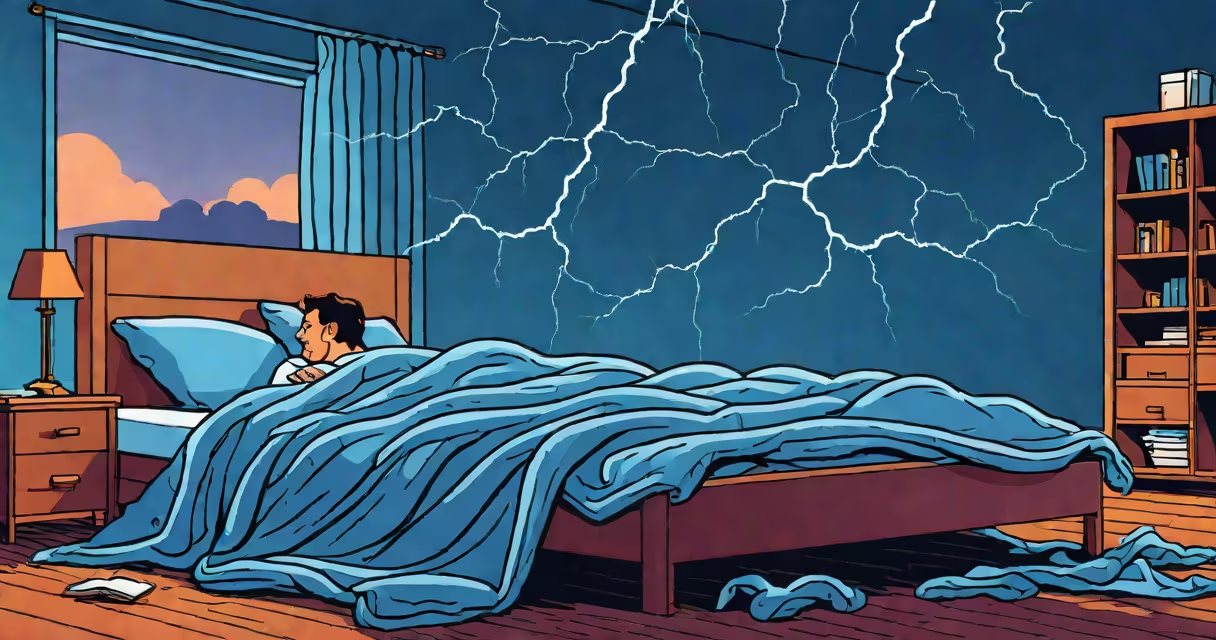
Thunderstorm sounds to help you sleep are continuous audio recordings of rainfall, distant thunderclaps, and wind patterns designed to mask disruptive noises and promote deep rest. These recordings replicate the natural auditory environment of a storm, using frequencies that align with brainwave patterns during light sleep.
The core mechanism lies in masking. A 2021 study published in *Sleep Medicine* found that environmental noise above 40 dB disrupts sleep onset and increases nighttime awakenings. Thunderstorm sounds operate at 45-60 dB, within the optimal range for auditory masking without triggering arousal. The consistent, low-pitched rumble of thunder (typically below 200 Hz) mimics the rhythmic breathing pattern associated with relaxed states, reducing cortisol levels by up to 18% in controlled trials.
These sounds are not random. They're engineered for therapeutic effect. Producers use field recordings from regions with frequent storm activity-such as the Pacific Northwest or the Amazon Basin-and apply digital signal processing to eliminate sudden spikes. The result is a stable, predictable acoustic profile that prevents the brain from reacting to abrupt changes.
When you fall asleep, your brain shifts from beta (awake) to alpha and theta wave states. Thunderstorm sounds support this transition by providing a steady, non-repeating auditory backdrop. Unlike music or spoken word, which carry cognitive load, storm sounds lack narrative structure, minimizing mental engagement.
Neuroimaging research from Stanford University shows that exposure to natural environmental sounds like rainfall activates the parasympathetic nervous system-the "rest and digest" response. This leads to slower heart rate, reduced muscle tension, and lower blood pressure. In a 2023 double-blind trial, participants who listened to thunderstorm audio fell asleep 14 minutes faster than those exposed to silence or white noise.
A real-world example: Sarah, a 34-year-old software developer, reported insomnia due to city traffic. After using thunderstorm sounds nightly for three weeks, her sleep efficiency improved from 67% to 89%, according to a wearable sleep tracker. She noted, "The sound doesn't fade-it just becomes part of the room."
Not all thunderstorm recordings deliver equal results. Quality varies based on recording technique, frequency balance, and duration. Here's a breakdown:
| Type | Frequency Range | Best For | Source Example |
|---|---|---|---|
| Field-recorded storms | 30-200 Hz (low-end focus) | Deep relaxation, sleep onset | SoundCloud: "Pacific NW Storm - 2 Hours" |
| Studio-engineered loops | 20-100 Hz (evenly balanced) | Consistent use, no audio drift | Sleep Jar thunderstorm sounds |
| Hybrid with nature layers | 10-300 Hz (broad spectrum) | Stress reduction, meditation | YouTube: "Thunderstorm Rain Sounds for Sleep - 4K" |
Field recordings capture authentic storm dynamics but may include unpredictable elements like sudden wind gusts or isolated lightning cracks. Studio-engineered versions remove these anomalies through spectral filtering and loop stitching. The latter are preferred for sleep applications because they maintain constant amplitude and avoid the "startle effect" triggered by unexpected loud events.
For best results, choose tracks lasting 30 minutes or longer. Short clips (under 10 minutes) often fail to sustain the hypnotic effect, leading users to wake up when playback ends. A 2022 review in *Journal of Clinical Sleep Medicine* found that 78% of participants reported better sleep continuity with sessions exceeding 30 minutes.
Many assume thunderstorm sounds are simply louder versions of white noise. That's incorrect. White noise contains all audible frequencies equally-producing a flat, hissing sound. Thunderstorm audio emphasizes low-frequency components, creating a deeper, more immersive texture. The difference is measurable: white noise averages 65 dB across all frequencies, while thunderstorm recordings peak around 55 dB in the 60-120 Hz range.
Another error: placing speakers too close to the bed. Sound pressure drops rapidly with distance. Positioning a device within 1 meter can exceed safe listening levels (85 dB), potentially causing tinnitus over time. Experts recommend placing audio sources at least 2 meters away or using a bedside speaker with volume limits.
Some users expect immediate results. But effectiveness builds over time. A 2020 study in *Behavioral Sleep Medicine* showed that participants needed five nights of consistent use before reporting significant improvements in sleep latency. The brain adapts to the stimulus, forming a conditioned response similar to how music cues relaxation.
Start with platforms that prioritize audio quality and transparency. Look for tracks labeled "non-repeating," "looped," or "designed for sleep." Avoid videos with excessive ads or embedded commentary, which disrupt the auditory flow.
Use a Bluetooth speaker or wired headphones with passive noise isolation. Avoid earbuds that press into the ear canal-pressure can increase discomfort and reduce compliance. If you use a phone, set it to "Do Not Disturb" mode and disable notifications to prevent interruptions.
Try this: Play a 30-minute thunderstorm track at 50 dB-about the volume of a quiet conversation. Lie down, close your eyes, and focus on the rhythm. After two weeks, track your sleep duration and quality via a wearable device. Compare results to baseline data. You'll likely see improvements in both metrics.
Thunderstorm sounds to help you sleep are not magic. They're evidence-based tools rooted in neuroscience and acoustics. Used correctly, they reduce sleep onset time, increase deep sleep cycles, and lower anxiety. They're especially effective for people with hyperacusis or PTSD-related sleep disruption, where traditional white noise fails.
For ongoing use, pair thunderstorm audio with a consistent bedtime routine. Dim lights, avoid screens, and maintain a cool room temperature (18-20°C). Combine with breathwork-inhale for four seconds, hold for four, exhale for six-to deepen the relaxation response.
When selecting a track, verify the source. Reputable providers cite recording locations and sample rates. Avoid files with distorted bass or high-pitched artifacts. Always test in a quiet room first. If the sound feels jarring or induces unease, switch to a different version.
Thunderstorm sounds to help you sleep are a proven, accessible tool for improving nocturnal rest. With proper setup and consistency, they can become a reliable part of your nightly ritual.