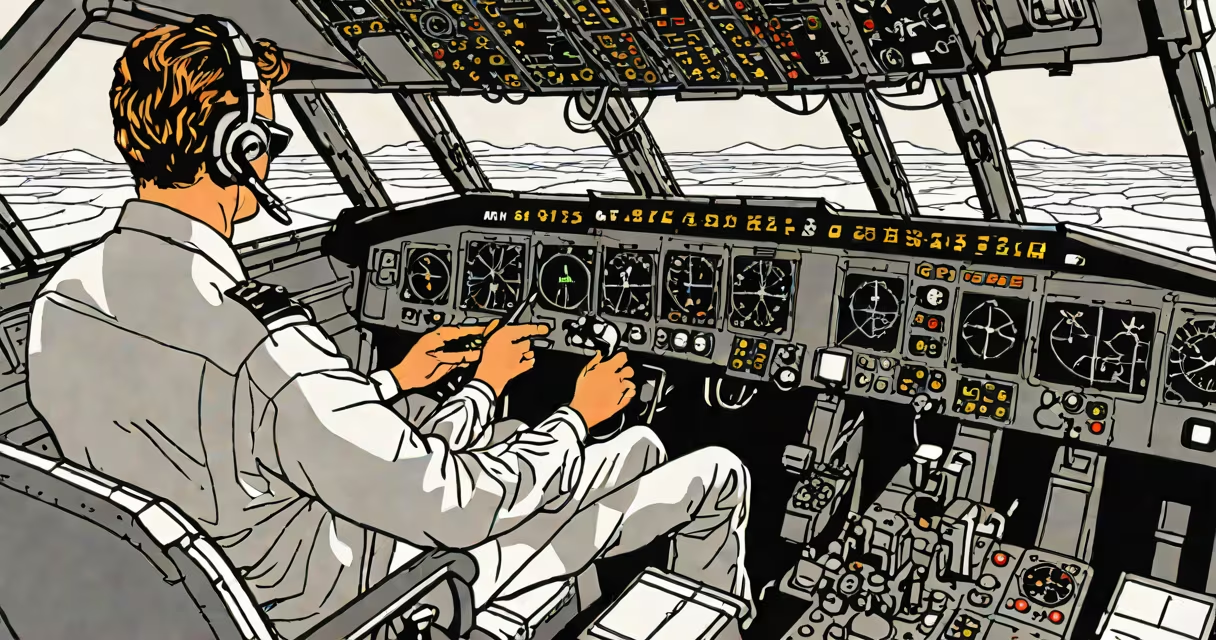
An instrument rating pilot is a licensed aviator authorized to fly under Instrument Flight Rules (IFR), relying solely on aircraft instruments and navigation systems when visual references are unavailable. This qualification allows flying in clouds, fog, or poor weather conditions where outside visibility is limited or absent.
The instrument rating is not a standalone license-it is added to a private or commercial pilot certificate. It permits the pilot to file and fly IFR flight plans, operate in controlled airspace, and land at airports without visual reference to the ground. Without it, pilots must remain in visual meteorological conditions (VMC), limiting operations during adverse weather.
According to the Federal Aviation Administration (FAA), over 60% of general aviation accidents occur during instrument meteorological conditions (IMC), often due to spatial disorientation. The instrument rating reduces this risk by training pilots to interpret flight instruments accurately and maintain control through reliance on data, not sight.
Instrument-rated pilots operate under IFR, which means they receive clearance from air traffic control (ATC) and follow predefined routes, altitudes, and procedures. They use onboard instruments such as attitude indicators, heading indicators, vertical speed indicators, and autopilot systems to maintain orientation and course.
Flight planning includes filing an IFR flight plan, obtaining clearance, and monitoring weather en route. Pilots must also monitor navigation aids like VORs, GPS waypoints, and ILS glideslopes to stay on course. ATC provides separation from other aircraft and guides the pilot through complex airspace, especially near major airports.
A real-world example: A pilot flying from Chicago to Denver in winter may encounter heavy snow and reduced visibility. With an instrument rating, they can proceed safely via established airways, descend using instrument landing system (ILS) approaches, and land without seeing the runway until touchdown-within certified performance limits.
To earn the instrument rating, a pilot must complete a minimum of 50 hours of cross-country flight time as pilot in command, including 10 hours of instrument flight time under actual or simulated instrument conditions. Additional requirements include:
The FAA's Airman Certification Standards (ACS) specify that candidates must demonstrate proficiency in holding patterns, intercepting and tracking courses, executing standard instrument departures (SIDs), and performing instrument approaches such as ILS, VOR, and RNAV.
One non-obvious requirement: pilots must log at least six instrument approaches within the past six months to maintain currency. Failure to meet this threshold results in a temporary loss of IFR privileges, requiring additional training before resuming instrument flight.
There are two primary categories of instrument ratings:
| Type | Eligibility | Use Case |
|---|---|---|
| Private Instrument Rating | Private pilot license holder | Personal flights in IMC, charter work, regional travel |
| Commercial Instrument Rating | Commercial pilot license holder | Professional flying, airline operations, cargo transport |
Many assume the instrument rating allows unlimited flight in any weather. That's incorrect. The rating only authorizes IFR flight under specific conditions-such as meeting minimum equipment requirements and receiving ATC clearance. Pilots still cannot fly below minimum descent altitudes or into known hazardous weather without proper briefing and equipment.
Another misconception: instrument flying is purely automated. In reality, most IFR flights require constant manual monitoring and decision-making. Even with autopilot engaged, the pilot remains responsible for navigation accuracy, weather changes, and emergency response.
I once flew a night cross-country from Seattle to Portland with a student pilot who had recently passed their instrument checkride. During a sudden drop in ceiling, we transitioned from VFR to IFR mode. The student maintained stable altitude and heading using only the attitude indicator and GPS, but the real challenge came when a nearby thunderstorm rerouted our clearance. We manually adjusted our route, communicated with ATC, and landed safely-all without visual cues. That experience reinforced that instrument flying is as much about judgment as it is about reading gauges.
For commercial operators, the instrument rating is essential. Airlines require IFR capability for all flight crew. According to the International Civil Aviation Organization (ICAO), over 90% of scheduled airline flights operate under IFR, regardless of weather.
Even private pilots benefit. An instrument rating increases flexibility, allowing flights during winter months, in mountainous terrain, or across regions with frequent cloud cover. It also enhances safety-studies show instrument-rated pilots have a 40% lower accident rate in IMC compared to those without.
The instrument rating pilot is not just someone who flies in bad weather. They are a professional navigator trained to make decisions based on data, not instinct. Their ability to trust instruments over eyesight separates routine flying from precision aviation.