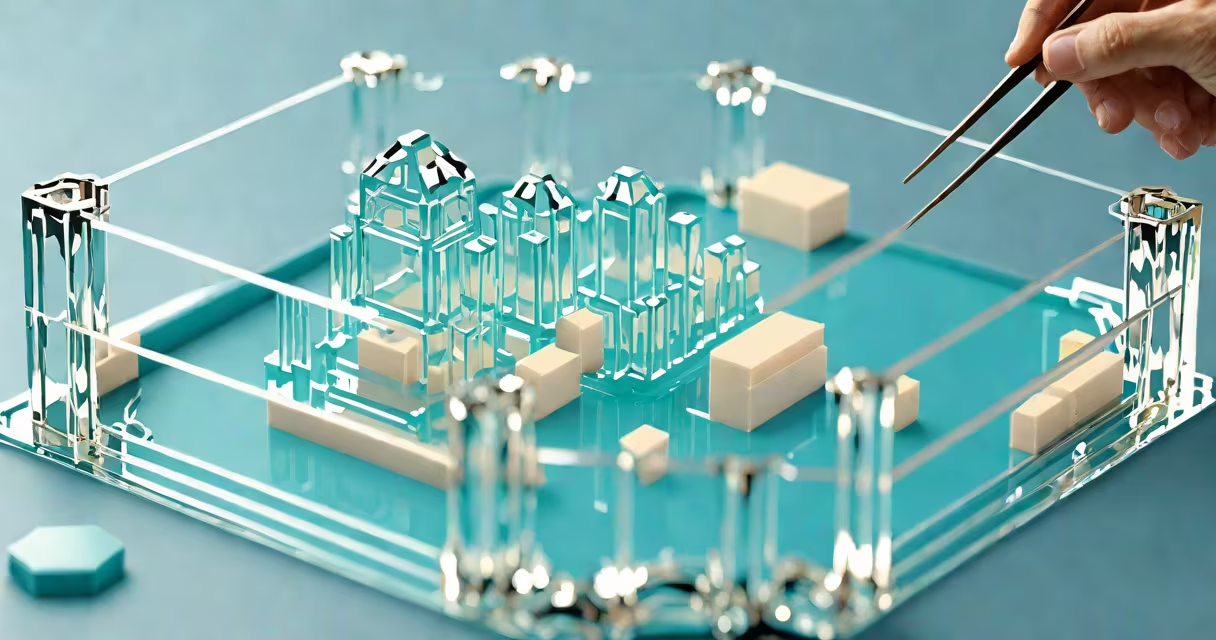
MMA acrylic is a transparent thermoplastic formed by polymerizing methyl methacrylate (MMA) monomers. It is valued for optical clarity, impact resistance, and ease of molding into complex shapes. Unlike traditional acrylic sheets made via bulk polymerization, MMA acrylic is typically cast using liquid monomer poured into molds and cured under UV light or heat.
The core process begins with pure methyl methacrylate (MMA), a colorless liquid monomer. When exposed to heat or UV radiation in the presence of a catalyst, MMA molecules link together into long chains-forming poly(methyl methacrylate), or PMMA. This polymer is the basis of all acrylic materials, but the method of formation defines whether it's classified as MMA acrylic.
Unlike injection-molded acrylic, which uses pre-polymerized pellets, MMA acrylic is cast from liquid. This allows for higher purity, fewer internal stresses, and superior optical quality. The result is a material often used in applications demanding visual precision, such as aquariums, lenses, and medical devices.
MMA acrylic achieves its clarity and strength through controlled polymerization. The monomer is mixed with a photoinitiator-typically benzophenone or similar-and poured into a mold lined with release film. The mold is then exposed to UV light at 365 nm wavelength for several hours. During this time, free radicals form and initiate chain reactions, linking MMA units into solid polymer chains.
Curing occurs slowly, allowing air bubbles to rise and escape. This reduces microvoids that scatter light. As a result, MMA acrylic can achieve transmittance values above 92%-higher than most glass or standard acrylic sheet. The slow cure also minimizes shrinkage, preventing warping or cracking during cooling.
After curing, the cast piece is removed from the mold, sanded, and polished. Final machining may include CNC routing or laser cutting. Because the material is still somewhat soft before full cure, it is handled carefully during processing. Once fully polymerized, MMA acrylic becomes rigid and stable under normal conditions.
MMA acrylic is available in multiple forms based on intended use. The primary categories are cast sheets, custom molds, and engineered components.
| Type | Form | Typical Thickness | Common Uses |
|---|---|---|---|
| Standard Cast Sheet | Flat, rectangular panels | 3 mm - 100 mm | Aquariums, display cases, signage |
| Custom Molded Shapes | Freeform, curved, or hollow | 5 mm - 50 mm | Lenses, medical casings, lighting diffusers |
| Reinforced Composite | With embedded fibers or fillers | 10 mm - 75 mm | Industrial guards, protective barriers |
One non-obvious distinction: MMA acrylic is not inherently flexible. While some plastics deform under stress, MMA acrylic fractures predictably when overloaded. Its tensile strength ranges from 70-80 MPa, and it withstands temperatures between -40°C and 80°C without significant degradation. Beyond 80°C, it begins to soften and lose structural integrity.
For reference, a 10 mm thick MMA acrylic panel can support over 1,200 kg/m² of static load-equivalent to standing on a 1 m² slab without breaking. This makes it suitable for architectural glazing and safety enclosures.
MMA acrylic is preferred in applications requiring both visual clarity and mechanical durability. A common example is in large public aquariums. The Georgia Aquarium in Atlanta uses 30 mm thick MMA acrylic panels for viewing windows. These panels transmit over 92% of visible light and resist pressure from 10 meters of water depth.
In medical settings, MMA acrylic is used for surgical instrument housings and diagnostic equipment covers. Its biocompatibility-when properly purified-allows direct contact with human tissue. According to the FDA's 21 CFR Part 177.2600, PMMA is approved for food and drug contact under specific processing standards.
Another niche use is in art installations. Artist Olafur Eliasson used cast MMA acrylic in his 2019 installation "Your Spiral View" at the Tate Modern. The translucent, bubble-free material created a smooth illusion of floating space, impossible with standard acrylic sheets due to internal stress lines.
Many assume MMA acrylic is the same as "plexiglass." While both are PMMA, they differ in manufacturing. Plexiglass is typically extruded or injection-molded from pre-polymerized pellets. This results in lower clarity and higher internal stress. MMA acrylic, being cast, avoids these flaws.
Another misconception is that MMA acrylic is highly flammable. In reality, it has a limiting oxygen index (LOI) of 32%, meaning it requires more oxygen to burn than air provides. It burns slowly and produces minimal smoke-making it safer than polystyrene or PVC in fire scenarios.
There's also confusion around toxicity. Pure MMA monomer is hazardous-it can irritate skin and eyes and is classified as a reproductive toxin by the EU's CLP regulation. However, once fully polymerized, the resulting PMMA contains no residual monomer. The U.S. National Toxicology Program confirms that fully cured PMMA poses no health risk under normal handling.
During my work on a museum exhibit, I witnessed a 1.5-meter-long MMA acrylic panel fracture after being struck with a metal tool. The crack propagated cleanly along a single plane, leaving no jagged edges. This behavior-brittle fracture with clean separation-is characteristic of cast PMMA and explains why it's used in safety-critical roles.
Despite this, MMA acrylic has a low carbon footprint compared to glass. A 2021 study by the European Plastics Network found that producing 1 kg of MMA acrylic emits 2.3 kg CO₂, while producing 1 kg of float glass emits 3.1 kg CO₂. The lighter weight also reduces transport emissions.
For disposal, MMA acrylic should not be incinerated in household waste. It releases toxic fumes when burned improperly. Instead, it should be sent to certified plastic recycling centers equipped for PMMA processing.
MMA acrylic is a high-performance transparent polymer made by casting liquid methyl methacrylate monomer and curing it under UV light. It offers superior clarity, strength, and dimensional stability compared to molded alternatives. Its applications span architecture, medicine, and art. Understanding its composition and limitations ensures proper selection and safe use.