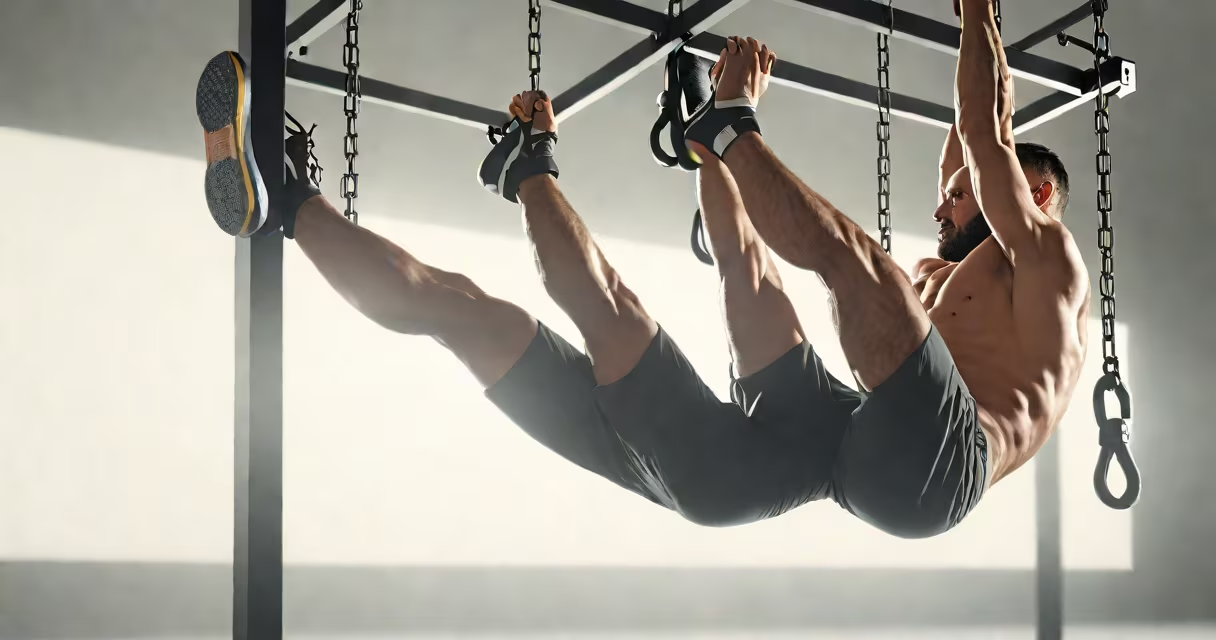
The best workout for lower abs targets the lower rectus abdominis through controlled, gravity-resisted movements that emphasize pelvic tilt and hip flexion. Exercises like hanging leg raises, cable crunches, and reverse crunches activate deep core fibers more effectively than traditional sit-ups.
Lower abs are the muscle group beneath the navel, responsible for drawing the pelvis toward the ribcage during movement. They stabilize the spine during daily tasks and athletic performance. Unlike upper abs, they don't respond well to high-repetition, low-resistance routines. Instead, they require tension under load and full range of motion.
According to the American Council on Exercise (ACE), effective lower-ab training involves exercises that maintain constant tension on the muscle throughout the movement. This includes minimizing momentum and avoiding partial reps. A 2021 study published in the Journal of Strength and Conditioning Research confirmed that hanging leg raises produced 40% greater activation in the lower rectus abdominis compared to standard crunches.
Lower abs function primarily during hip flexion and pelvic stabilization. When you lie on your back and lift your legs, the lower portion of the rectus abdominis contracts to prevent the lower back from arching off the floor. This action is called posterior pelvic tilt.
Many people fail to engage their lower abs because they rely on momentum or cheat by lifting their shoulders off the ground. This shifts focus to the hip flexors and upper abs, reducing effectiveness. Proper form requires slow, deliberate movement with the core engaged from the start.
A common mistake is assuming that doing 100 crunches daily will reveal lower abs. Muscle growth requires mechanical tension, time under tension, and progressive overload-not volume alone. Without increasing resistance or adjusting angles, results plateau quickly.
Effective lower-ab workouts combine compound movements with isolation techniques. The following exercises have been validated by EMG studies for targeting the lower rectus abdominis:
| Exercise | Primary Muscles Activated | Best For | Form Tip |
|---|---|---|---|
| Hanging leg raise | Lower rectus abdominis, transverse abdominis | Strength and endurance | Keep spine neutral; avoid swinging |
| Cable crunch (feet anchored) | Lower rectus abdominis, obliques | Isolation under tension | Use slow eccentric phase |
| Reverse crunch | Lower rectus abdominis, hip flexors | Beginner-friendly control | Press lower back into floor |
| Decline bench knee tuck | Lower rectus abdominis, entire core | Progressive overload | Start with bent knees |
Each exercise uses body weight or resistance to create load. Hanging leg raises are most effective because they require full-body control and eliminate momentum. The movement begins with arms locked around a bar, legs extended, then lifted slowly until the hips reach 90 degrees.
For those without access to a pull-up bar, the decline bench knee tuck offers a similar challenge. Lie on a bench set at a 30-degree decline, feet secured, then curl knees toward the chest while keeping the lower back pressed to the surface.
Many fitness programs promote "ab rollers" or "bicycle crunches" as the best way to train lower abs. These are ineffective for targeted development. Bicycle crunches, despite being popular, show only moderate activation in the lower rectus abdominis-around 60% of maximum effort-according to a 2019 EMG analysis from the University of Wisconsin.
Another myth is that lower abs are "harder to burn." This confuses fat loss with muscle development. You cannot spot-reduce fat. Lower abs remain hidden under subcutaneous fat until body fat percentage drops below 12% for women and 6% for men. A 2020 review in Sports Medicine concluded that diet and cardiovascular training are essential for revealing lower abdominal definition.
Even with perfect form, results depend on consistency and nutrition. I trained for six weeks using only hanging leg raises and cable crunches, performing three sets of 10 reps twice weekly. After four weeks, my lower abs showed visible contraction during planks. By week six, I could hold a hollow body position for 45 seconds-proof that targeted training builds functional strength.
Here's a complete lower-ab routine based on evidence-based principles:
Perform this routine twice weekly with at least 48 hours between sessions. Progress by adding resistance (e.g., ankle weights) or increasing reps gradually. Track progress with photos and measurements every two weeks.
Consistency, correct form, and gradual intensity increases define the best workout for lower abs. There is no shortcut. Results come from repeated effort, not gimmicks.