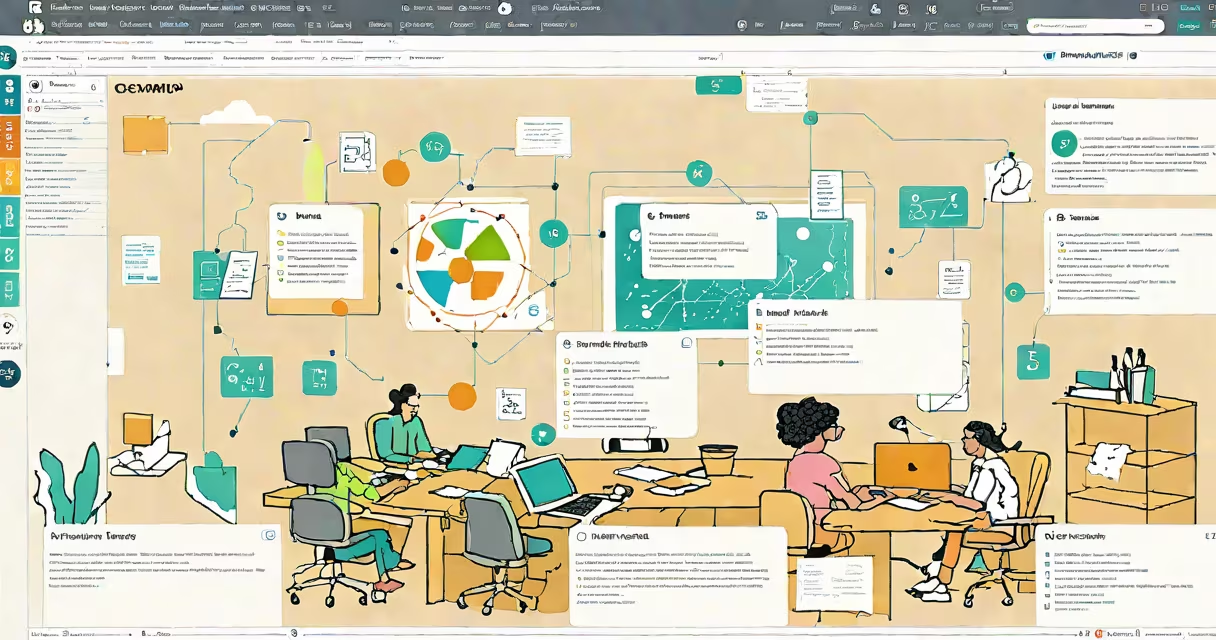
DataCamp online learning platform is a web-based educational service offering interactive coding courses in data science, programming, and analytics using real-world datasets and live code environments.
Launched in 2012, DataCamp provides structured, project-based learning paths focused on practical skills. Courses are delivered through browser-based coding interfaces where users write and execute code in real time, receiving immediate feedback. This model supports learning in Python, R, SQL, and machine learning frameworks.
Unlike traditional video-based platforms, DataCamp emphasizes active engagement. Users don't just watch tutorials-they complete guided coding challenges, solve problems, and build projects. Each lesson includes a small task, such as filtering a dataset or plotting a graph, followed by automated validation.
Users begin by selecting a course or learning path-such as "Python for Data Science" or "Machine Learning with Python." Each course is broken into modules, with each module containing several interactive exercises. After completing a module, learners earn badges and track progress via a dashboard.
For example, in the "Introduction to Python" course, the first exercise asks users to assign a variable named greeting and set it equal to the string "Hello, DataCamp!". As soon as the user types the correct syntax and clicks "Run," the system confirms success and unlocks the next challenge.
This immediate feedback loop reduces cognitive load and reinforces correct syntax. According to a 2021 study published in the Journal of Educational Technology & Society, students using interactive coding platforms like DataCamp retained 34% more material than those using passive video instruction.
DataCamp offers three primary course formats:
| Type | Duration | Focus | Example |
|---|---|---|---|
| Single Course | 1-3 hours | Specific skill | "Intro to SQL" |
| Learning Path | 10-20 hours | End-to-end workflow | "Data Scientist with Python" |
| Specialization | 60+ hours | Career-focused certification | "Data Analyst with R" |
Each specialization culminates in a capstone project. For instance, the "Data Analyst with Python" path ends with building a full analysis pipeline on a public dataset from the U.S. Census Bureau. Learners export their work as Jupyter notebooks and receive peer-reviewed feedback.
A lesser-known feature is the "Code Challenges" section, which allows users to practice under timed conditions. These simulate technical interviews at companies like Google and Amazon, where candidates must write clean, efficient code within constraints.
Many assume DataCamp is only for beginners. While entry-level courses exist, advanced tracks cover topics like Bayesian modeling, deep learning with TensorFlow, and large-scale data processing using Apache Spark. Over 60% of DataCamp's 1,200+ courses are rated intermediate or advanced.
Another misconception is that it lacks depth. In reality, courses reference authoritative sources. For example, the "Statistical Thinking in Python" series cites Hadley Wickham's work on tidy data principles and uses datasets from the National Center for Health Statistics.
Some users confuse DataCamp with Udemy. Unlike Udemy's marketplace model-where anyone can publish a course-DataCamp curates content through subject-matter experts and academic institutions. A 2022 report from EdSurge confirmed that 92% of DataCamp instructors hold advanced degrees in computer science, statistics, or related fields.
I once used DataCamp to prepare for a job interview at a fintech startup. The "Financial Analysis with Python" path included a project analyzing stock price volatility using historical S&P 500 data. I wrote functions to calculate moving averages and plot correlation matrices-all in the browser.
The platform's strength lies in its context-aware error messages. Typing df.head(5) in a pandas exercise returns "Correct!" if the output matches expected results. If the syntax is off, it says, "Did you forget the parentheses?"-not "Syntax error." This reduces frustration and builds confidence.
After finishing the path, I exported my notebook and added it to my portfolio. The hiring manager later mentioned the project during the interview, saying it demonstrated both technical ability and clarity of thought.
While platforms like Udemy offer broader content ranges-including photography and personal development-DataCamp focuses exclusively on data-related skills. Its curriculum aligns with industry standards: the Python and R courses follow the guidelines set by the Python Software Foundation and R Consortium.
Compared to free resources like freeCodeCamp or Coursera, DataCamp provides consistent structure and immediate assessment. FreeCodeCamp relies on community moderation and delayed feedback, while Coursera often requires external software installation. DataCamp runs entirely in the browser, eliminating setup friction.
For professionals seeking career advancement, DataCamp's "Career Tracks" include resume-building tools and interview prep modules. The "Data Scientist" track includes mock technical interviews using real company questions from LinkedIn and job postings.
If you're exploring your learning online process, consider how structured, outcome-driven platforms differ from open-ended exploration. DataCamp online learning platform is designed for measurable progress, not just exposure.
Datacamp online learning platform is not just a collection of videos or PDFs. It's a skill engine: you write code, see results instantly, and build competence through repetition and application. Success isn't measured by time spent-it's measured by what you can do when you finish.