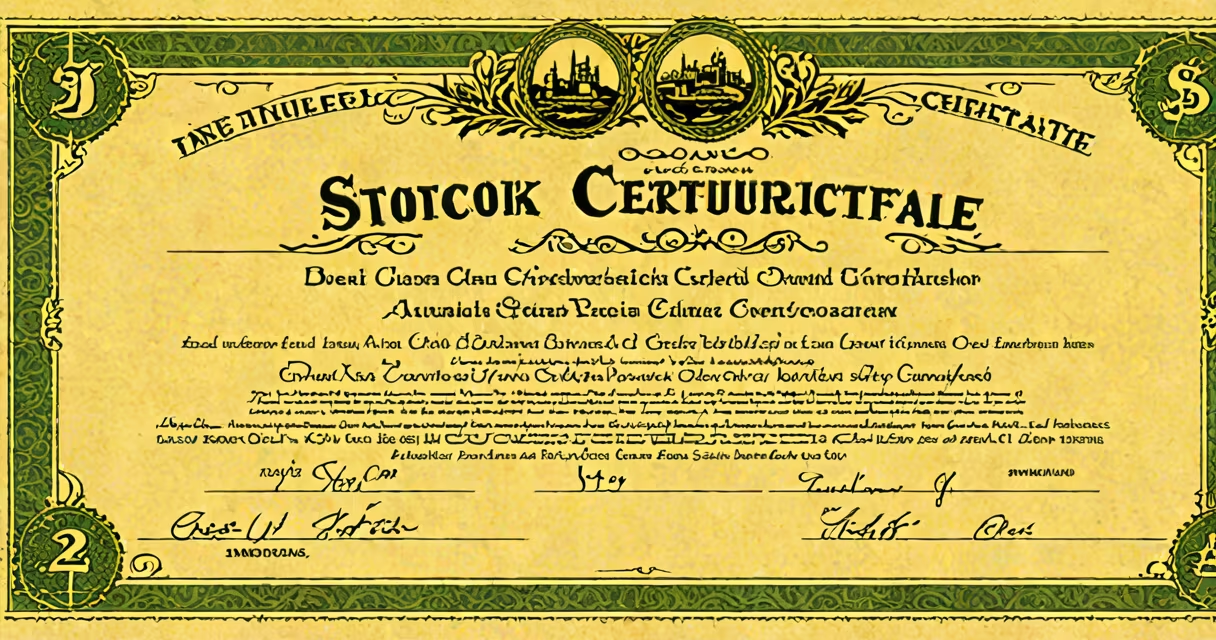
A stock certificate is a physical document issued by a corporation that certifies ownership of a specific number of shares in that company. It serves as legal proof of equity ownership and includes details such as the shareholder's name, the number of shares, the class of stock, and the issuer's official signature and seal.
Stock certificates were historically the primary way investors held shares. While most trading now occurs electronically through brokerage accounts, physical certificates still exist and retain legal validity. They are especially relevant for inherited holdings, private company shares, or investments in companies that do not list on public exchanges.
The U.S. Securities and Exchange Commission (SEC) recognizes stock certificates as valid instruments under federal securities law. According to SEC Rule 17a-4, broker-dealers must maintain accurate records of ownership, including physical documents, for audit purposes. This underscores their ongoing legal standing despite digital dominance.
When a company issues shares, it may choose to issue physical stock certificates instead of registering ownership in electronic form. The process begins with the company's transfer agent-the entity responsible for maintaining shareholder records and issuing certificates. Once authorized, the transfer agent prepares the certificate, signs it, and sends it to the shareholder.
Certificates include several mandatory fields: the shareholder's full name, the number of shares, the stock's par value (if any), the date of issuance, and the corporate seal. Some older certificates also feature watermarks, holograms, or engraved borders to prevent counterfeiting. These features were more common in the 20th century but remain in use for high-value or historical shares.
Transferring ownership requires signing the certificate over to a new owner. The signature must match the one on file with the transfer agent. After signing, the new owner submits the certificate to the transfer agent, who updates the company's shareholder registry and issues a new certificate if needed. This process is known as a "delivery versus payment" transaction and remains standard for private transfers.
While most modern stocks are held in book-entry form, certain types of certificates still exist. The main categories include:
| Type | Description | Common Use Case |
|---|---|---|
| Registered Certificate | Names the shareholder directly. Issued in the owner's name and registered with the company. | Individual investors, long-term holdings. |
| Bearer Certificate | Ownership is transferred by physical delivery. No name appears on the document. | Rare today; mostly obsolete due to fraud risks. |
| Uncertificated Shares | Shares held electronically. No physical document exists. | Standard for publicly traded stocks since the 1990s. |
Bearer certificates were once common in international markets but have largely disappeared due to money laundering concerns. The Financial Crimes Enforcement Network (FinCEN) notes that bearer instruments pose significant regulatory challenges and are now prohibited in most jurisdictions.
One non-obvious fact: many old stock certificates are still valid even if they lack modern security features. A 1920s Ford Motor Company certificate, for example, remains legally binding if properly endorsed and transferred. The key is not the design but the authenticity of the signature and the chain of ownership.
Physical stock certificates are most often encountered in estate planning, private equity transactions, or when inheriting shares from a deceased relative. If a person dies owning shares in a non-public company, those shares may be passed via a will-and the executor must present the original certificate to transfer title.
For example, in 2021, a Florida court ruled that a $2.3 million inheritance involving shares in a family-owned manufacturing firm was valid based on a 1978 stock certificate. The court accepted the document because it bore the original corporate seal and matched the transfer agent's records. This case illustrates that physical certificates still carry weight in legal proceedings.
Another use case is in private placements. Startups often issue stock certificates to early investors during seed rounds. These documents serve as proof of investment and are referenced in future funding events. A venture capital firm may require a copy of the original certificate before approving a buyout offer.
Stock certificates are frequently confused with stock certificates issued by brokers. A brokerage statement showing 100 shares of Apple Inc. is not a stock certificate-it's a record of electronic ownership. The difference lies in legal form: one is a physical instrument, the other a digital entry.
Another misconception is that stock certificates are outdated. While electronic systems dominate daily trading, physical certificates remain essential for certain transactions. For instance, transferring shares to a trust or gifting them to a minor may require the original document to comply with IRS reporting rules.
Verifying authenticity involves checking multiple elements. First, confirm the company's name and ticker symbol against public records. Use the SEC's EDGAR database or the company's investor relations website to validate the issuer.
Next, examine the signature and seal. Compare them to known samples from the company's transfer agent. Many corporations publish sample signatures online. If the document lacks a corporate seal or uses a generic stamp, it may be counterfeit.
For example, in 2019, a man attempted to sell a forged 1955 IBM stock certificate for $15,000. The certificate had a mismatched signature and no traceable transfer history. Authorities flagged it after cross-referencing with the company's archived records. This case shows that verification requires more than visual inspection-it demands record matching.
I once helped a client recover shares from a dormant account. The original certificate had faded ink and a torn corner. By cross-referencing the serial number with the transfer agent's archive, we confirmed the shares existed and reissued a new certificate. The process took 14 days and required notarized affidavits, but it proved that physical documents still hold legal power.
Understanding how to define stock certificate is essential for anyone managing personal assets, handling inheritances, or investing in private companies. verifying a transaction, knowing the structure, purpose, and verification steps ensures accuracy and compliance.
Stock certificates remain a foundational element of equity ownership. Even in a digital-first market, they provide tangible evidence of investment. For those exploring stock ownership, knowing how to interpret and validate a stock certificate is critical. If you're considering buying or selling shares, always confirm the document's legitimacy before proceeding.