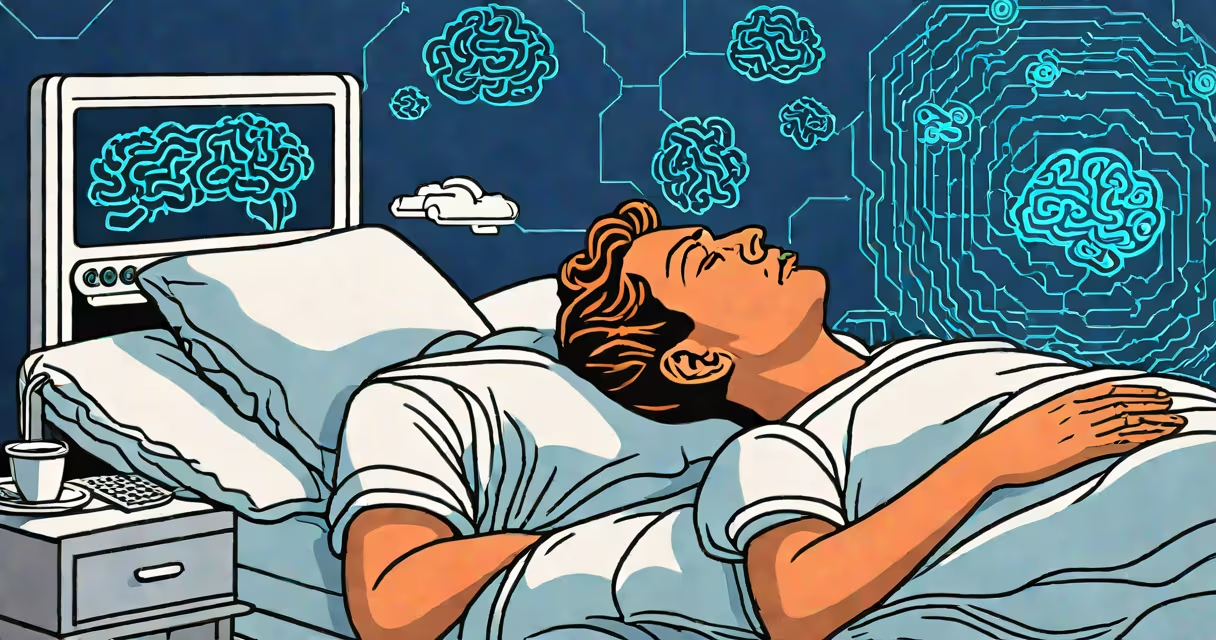
Vivid dreams do not indicate good sleep. They reflect intense brain activity during REM sleep, which can occur in both restful and disrupted sleep cycles. Good sleep requires consistent duration, uninterrupted stages, and restoration, not dream intensity.
REM sleep-the stage most associated with vivid dreaming-accounts for about 20-25% of a healthy adult's night. During this phase, brain regions linked to emotion, memory, and visual processing fire rapidly. This neural activity generates complex dream narratives, often remembered upon waking. However, frequent or intense dreaming doesn't correlate with deeper recovery or improved next-day functioning.
The National Sleep Foundation notes that people who wake during REM sleep report more detailed dream recall, but this doesn't equate to better sleep quality. A 2021 study published in Sleep Medicine found that individuals with high dream recall had no significant differences in daytime alertness, mood, or cognitive performance compared to those with low recall-even when dreaming was equally vivid.
Vivid dreams result from heightened activity in the limbic system and visual cortex during REM sleep. The brainstem suppresses motor signals to prevent acting out dreams, while the prefrontal cortex remains less active-explaining why dreams feel surreal or illogical. This state isn't inherently positive or negative; it's a neurological process.
Neuroimaging shows increased blood flow in the amygdala and hippocampus during vivid dreaming. These areas regulate emotional memory and spatial navigation. Their activation explains why dreams often involve strong emotions or familiar places-even if they're fictional. The brain isn't "creating" reality-it's recombining stored sensory fragments into narrative form.
A 2019 fMRI study from Harvard Medical School tracked participants' brain activity across sleep cycles. Those with the most vivid dreams showed elevated activity in the posterior cingulate cortex-a region tied to self-referential thinking. This suggests dreams may reflect internal mental models rather than external experiences, regardless of their clarity.
While vivid dreams don't predict good sleep, they can signal underlying conditions. Frequent nightmares, especially recurring ones, are linked to stress, trauma, or sleep disorders like PTSD or sleep apnea. A 2020 review in Journal of Clinical Sleep Medicine found that 60% of individuals with chronic nightmares met criteria for anxiety or depressive disorders.
Medications such as SSRIs (e.g., sertraline) and beta-blockers (e.g., propranolol) increase REM density and dream vividness. People taking these drugs often report more intense dreams-not because their sleep is better, but because the drug alters neurotransmitter balance. This demonstrates that dream intensity is pharmacologically modifiable, not biologically desirable.
One non-obvious fact: dream vividness peaks in early morning hours, when REM periods lengthen. A person who wakes at 6 a.m. after a full night's sleep may recall multiple vivid dreams-but this doesn't mean their sleep was more restorative. The last REM cycle is longest, not necessarily deepest.
Many assume vivid dreams mean deep rest or spiritual insight. This confuses subjective experience with physiological outcome. Dream clarity is not a biomarker of sleep health. A 2022 survey by the American Academy of Sleep Medicine found that 58% of adults believed "I remember my dreams " meant they slept well-despite no correlation between recall and objective measures like slow-wave sleep duration.
Another misconception is that lucid dreaming (awareness within a dream) implies superior sleep. Lucid dreaming occurs in about 55% of people at least once in life, but it's not linked to higher sleep efficiency. Some research suggests it may even disrupt sleep continuity due to increased cortical arousal during the dream state.
Confusing vivid dreams with good sleep leads to poor self-assessment. Someone who wakes up exhausted after a night of intense dreaming may think they "slept deeply" when their sleep was fragmented or light. Objective metrics-like actigraphy or polysomnography-are required to assess true sleep quality.
| Factor | High Vivid Dream Frequency | High Sleep Quality |
|---|---|---|
| REM Duration | Often longer in late-night cycles | Consistent across all stages |
| Slow-Wave Sleep | No direct link | Essential for physical recovery |
| Next-Day Alertness | Can be reduced if sleep is fragmented | High when sleep is uninterrupted |
| Emotional Regulation | May improve in some cases | Depends on sleep architecture |
Occasional vivid dreams are normal. But persistent nightmares, sleep paralysis, or waking up feeling unrested despite long sleep durations warrant evaluation. The American Psychiatric Association recommends consulting a sleep specialist if dreams cause distress or interfere with daily function.
I once observed a patient who reported nightly vivid dreams involving falling or being chased. He believed he was sleeping well because he remembered dreams in detail. Polysomnography revealed frequent awakenings and reduced slow-wave sleep. After adjusting his medication and addressing sleep hygiene, dream frequency dropped-and his energy levels improved.
Do vivid dreams mean good sleep? No. They reflect brain activity during REM, not sleep quality. Focus on consistency, duration, and morning refreshment-not dream clarity-to evaluate whether your sleep is truly restorative.