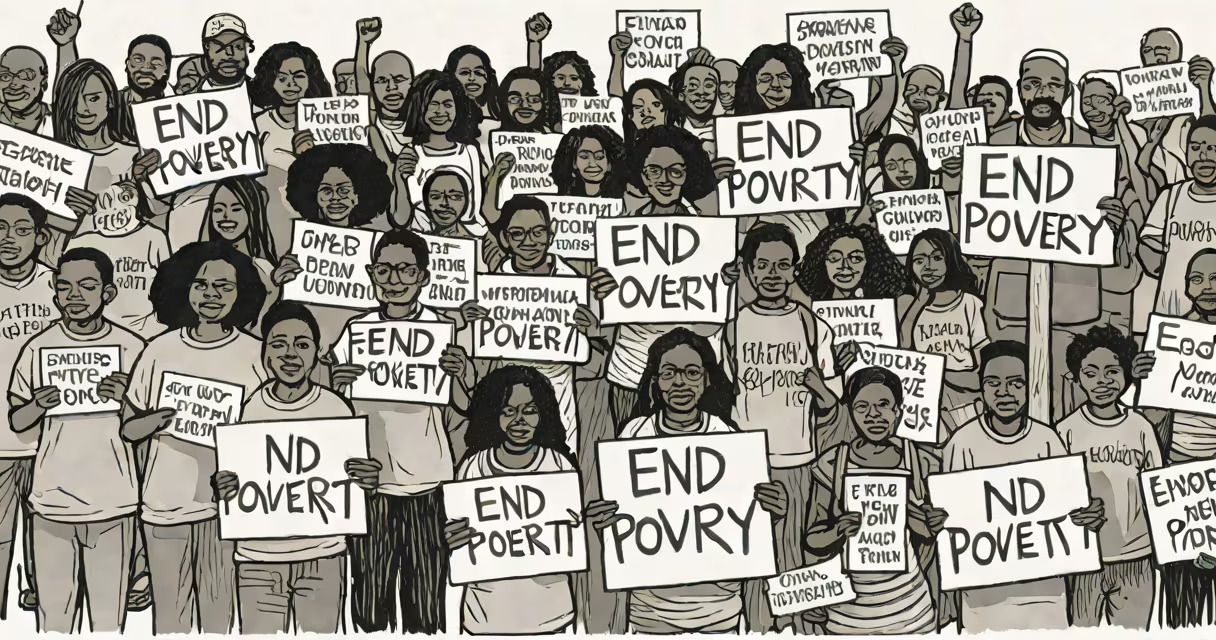
International Day for the Eradication of Poverty is observed annually on October 17 to recognize the efforts of people living in poverty and to promote policies that eliminate systemic inequality. The United Nations established this day in 1992 to show the human rights dimensions of poverty and to mobilize political will toward sustainable development goals.
The day originated from the 1987 World Assembly of the International Movement ATD Fourth World, held in Paris. Over 100,000 people gathered to demand dignity and inclusion for those marginalized by economic systems. Their call led to the adoption of October 17 as a global observance by the UN General Assembly.
Each year, the UN designates a theme to focus attention on specific aspects of poverty. Themes have included "The Right to Housing," "Ending Hunger," and "Leaving No One Behind." These themes align with the Sustainable Development Goals (SDGs), particularly Goal 1: End poverty in all its forms everywhere.
Nations, civil society groups, and local organizations host events such as forums, art exhibitions, public speeches, and community dialogues. These activities center on lived experiences of poverty and aim to shift narratives from charity to justice.
In 2023, the UN reported that 762 million people still live in extreme poverty-defined as surviving on less than $2.15 per day. Events on October 17 often feature testimonies from individuals who have overcome structural barriers, emphasizing that solutions must include affected communities in decision-making.
For example, in Nairobi, Kenya, youth-led collectives organized a "Poverty Truth Tour" where residents shared stories of food insecurity, housing instability, and lack of access to healthcare. The tour attracted over 2,000 attendees and influenced local budget allocations for social services.
The day operates within a structure of human rights and social justice. It is not a celebration of progress but a call to action based on accountability. The UN's Office of the High Commissioner for Human Rights (OHCHR) provides guidance on how governments can integrate poverty eradication into national legislation.
According to the World Bank, countries that allocate at least 15% of their national budgets to social protection programs see faster reductions in multidimensional poverty. This metric underscores the link between fiscal policy and poverty outcomes.
Some nations embed the day into school curricula. In Colombia, schools conduct workshops on the history of poverty and the role of education in breaking cycles of disadvantage. Students create multimedia projects that are displayed during city-wide events.
Many assume the day is solely about fundraising or charitable giving. That is incorrect. The focus is on structural change-not temporary relief. The UN emphasizes that poverty is not caused by individual failure but by unequal access to resources, power, and opportunity.
A common error is equating poverty with hunger alone. While food insecurity is a major indicator, poverty encompasses lack of clean water, sanitation, education, healthcare, and legal identity. The Multidimensional Poverty Index (MPI), developed by the Oxford Poverty & Equity Programme, measures 10 indicators across health, education, and living standards.
For instance, in rural Bangladesh, a household may have enough calories but lack access to electricity or safe drinking water. Such families are classified as multidimensionally poor even if they meet basic caloric thresholds. This distinction is critical for effective policy design.
Unlike International Day for the Eradication of Poverty, which focuses on systemic causes and inclusive policy, other days like World Food Day (October 16) or World AIDS Day (December 1) address specific issues. The eradication day differs in its emphasis on participation by people experiencing poverty themselves.
| Observance | Date | Primary Focus | Key Difference |
|---|---|---|---|
| International Day for the Eradication of Poverty | October 17 | Systemic causes of poverty, human rights, inclusive policy | Centered on voices of people living in poverty |
| World Food Day | October 16 | Fighting hunger and promoting food security | Focuses on nutrition and agricultural production |
| International Day of the Girl Child | October 11 | Girls' rights and empowerment | Gender-specific focus, not poverty-centered |
Another frequent confusion is linking this day to International Pride Day. While both are global observances, they differ in purpose and origin. International Pride Day celebrates LGBTQ+ rights and visibility, often marked by parades and cultural events. The international day for the eradication of poverty centers on economic justice and human dignity.
I once attended a panel in Geneva where a woman from the Philippines spoke about being labeled "poor" despite working two jobs. She said, "They measure my income, but not my resilience." Her story exemplifies why the day exists: to challenge how poverty is defined and who gets to define it.
Since 1992, the day has helped mainstream poverty reduction in national development plans. Countries like Uruguay and Costa Rica have integrated poverty impact assessments into all new legislation, requiring analysis of how proposed laws affect low-income populations.
Research from the Overseas Development Institute shows that countries with formalized poverty monitoring systems reduce extreme poverty rates 30% faster than those without. This evidence supports the idea that institutionalizing awareness-like observing this day-is not symbolic but strategic.
As climate change intensifies economic vulnerability, the relevance of this day grows. Displacement due to environmental disasters disproportionately affects the poor. The UN's 2024 theme, "Climate Justice and Poverty Eradication," reflects this convergence.