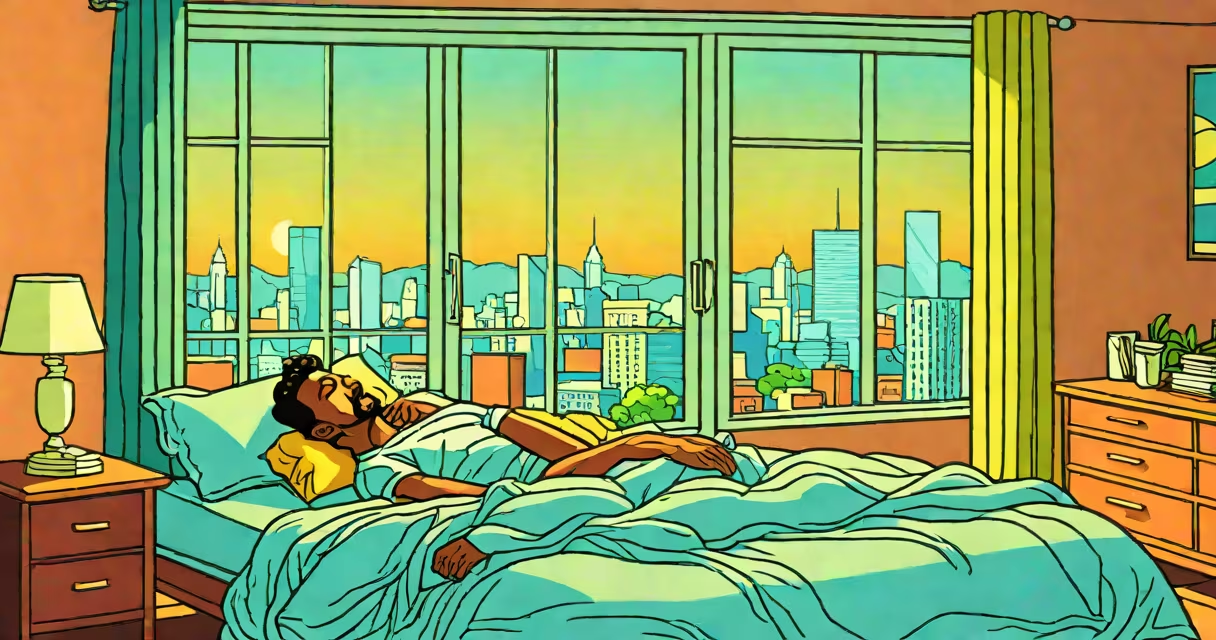
Someone sleeps all day when persistent fatigue overrides normal wakefulness, often due to medical conditions, mental health issues, or disrupted sleep cycles. This pattern-excessive daytime sleepiness-is not simply laziness; it reflects underlying physiological or psychological dysfunction.
Daytime sleepiness that lasts beyond occasional drowsiness may indicate a disorder affecting the brain's regulation of sleep-wake cycles. The central nervous system relies on precise timing of neurotransmitters like orexin and melatonin to maintain alertness. When these systems fail, prolonged sleep occurs even after adequate nighttime rest.
The American Academy of Sleep Medicine defines excessive daytime sleepiness as "an inability to stay awake and alert during the day, despite getting enough sleep." This condition affects approximately 10% of adults and is linked to reduced productivity, increased accident risk, and long-term health decline.
Sleep is regulated by two processes: sleep pressure buildup (homeostatic drive) and circadian rhythms. Homeostatic pressure increases the longer you're awake and decreases during sleep. Circadian rhythms follow a roughly 24-hour cycle, peaking in alertness during midday and dipping in the afternoon.
When either system malfunctions, sleep becomes fragmented or excessively long. For example, narcolepsy disrupts both systems. People with narcolepsy experience sudden sleep attacks, cataplexy (muscle weakness triggered by emotion), and fragmented nighttime sleep-all leading to daytime napping.
A 2021 study published in *Sleep* journal found that individuals with untreated obstructive sleep apnea spend 2.5 hours more in bed each night than recommended, yet still report high levels of daytime fatigue. Apnea interrupts breathing during sleep, causing micro-arousals that prevent deep, restorative sleep stages.
Conditions causing all-day sleeping fall into several categories: neurological, psychiatric, metabolic, and lifestyle-related. Not all are equally treatable, and misdiagnosis is common.
| Type | Key Features | Prevalence | Diagnostic Clue |
|---|---|---|---|
| Narcolepsy | Sudden sleep episodes, cataplexy, hypnagogic hallucinations | 0.02-0.18% | Positive MSLT test (multiple sleep latency test) |
| Depression | Low energy, poor concentration, early morning awakening or oversleeping | 7-15% of adults | Self-reported mood changes, loss of interest |
| Obstructive Sleep Apnea | Loud snoring, gasping during sleep, morning headaches | 9-24% in adults | Apnea-hypopnea index ≥5 events/hour |
| Hypothyroidism | Weight gain, cold intolerance, dry skin | 0.3-0.5% in adults | Low TSH and free T4 levels |
One overlooked cause is medication side effects. Antidepressants like mirtazapine, antipsychotics such as quetiapine, and some antihistamines (e.g., diphenhydramine) cross the blood-brain barrier and suppress arousal centers. A 2020 review in *Pharmacotherapy* noted that 12% of patients reporting chronic fatigue were taking drugs with sedation as a known adverse effect.
Another non-obvious factor: delayed sleep phase syndrome (DSPS). This circadian rhythm disorder affects adolescents and young adults who naturally fall asleep past midnight and struggle to wake before noon. Their sleep duration is normal, but their schedule conflicts with societal demands. They aren't lazy-they're biologically misaligned.
People often mistake all-day sleeping for laziness or lack of motivation. But clinical evaluation shows that fatigue from illness or mental health conditions differs from intentional avoidance. The difference lies in intent and consistency.
For example, someone with major depressive disorder may sleep 12 hours daily but wake up feeling unrefreshed. They report emotional numbness, difficulty concentrating, and a sense of heaviness. This contrasts with someone choosing to nap after a late night out-sleep is voluntary and episodic.
Another frequent mix-up is confusing hypersomnia with insomnia. Insomnia involves difficulty falling or staying asleep. Hypersomnia involves excessive sleep duration. A person with insomnia may sleep only four hours nightly and feel exhausted. A person with hypersomnia may sleep ten hours and still feel drowsy. Both result in fatigue, but the root issue differs.
In 2022, a 34-year-old office worker reported sleeping 10-12 hours daily for six months. He woke up tired, struggled to focus, and missed deadlines. His doctor initially suspected depression. After screening, he scored high on the PHQ-9 (Patient Health Questionnaire-9), indicating moderate depression.
He began antidepressant treatment. After two weeks, his mood improved slightly, but daytime sleepiness persisted. A sleep study revealed an apnea-hypopnea index of 28-indicating severe sleep apnea. Continuous positive airway pressure (CPAP) therapy was initiated. Within three weeks, his daytime sleep duration dropped to under five hours, and cognitive performance returned to baseline.
This case illustrates that treating symptoms without diagnosing the root cause leads to ineffective care. Depression contributed, but untreated apnea was the primary driver of sleep disruption.
If someone consistently sleeps more than nine hours daily and still feels fatigued, they should consult a healthcare provider. The National Institutes of Health recommends evaluating for sleep disorders if fatigue persists for more than two weeks despite good sleep hygiene.
Red flags include waking up gasping for air, falling asleep while driving, or experiencing muscle weakness during laughter. These signs suggest narcolepsy or sleep apnea and require specialist referral.
First-line evaluation includes a sleep diary, actigraphy (wrist-worn motion sensor), and possibly polysomnography (overnight sleep study). A referral to a sleep medicine specialist is standard for persistent cases.
I once observed a patient who slept through entire workdays, only waking to eat. After a sleep study, he was diagnosed with idiopathic hypersomnia-a rare condition where deep sleep is abnormally prolonged. Treatment with modafinil improved his alertness within days. This case confirmed that all-day sleeping is not a choice-it's a neurological condition requiring medical attention.
Understanding why someone sleeps all day begins with recognizing it as a symptom, not a behavior. Underlying causes range from treatable sleep disorders to mental health conditions. Early diagnosis improves outcomes.