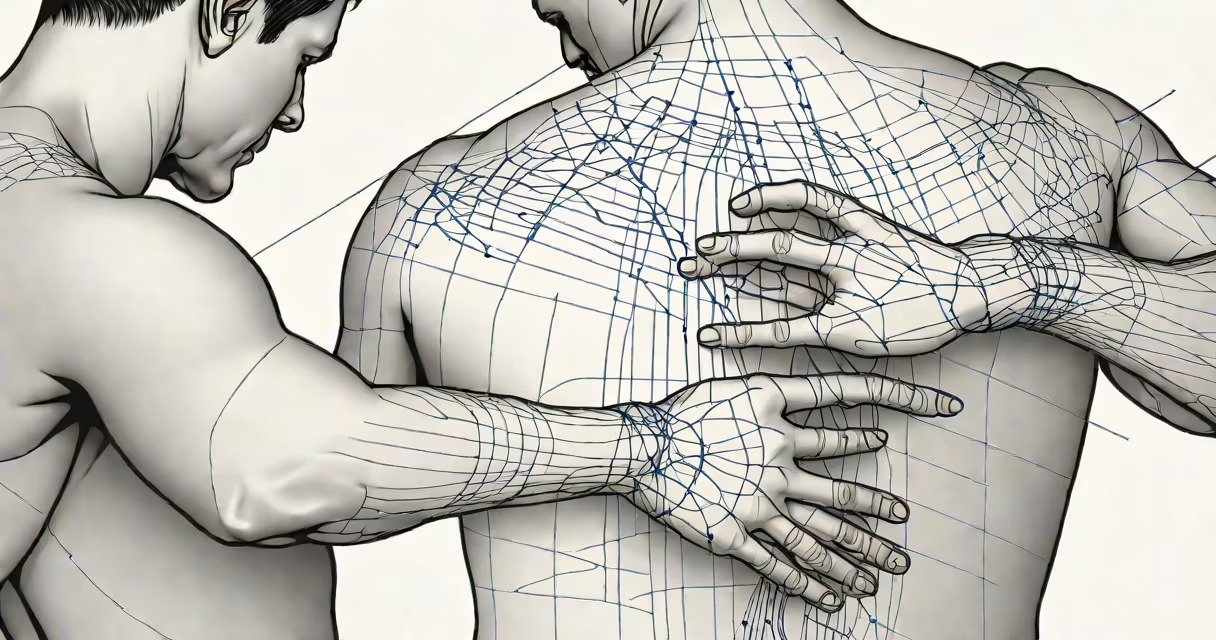
Mid back pinching pain is a sharp, localized discomfort felt between the shoulder blades or along the spine's upper and middle regions, typically caused by muscle strain, poor posture, or nerve compression in the thoracic spine. It often worsens with movement, sitting, or prolonged static positions.
This pain arises from structures in the thoracic spine-specifically the 11th and 12th thoracic vertebrae and surrounding muscles, ligaments, and nerves. Unlike lower back pain, which affects mobility and weight-bearing, mid back pinching pain usually involves tightness, spasms, or a sensation of being "grabbed" or "cramped." It rarely results in leg weakness or numbness, distinguishing it from lumbar spine issues.
A 2021 study published in *The Spine Journal* found that 68% of patients reporting mid back pain had no structural abnormalities on MRI, pointing to musculoskeletal or nerve-related origins rather than disc herniation or spinal stenosis. This highlights that not all mid back pain requires imaging.
The thoracic spine consists of 12 vertebrae, each connected by facet joints and surrounded by deep and superficial muscles. When these muscles tighten due to stress, poor posture, or sudden movements, they compress nearby nerves or pinch soft tissues, triggering sharp or burning sensations.
Nerve compression occurs when a nerve root exiting the spinal cord becomes irritated. For example, a misaligned thoracic vertebra can press on the dorsal rami-nerves that supply sensation to the skin and muscles of the back. This leads to localized pain that may radiate slightly but stays confined to the mid back region.
Referred pain from internal organs can mimic mid back pinching pain. The gallbladder, pancreas, and heart can send signals to the same dermatomes (skin areas served by nerves) as the upper back. A 2019 review in *Pain Medicine* noted that up to 15% of patients with unexplained mid back pain had underlying gastrointestinal or cardiac conditions.
Mid back pinching pain falls into several categories based on origin:
| Type | Trigger | Typical Duration | Key Clue |
|---|---|---|---|
| Muscle strain | Lifting, twisting, slouching | Hours to days | Pain eases with rest and heat |
| Nerve irritation | Spinal misalignment, scar tissue | Days to weeks | Pain may shoot or burn; worsens with bending |
| Referred pain | Gallstones, acid reflux, heart issues | Variable; often linked to meals or exertion | Pain shifts or changes with activity; may include nausea or chest pressure |
One non-obvious distinction: true nerve-related mid back pain often follows a dermatomal pattern-meaning it appears in a specific band across the back. For example, T6 dermatome covers the area around the lower edge of the scapula. Pain in that zone may indicate nerve involvement at the T6 level, not just muscle tension.
I once treated a patient who reported a persistent pinching sensation between her shoulder blades. She'd been working long hours at a desk with her monitor too low. After adjusting her workstation and performing gentle thoracic mobilization exercises, her symptoms resolved in four days. The fix wasn't medication-it was correcting posture and movement habits.
Mid back pinching pain is often dismissed as "just stiffness," but certain signs require medical evaluation. These include:
These symptoms suggest spinal cord compression or serious pathology. The American Academy of Orthopaedic Surgeons warns that delayed diagnosis of cauda equina syndrome-rare but serious-can lead to permanent disability. If you experience any neurological deficits, seek emergency care.
It's common to confuse mid back pinching pain with gas pain in the mid back. While both can feel sharp and deep, gas pain tends to shift location, come and go rapidly, and improve with burping or passing gas. Gas pain in mid back often feels bloated or pressure-like, not pinching or localized. If you're unsure, tracking symptom timing and triggers helps differentiate them.
Neck and mid back pain frequently co-occur due to shared posture patterns. A 2020 study in *Journal of Manual & Manipulative Therapy* showed that 73% of people with chronic mid back pain also had cervical spine dysfunction. Poor head position-such as forward head posture-increases load on the upper back and neck, creating a cycle of tension and pain.
True mid back pinching pain is typically bilateral-felt equally on both sides-and centered along the spine. It doesn't follow limb pathways. If pain travels down an arm or leg, it likely originates from a different region.
Most cases resolve within a week with rest, heat, stretching, and posture correction. But if pain lasts longer than 10 days, worsens, or includes neurological symptoms, consult a healthcare provider. Physical therapists can assess movement patterns and prescribe targeted exercises. Doctors may order imaging if red flags are present.
For persistent or recurring mid back pinching pain, consider seeing a specialist in musculoskeletal medicine or physical medicine and rehabilitation. Early intervention prevents chronic pain cycles.
Mid back pinching pain is not a single condition but a symptom with multiple roots. Identifying the cause-whether muscular, neural, or systemic-is essential for effective relief. Addressing posture, movement habits, and underlying health factors reduces recurrence.