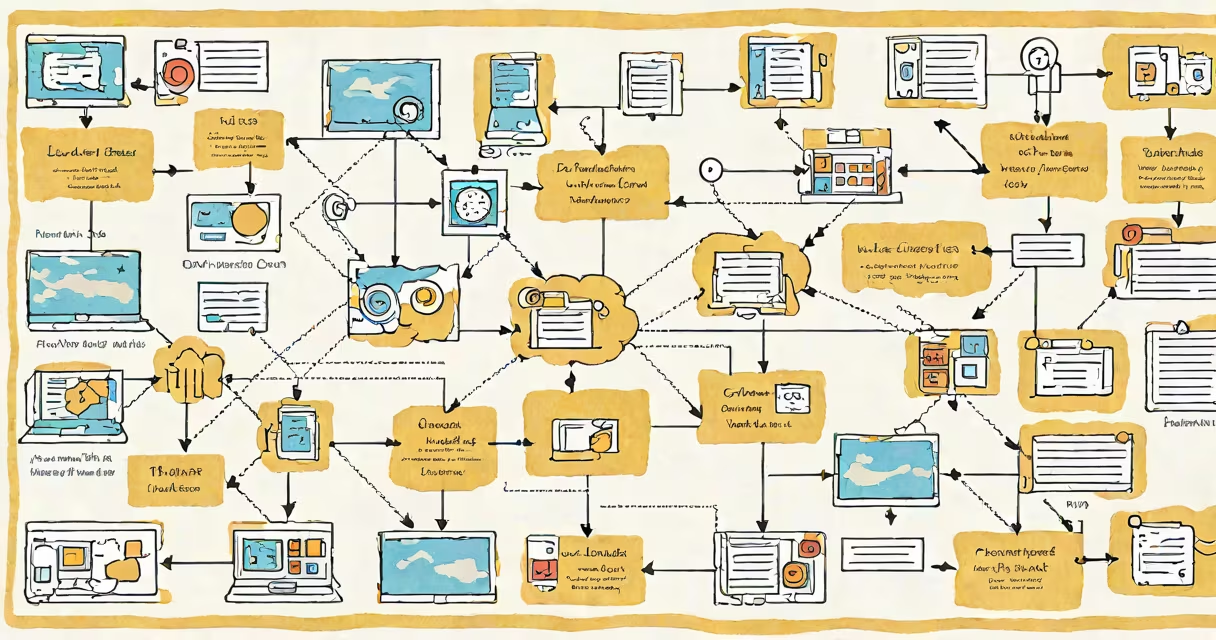
A serverless application is a software system deployed and executed in the cloud without the developer managing physical or virtual servers. It runs on demand, scales automatically, and charges only for actual execution time. This model shifts infrastructure management to the cloud provider, enabling rapid deployment and reduced operational overhead.
Serverless applications rely on event-driven execution. When a trigger occurs-such as a file upload, HTTP request, or database update-the cloud platform launches a function to handle the task. After completion, the function terminates. This eliminates idle server costs and ensures resources scale precisely with workload.
Major providers offer serverless platforms: AWS Lambda, Azure Functions, and Google Cloud Functions. These services integrate with APIs, databases, storage, and monitoring tools. A single application may combine multiple functions, each responsible for a specific task like authentication, data validation, or report generation.
When a user sends a request-say, uploading a photo to a social media app-the request triggers an API Gateway. That gateway routes the call to a Lambda function. The function processes the image: resizes it, applies filters, and stores the result in Amazon S3. Once done, the function ends. No server remains running.
This flow happens in milliseconds. The cloud provider allocates compute resources dynamically based on the incoming load. During peak hours, hundreds of function instances can run simultaneously. During low traffic, no instances run at all. This elasticity prevents over-provisioning and cuts costs.
Functions are stateless. They don't retain data between executions. Any persistent data-like user profiles or session records-must be stored externally in databases such as Amazon DynamoDB or PostgreSQL. This design enforces clean separation of concerns and improves reliability.
Serverless applications consist of four core elements:
Common types include:
| Type | Use Case | Example |
|---|---|---|
| API backend | Handling HTTP requests | Processing form submissions for a contact page |
| Data processing | Transforming or analyzing data | Resizing images uploaded to a gallery |
| Background jobs | Scheduled or delayed tasks | Generating daily sales reports at 3 AM |
| Real-time processing | Responding to live events | Validating payment tokens during checkout |
Each function typically performs one task. This modular design simplifies debugging and enables independent updates. For example, changing the image compression algorithm requires updating only the resize function-not the entire app.
Companies use serverless applications to build scalable web backends, mobile app APIs, and automated workflows. Startups favor it for low initial cost and fast iteration. Enterprises adopt it for microservices architectures that reduce downtime during updates.
Netflix uses AWS Lambda to process metadata for video recommendations. Each new show entry triggers a function that analyzes genre, cast, and viewing patterns. The system handles millions of entries daily without manual scaling.
Another example: a weather app that sends alerts when forecasts exceed thresholds. A scheduled function checks data every hour. If rain probability exceeds 80%, it triggers a notification via Amazon SNS. The function runs once per hour, consuming minimal resources.
According to AWS documentation, serverless workloads can reduce infrastructure costs by up to 70% compared to traditional VM-based deployments. The savings come from eliminating idle server capacity and automatic scaling.
"Serverless" does not mean "no servers." The cloud provider manages the underlying hardware. Developers still interact with servers-but they don't provision, patch, or monitor them. The term refers to abstraction, not absence.
Many confuse serverless with containers or VMs. Unlike Docker or EC2, serverless functions have no persistent runtime. They start fresh on each invocation. This limits long-running processes like machine learning training or batch jobs requiring hours of computation.
A lesser-known fact: cold starts-delays when a function runs for the first time-can impact performance. AWS Lambda cold starts average 100-300ms depending on the runtime and region. Using provisioned concurrency can reduce this to under 50ms, but adds cost.
I once built a serverless app for a client that processed PDF invoices. The first version failed under load because the function exceeded 5-minute timeout limits. We split the workflow into smaller steps using Step Functions. This improved reliability and cut execution time by 60%.
Traditional apps run on dedicated servers or VMs. They require ongoing maintenance: patching, backups, and load balancing. Scaling involves adding more instances manually or through auto-scaling groups.
Serverless applications eliminate these steps. The cloud provider handles availability, failover, and scaling. You define the function code and set execution limits. The platform manages everything else.
However, serverless isn't ideal for all scenarios. Long-running tasks, high-memory operations, or frequent cross-function calls can increase latency and cost. Applications needing consistent low-latency responses-like gaming or trading systems-may benefit more from containerized or VM-based solutions.
To build a serverless application, begin with a cloud provider's serverless offering. AWS Lambda is widely adopted. It supports multiple languages and integrates with API Gateway, S3, and DynamoDB.
Start small: create a function that returns "Hello, World!" when triggered by an HTTP request. Deploy it using the AWS CLI or the console. Test the endpoint with curl or Postman.
As complexity grows, use infrastructure-as-code tools like AWS SAM or Terraform. These let you define the full stack-functions, permissions, triggers-in code. This enables version control, testing, and repeatable deployments.
Understanding serverless application design helps avoid common pitfalls. Focus on function boundaries, error handling, and logging. Monitor execution duration and invocation counts to track cost and performance.
While serverless applications simplify deployment and reduce operational burden, they require thoughtful design. The trade-off is simplicity versus visibility-fewer moving parts, but harder-to-trace issues across distributed components.
Serverless application development continues to evolve. With managed services expanding into AI inference, real-time analytics, and edge computing, the model is becoming central to modern cloud strategy.