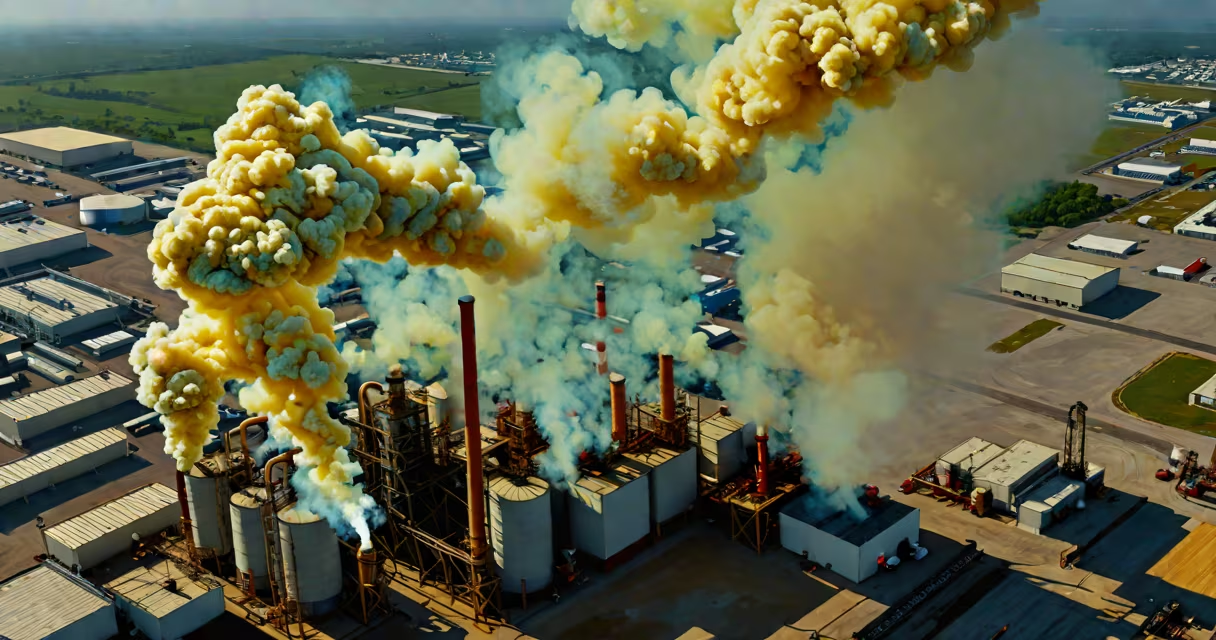
Sulfur in the air mainly appears as sulfur dioxide (SO₂), a colorless gas formed during the burning of fossil fuels containing sulfur, such as coal and oil. It enters the atmosphere through industrial processes, power plants, and vehicle exhaust. SO₂ can react with water vapor to form sulfuric acid, contributing to acid rain and respiratory health risks.
Sulfur dioxide is a regulated air pollutant under the U.S. Clean Air Act. The Environmental Protection Agency (EPA) sets national ambient air quality standards (NAAQS) for SO₂ at 75 parts per billion (ppb) averaged over one hour. Levels above this threshold are associated with increased asthma attacks and reduced lung function, especially in children and people with preexisting conditions.
When sulfur in the air combines with moisture, it forms fine particulate matter (PM2.5) and acidic aerosols. These particles reduce visibility, damage ecosystems, and contribute to long-term health problems. A 2021 study published in *Environmental Health Perspectives* found that long-term exposure to elevated SO₂ levels correlates with higher rates of cardiovascular mortality in urban populations.
Sulfur in the air originates from both natural and human-made sources. Natural sources include volcanic eruptions, which release large amounts of SO₂. Mount St. Helens' 1980 eruption emitted approximately 100,000 tons of sulfur dioxide in a single day, temporarily increasing regional SO₂ concentrations by over 100 times background levels.
Human activities dominate current sulfur emissions. Power plants burning high-sulfur coal are major contributors. For example, in 2020, the U.S. Energy Information Administration reported that coal-fired power plants accounted for 62% of total SO₂ emissions in the United States. Industrial facilities such as refineries and smelters also emit significant quantities. A single steel mill in Ohio was found to emit over 1,200 tons of SO₂ annually, exceeding local emission limits in multiple years.
Vehicle exhaust contributes less directly but still adds to the burden. Diesel engines produce more SO₂ than gasoline engines due to higher sulfur content in diesel fuel. Although modern low-sulfur diesel (15 ppm sulfur) reduces emissions, older vehicles and heavy-duty transport remain sources of concern in urban areas.
Sulfur in the air exists in several chemical forms. The most common is sulfur dioxide (SO₂), a gaseous compound. It can also oxidize in the atmosphere to form sulfur trioxide (SO₃), which rapidly reacts with water to create sulfuric acid (H₂SO₄). This process occurs within hours of emission in humid conditions.
| Form | Chemical Formula | Primary Source | Environmental Impact |
|---|---|---|---|
| Sulfur dioxide | SO₂ | Combustion of sulfur-containing fuels | Respiratory irritation, acid rain |
| Sulfur trioxide | SO₃ | Further oxidation of SO₂ | Forms sulfuric acid; contributes to PM2.5 |
| Sulfate aerosols | SO₄²⁻ | Reaction of SO₂ with OH radicals | Reduced visibility, climate cooling effect |
A non-obvious fact: sulfate aerosols formed from atmospheric sulfur can have a net cooling effect on climate by reflecting sunlight. However, this masking effect does not eliminate the harm caused by acid deposition and poor air quality. According to the Intergovernmental Panel on Climate Change (IPCC) Sixth Assessment Report, while sulfate aerosols offset some warming, they also cause widespread ecological damage and human health burdens.
Many assume that "sulfur in the air" refers to elemental sulfur (S₈), the yellow powder found in labs. This is incorrect. Elemental sulfur is not volatile and does not enter the atmosphere in significant quantities under normal conditions. It requires high temperatures to vaporize, which rarely occur in ambient environments.
Another confusion arises between sulfur dioxide and hydrogen sulfide (H₂S). While both contain sulfur and are toxic, H₂S is a heavier-than-air gas with a rotten egg smell. It's produced by decaying organic matter in sewers and swamps, not combustion. H₂S is not a major contributor to long-range air pollution compared to SO₂.
Some believe that sulfur in the air is only a problem in heavily industrialized regions. But even rural areas near coal plants or shipping lanes experience measurable SO₂ levels. Monitoring stations in rural Pennsylvania recorded SO₂ spikes exceeding 50 ppb during winter months due to downwind transport from nearby power plants.
In 2019, researchers from the University of Pittsburgh analyzed air quality data from 12 monitoring sites across the Ohio River Valley. They found that SO₂ levels exceeded the EPA's one-hour standard on 47 days that year. The highest daily average reached 112 ppb in a town near a coal-fired power plant.
Local hospitals reported a 22% increase in emergency room visits for bronchitis and asthma during those periods. A follow-up study by the American Lung Association confirmed that children living within 10 miles of the plant had lower lung function scores compared to those in low-SO₂ zones.
This case illustrates how sulfur in the air affects public health beyond industrial boundaries. Even with regulatory controls, persistent emissions from aging infrastructure continue to impact communities.
National air quality networks track sulfur in the air using continuous monitoring systems. The EPA's AirNow system provides real-time SO₂ data for over 1,000 locations across the U.S. Data from 2022 shows that annual average SO₂ levels have declined by 85% since 1990 due to scrubber installations and fuel switching.
Scrubbers, or flue gas desulfurization units, remove up to 95% of SO₂ from power plant exhaust. A retrofit project at the Mountaineer Power Plant in West Virginia reduced SO₂ emissions by 12,000 tons per year after installing wet limestone scrubbers.
Understanding sulfur in the air is essential for protecting health and the environment. It's not just a byproduct of industry-it's a measurable factor in air quality, climate, and disease. Regular exposure to elevated SO₂ levels increases risk for chronic illness. Reducing emissions remains critical for long-term environmental and human well-being.